“In Search of the Phoenicians” by Josephine Quinn
There were no Phoenicians, so we aren’t going to find them. Simply put, that is Josephine Quinn’s thesis in this pioneering study.
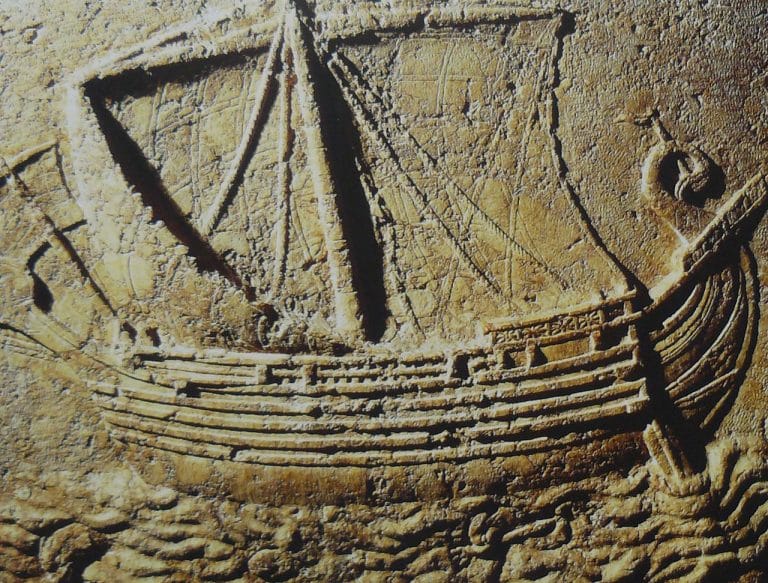
There were no Phoenicians, so we aren’t going to find them. Simply put, that is Josephine Quinn’s thesis in this pioneering study.
Jurrick Oson is a big man, forty-six years old, with muscles bulging inside his bright purple sleeveless T-shirt. He was raised to work around nets, fish, tides, and weather, and his skin is leathery from a lifetime at sea. His boat had always been moored at the end of a dirt track, with shacks and…
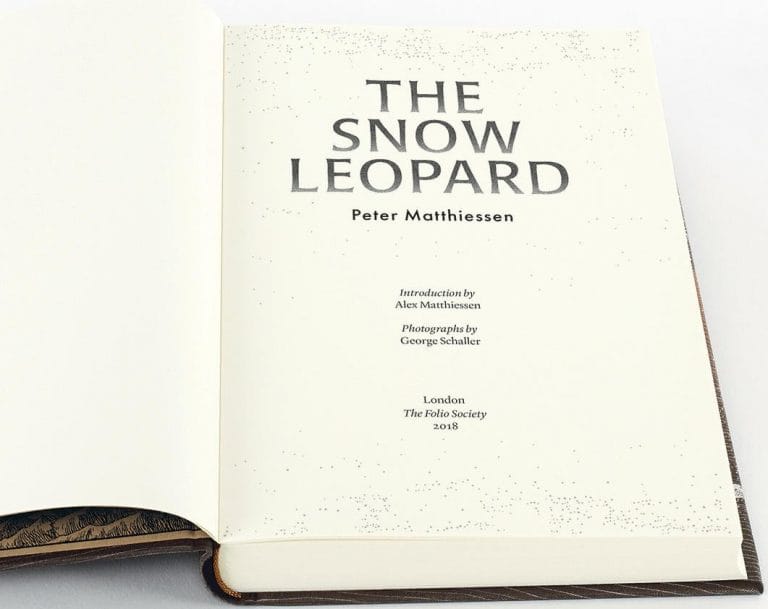
It’s always been a pleasure to handle a Folio Society book, and having three of them at one time, all on Asian themes, was even better.
The internet was supposed to have delivered China into freedom by now. But that optimistic consensus has been proven wrong so far. In their books, academics Rongbin Han and Margaret Roberts, attempt to explain why.
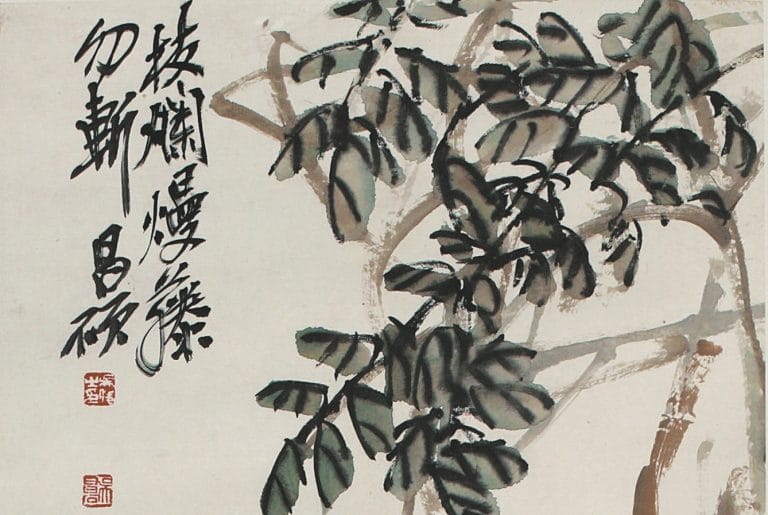
Wu Changshi 吳昌碩 was an extraordinary artist and a major force in late-nineteenth- and early twentieth-century Chinese art. A true literatus in a changing cultural landscape, he combined the traditional scholarly arts with popular subject matter in a manner that would revolutionize painting. The following series of “views” represent an accumulation of forays into an…
The Teatro Dom Pedro V is a gem. Built in 1860, it both looks like and is a traditional theatre, with gold-fluted columns, plaster molding and orchestra pit. It is, for better or worse (and in many ways better), small with fewer than 300 seats. One can hardly think of a more idyllic place in…
If you go into most bookshops in the States for example, there’s a cottage industry of books on the US and China, the US and the Middle East, you go to the UK, there’s a sort of similar cottage industry of books on the UK and France, and France and Germany. But there’s very little…
Americans have been present in the Pacific since the dawn of the Republic. At the time of George Washington’s inauguration in 1789, the country consisted of just 13 states huddled along the Atlantic seaboard, but in the geography of sail navigation Boston and New York were just as close to China as were London, Liverpool,…
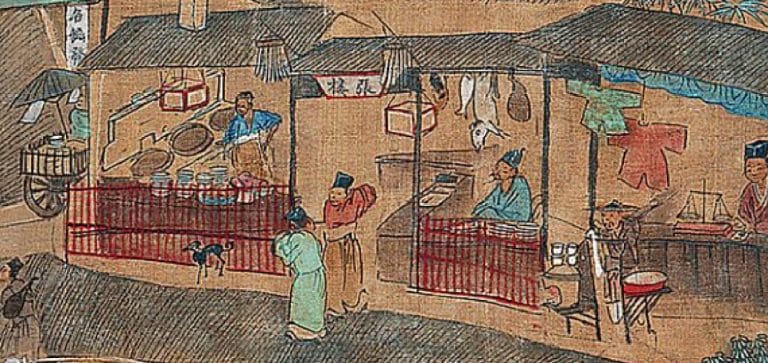
This story is drawn from The Book of Swindles, a collection whose oldest known edition dates to 1617. The author, Zhang Yingyu, collected stories about swindles large and small that are mainly set in the highly commercialized and mobile world of late-Ming China.
Only several poems by the now forgotten 1930s Shanghai poet Shao Xunmei (1906-1968) have previously been rendered into English, making our translation of his two major volumes a first. We have long considered Shao well worth translating, owing as much to his colorful artistic persona as to his verse. The former mostly flowered during his…
In mid-19th century China, after suffering multiple humbling defeats by imperial powers, a movement to modernize China’s military developed. The idea was that the national essence or culture of China could be better defended with superior Western methods and technology than outdated Chinese methods—seen as the extension of a static political culture. That the methods…
The rise of China in the wake of the slow relative decline of the United States has been the overarching narrative of global studies since the beginning of this century. Is this narrative correct? China’s growth is slowing as it reaches middle income status and the United States is still overwhelmingly more wealthy and powerful…
“It is a common rule of propriety that culturally inferior foreign peoples should respect the Central Kingdom.” So begins a 1374 letter from Ming China’s founding Hongwu Emperor to a regional ruler in Japan. It continues: “One principle in both ancient and modern times has been for the small to serve the great.”
A few weeks ago in front of Lincoln Center in New York, while Women in The World Summit was about to start, a woman who seemed to like she could move mountains called Tina Brown was telling me, “I very much liked your description… What was it? ‘Having a sword fight with the ghosts’.”
New operas are not perhaps as rare as sometimes made out to be, but it is nevertheless hard to underestimate the significance of Bright Sheng’s Dream of the Red Chamber appearing at the Hong Kong Arts Festival so soon after its premiere at the San Francisco opera last Autumn.