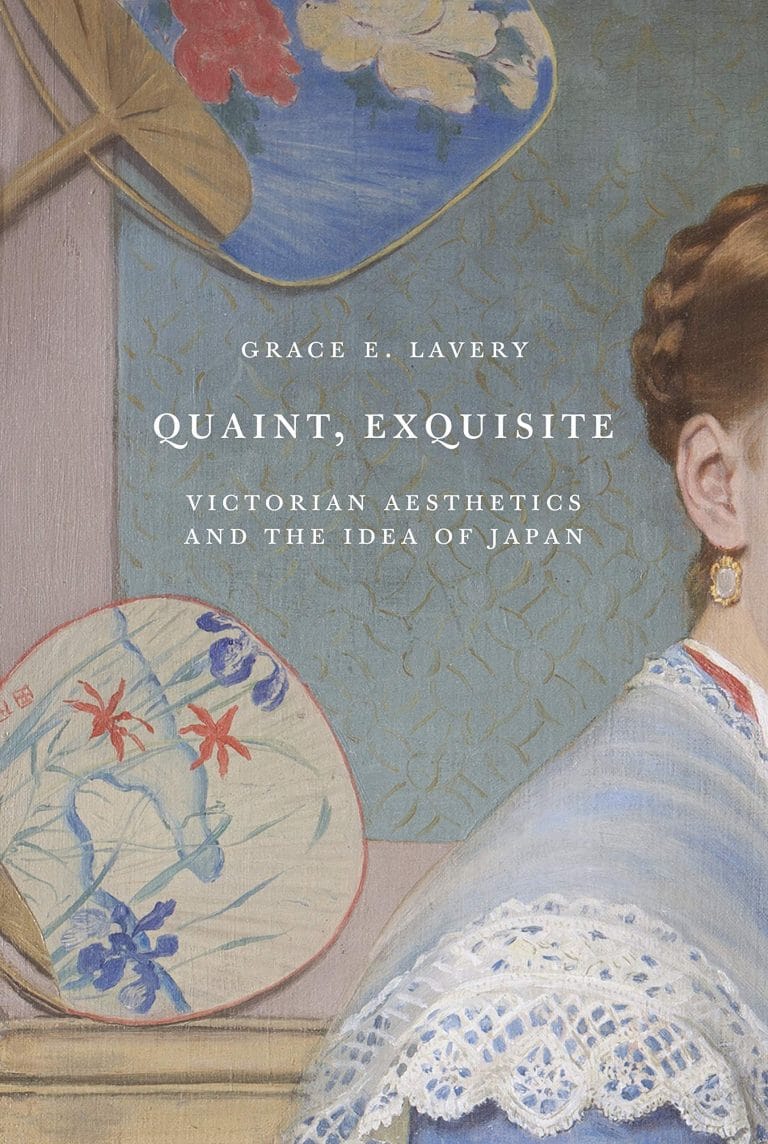
“Sōseki: Modern Japan’s Greatest Novelist” by John Nathan
“Greatest novelist.” I’ve never been much of a fan of someone being dubbed the “greatest” anything, as it assumes there can never have been anyone better and perhaps never will be.
With a surname like Silber, a book on silver is perhaps inevitable. And if you thought a book entitled The Story of Silver: How the White Metal Shaped America and the Modern World and published by the venerable and academic Princeton University Press would be a dull, dense, heavily-footnoted tome, you’d be wrong (although not…

The Earth may be divided among many countries, but since there is only one Heaven, there can be but one tianxia, or “all-under-heaven”. The Chinese concept tianxia might be literally translated into English as “sky-beneath”, and it has been variously rendered as “enlightened realm”, “world-system”, or simply “the world”. To keep Chinese scholars happy, just…
If it hadn’t been for Ezra Pound and a 20th-century literature course at university, I would never have heard of Li Bai, and even then I thought his name was Rihaku, because in 1915 Pound, who knew absolutely no Chinese at all, published a number of “translated” poems by Rihaku in a collection entitled Cathay.
The author and journalist Xinran has written a number of non-fiction books about women in contemporary China, but in her latest book she goes back in time to examine the changes in love and marriage since the Republican era. Much has been written about political, social, and economic changes in China since before the 1949,…

Asians, in general, need little convincing that the United States is, if not an empire per se, at least imperial. The title of How to Hide an Empire might therefore be seen as an attempt at irony.

A tiger hunt! In No Beast so Fierce, Dane Huckelbridge tells the exciting true story of the extirpation of a man-eating tiger in colonial India in 1907. This was no safari with a fleet of elephants and an army of bearers. It was one Irishman with a rifle and three cartridges on foot against a…
In August 1954, the United States revised its revenue code to allow the accelerated depreciation of fixed asset investments. The move was designed to encourage American manufacturers to invest in new plant and equipment. Its actual effect was to fuel an explosion in shopping center construction.
Some international relations scholars and commentators are rediscovering that Eurasia is a geopolitical unit, a “supercontinent”, in the words of Bruno Maçães in his interesting new book The Dawn of Eurasia. Maçães traces the origins of the term Eurasia to Austrian geologist Eduard Suess in 1885, but the idea that Eurasia should be viewed as…

There’s a rather ungrammatical saying which goes “sometimes I eats to live, but mostly I lives to eat.” That’s why we have cookery books; we love to eat and we love the things that go along with eating, namely social interaction and sheer sensual pleasure.
Of the many books about the Cultural Revolution, this memoir by financier Weijian Shan might be one of the most detailed accounts. Out of the Gobi focuses on the author’s harsh years as a “sent-down” youth in a work camp in the Gobi desert, as well as how he eventually makes it out and goes…

When Travis Jeppesen, 37-year-old writer and art critic, spotted the ad offering a one-month study program in North Korea, he didn’t hesitate. Not that he was any wide-eyed naif: he’d visited four times before. But he was done with package tours, with being shuttled from monument to tedious monument. If he were to return to…

Helen Zia’s mother fled Shanghai just before the Communists took control of the city in 1949, but Zia wasn’t aware of her mother’s perilous departure until she was an adult. Roughly a million people from Shanghai became refugees in the late 1940s. While it has hardly been forgotten, the People’s Republic has never recognized this…
Pity poor Jahangir, sandwiched between his father Akbar I “the Great” and his son Shah Jahan, the builder of the Taj Mahal. No wonder he often gets lost in history, and, if not quite lost, dismissed as an occasionally cruel, always pleasure-loving drunkard who was led around by his wife Nurjahan and whose accomplishments, such…
Writing the truth to power is difficult, courageous, and uncertain in its effect. The importance of the late Gao Hua’s How the Red Sun Rose is evidenced by the fact that it is banned in China despite having been first published in Chinese in Hong Kong in 2000 and reprinted twenty-odd times. The book is,…