“How China Escaped the Poverty Trap” by Yuen Yuen Ang
One of the defining debates in economic development theory is one of chicken-and-egg: whether good institutions and governance are needed for markets and growth, or vice versa.
One of the defining debates in economic development theory is one of chicken-and-egg: whether good institutions and governance are needed for markets and growth, or vice versa.
In 1900 Mirza Kalich Beg, celebrated as the first Sindhi novelist, translated a 13th-century Persian text called Chachnama into English. Ali Kufi, the author of Chachnama, in turn, claimed his work was a translation of an 8th-century work in Arabic. The English-language Chachnama is thus apparently twice removed from the ever-elusive original text, a rumoured…
Arabia Felix: Happy Arabia. Who wouldn’t want to go there and find out why it was such a happy place? In fact, in 1761 not that many Europeans were going there, which left an opening for the culturally and scientifically minded king of Denmark, Frederik V, to make a name for himself and his country…
The prolific British historian Niall Ferguson contends that the Second World War began in July 1937, when, after an “incident” at the Marco Polo Bridge on the outskirts of Beijing, Japan sent five divisions to Northern and coastal China. By the end of the year, more than 800,000 Japanese troops occupied 150,000 square miles of…
MacArthur hardly appears. The spies were rank amateurs. But once you get past the misleading title, MacArthur’s Spies is a well-written piece of work with a lot to say about life in occupied Manila during World War II.
All too many places have the form of democracy—elections—without the substance. Hong Kong, just about uniquely, has the opposite: most of the substance—a free press, independent courts, rule of law, privacy protections, etc.—without the form. The territory suffers having a significant democratic deficit, a situation that Christopher Patten, the “last governor”, famously called “liberty without…
“Finance is the lifeblood of the modern economy” has become something of a stock phrase for Chinese policymakers over recent years, uttered most recently by Xi Jinping as part of his speech to the Belt and Road Forum in Beijing in mid May. Although this sounds like a capitalist mantra, what precisely might be meant…

Ronald McCrum is a retired British army officer, and in his prologue he sets out his conviction that in previous accounts of the fall of Singapore too much blame has been attributed to the military and not enough to the “seriously flawed” civil administration.
The fugitive ran north beside the railway tracks, the bleak wastes of the Gobi blanketed in darkness, towards the streetlamps of Zamyn-Üüd glowing faintly in the distance. By luck passing too close to a sentry tower to be visible on radar, Xu Hongci soon realized that the lights of the Mongolian border town were now…
“It is a common rule of propriety that culturally inferior foreign peoples should respect the Central Kingdom.” So begins a 1374 letter from Ming China’s founding Hongwu Emperor to a regional ruler in Japan. It continues: “One principle in both ancient and modern times has been for the small to serve the great.”

It might be thought that all that can be said about earlier European contacts with India has been said, and that no further interesting approach to the study of those contacts could be developed. Sanjay Subrahmanyam’s Europe’s India: Words, People, Empires 1500-1800 proves how wrong such a supposition might be.
The Circassian sounds like the name of a film; there’s more than enough material here for one. Eşref Bey, or Eşref Kuşçubaşı or any of the other names by which he went, played many roles in his life: brigand, family man, military leader, spy, rebel. He crossed paths if not quite swords with TE Lawrence—Lawrence…
It is not surprising that writers in the Indian sub-continent should seek to redress the balance in accounts about what happened there when it was part of the British Empire.
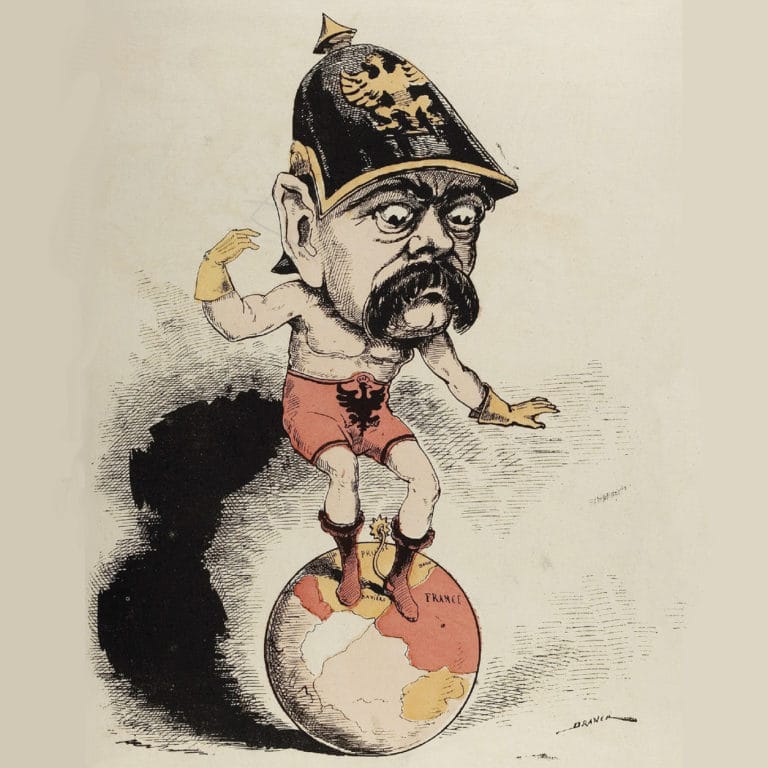
It is important for statesmen and policymakers to study and understand history, but the use of historical analogies to inform policy is fraught with dangers. The United States and its allies discovered that the “lessons of Munich” of 1930s Europe, for example, were not easily translatable to wars on the Korean peninsula and later in…
The recurring themes of Manchuria’s history—and Empire and Environment in the Making of Manchuria, edited by Norman Smith—are colonization and the environment. Over centuries, Manchuria—the region covering the remote northeast of modern-day China—has been fought over by competing imperial powers. Its geographic location at the intersection of three of the 20th century’s most powerful empires—Russia,…