“Enheduana: The Complete Poems of the World’s First Author” by Sophus Helle
The Mesopotamian high priestess Enheduana lived over 4,000 years ago, but her words ring down to the present: “I am Enheduana.”

The Mesopotamian high priestess Enheduana lived over 4,000 years ago, but her words ring down to the present: “I am Enheduana.”

Sikhism, born in India, about six centuries ago, is not a religion that has travelled far and wide the way Buddhism did in ancient times, and Hinduism continues to do even today through concepts of yoga, karma and so on. As the Sikh diaspora in the West struggles with its identity in contemporary times, there…

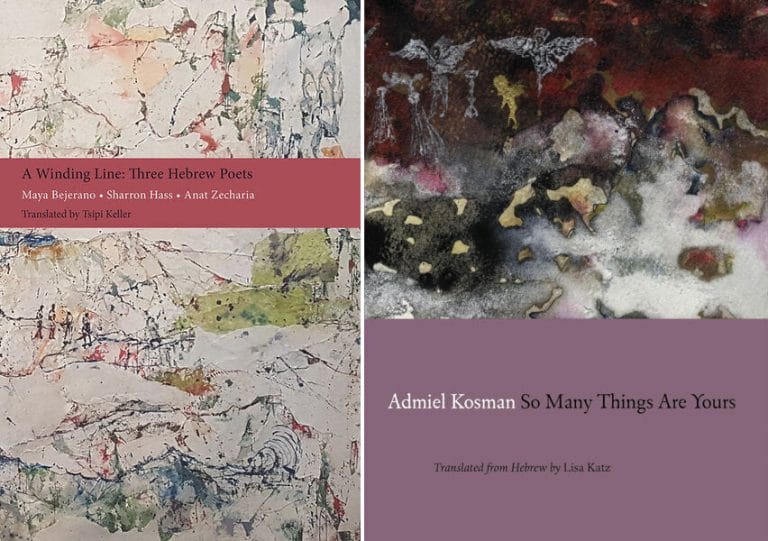
Hebrew is unique, an ancient tongue that was all but lost for millennia as a spoken language, but was revitalized in the late 19th century and is now the official language of Israel, a country of nine million. Despite this relatively small number of native speakers, Hebrew literature is robust, yet Hebrew literature in English…

Derek Chung is not only a prolific poet, novelist, and essayist, he’s also an acclaimed translator that has brought work from Li-Young Lee, Carl Sandburg, Williams Carlos Williams and others into Chinese. Now a new English translation of his poetry collection, A Cha Chaan Teng That Does Not Exist, from May Huang, brings back to…

When Ping arrives to live in New Zealand in the 1960s, the young mother from Hong Kong is expecting “paradise”. On her first night, Ping compares her new home with her homeland.

A family grocery store is the primary backdrop for Korean American writer Rosanna Young Oh’s debut poetry collection The Corrected Version: a backdrop refracted by memory and myth. Taken at face value, the grocery store—owned and run by Oh’s immigrant parents—represents the regular mundanity, tediousness and humiliation that accompanies the experience of starting over in…

Sweet malida is a dish made from rice grains softened in water mixed with sugar and dried fruit and nuts. It’s enjoyed in Afghan, Indian and Pakistani homes, and it’s also a dish popular with the Bene Israel, a Jewish community with a 2000 year history in India. Zilka Joseph has written before about her…

When Mark Twain interviewed the leader of the Mormon Church, Brigham Young, in 1861, he found the religious patriarch mightily preoccupied with the problems of equal treatment for his 56 wives. Young told Twain of gifting a handkerchief or a fan to one woman; before long, all the other wives clamored for similar attentions. Polygamy’s…

Deeply experimental, creative and thought-provoking, From From by leading Korean-American poet Monica Youn, looks at the complexity of race through myths, history and popular culture, comparing the ways “otherness” is seen in both East Asian and Western cultures and norms. Through these complex, original and tragic-comic poems, the poet explores the deep roots of human…

Issues of identity take center stage in Mary Jean Chan’s new poetry collection Bright Fear. Chan’s poems deal with a variety of uncomfortable personal experiences: growing up queer in a Chinese household, dealing with racism and racial prejudice when moving to the United Kingdom, and grappling with learning—and then eventually writing in and making a…

“Take up the White Man’s burden— / Send forth the best ye breed— / Go bind your sons to exile / To serve your captives’ need,” starts Rudyard Kipling’s notorious poem of American expansionism in the Philippines, “The White Man’s Burden”. Those lines will ring familiar to many, particularly those who have received an education…

Kit Fan’s latest poetry collection, The Ink Cloud Reader, hinges on anticipation of change. In “Cumulonimbus,” which opens the main section of the book, Fan compares the current state of his writing career to the moments before a thunderstorm breaks.

There once was a tradition of storytelling that enthralled kings and beggars, mixing simple language and lofty poetry, while deploying ingenious tricks to retain the audience’s attention. Usually there were three or four stories embedded one within another, like a Russian doll. Just when you thought you were coming to a denouement, a new story…

A Bad Girl’s Book of Animals was first published by Harcourt, Brace & World in 1969, when there were very few Asians with a poetry collection out in the US—and has now been put out again by Singaporean publisher Ethos with an excellent foreword by poet Tse Hao Guang.

The poet Ghalib took a broad view about spirituality and ritual. He told a British friend he was half a Muslim, because while he wouldn’t eat pork, he enjoyed as hurrah peg of whiskey. Did Ghalib retain a medieval belief in cultic efficiency, or did he have a modern’s skepticism about revealed religions in general?…