Podcast with Kerry Brown, author of “China Incorporated: The politics of a world where China is number one”
How do we talk about China? It’s a question every analyst, academic, policymaker, and reporter probably needs to ask themselves.
How do we talk about China? It’s a question every analyst, academic, policymaker, and reporter probably needs to ask themselves.
In Kerry Brown’s several decades of working in and observing China, he has developed a reputation as one of the more sober and thoughtful observers of the country. For those who value logic and epistemology over rhetoric, Brown’s latest (brief) book won’t disappoint.
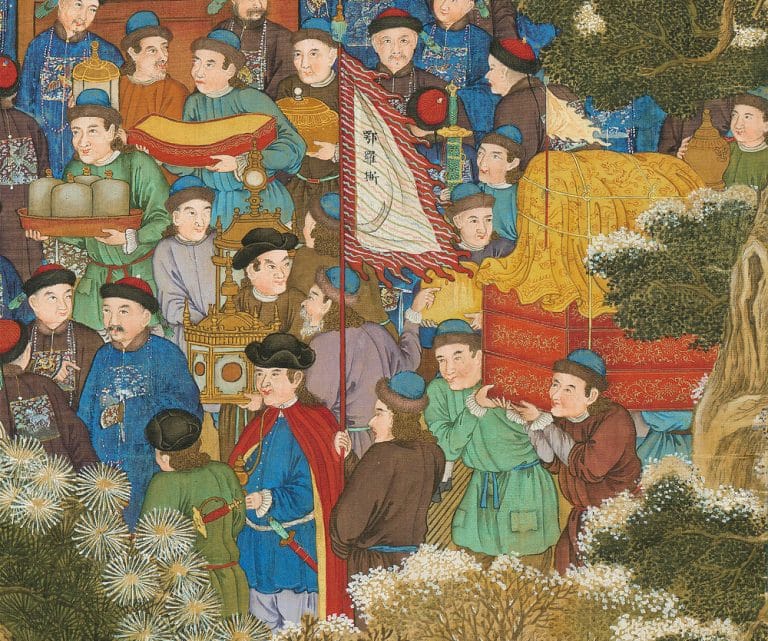
If there’s a starting point to the relationship between Russia and China, it’s likely the 1650s—when Manchu and Cossack forces clash near Khabarovsk, and when Russia sends its first, and unsuccessful, embassy to China.
Philip Snow opens his engaging, and refreshingly straightforward, history of Sino-Russian relations with an observation born out ever more frequently in the opinion pages of current (at least English-language) newspapers: “Ever since they emerged from the rubble of the Second World War Western societies have looked with apprehension on either Russia, or China, or both.”…
In this book, Barney Walsh presents an in-depth study of China’s involvement in East Africa through specific focus on President Museveni of Uganda who has been uniquely influential in utilising China’s presence to shape regional security dynamics in his favour.
“We’ll compete with confidence; we’ll cooperate wherever we can; we’ll contest where we must.” That’s the new China strategy as outlined by US Secretary of State Antony Blinken earlier this year. But just exactly how countries should deal with China—including working with it, when the times call for it—is perhaps the thorniest question in international…
Most people tend to mark the beginning of Indian international relations thought to Nehru, and his self-proclaimed attempt to build a true non-aligned movement and more enlightened international system. But Indian thought didn’t emerge sui generis after Indian independence, as Rahul Sagar notes in his edited anthology, To Raise a Fallen People: The Nineteenth-Century Origins…
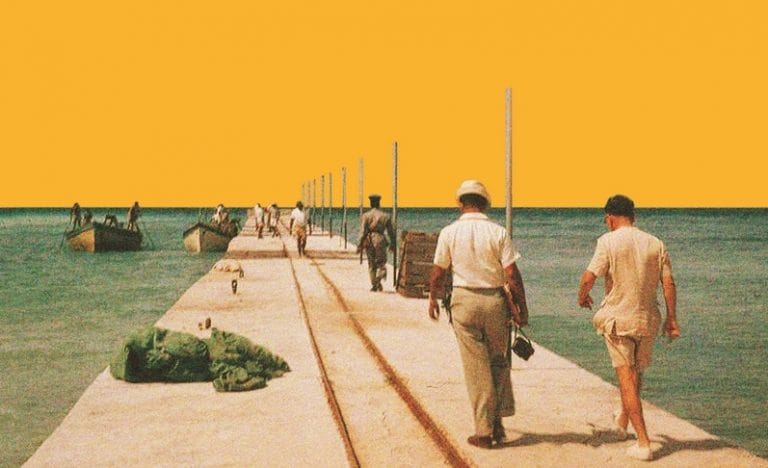
For a book that is fundamentally about hope, Philippe Sands’s The Last Colony is a depressing read, not just its in its tale of colonial injustice, but also in its recounting of the US and Britain’s refusal to abide by the norms, the “rules-based order”, that they demand of others. “One rule for you, another…
Jawaharlal Nehru, India’s first Prime Minister, was the earliest advocate of the Non-Alignment Movement, a doctrine that enabled the newly decolonized nations to keep away from the larger world politics of the Cold War. Additionally, Gandhi, the Father of the Nation, took the stance of non-violence that, in the sphere of international politics, restrained India…
The first diplomatic mission from Brazil to China took place from 1879-1882; it also included Brazil’s first circumnavigation of the globe (sailing east in this case). An account—Primeira circum-navegação brasileira e primeira missão do Brasil à China (1879) by Marli Cristina Scomazzon and Jeff Franco—has recently been published. This excerpt about the delegation’s stop-over in Hong…
In 1973, the Philadelphia Orchestra boarded a Pan Am 707 plane in Philadelphia for a once-in-a-lifetime journey: a multi-city tour of Maoist China, months after Nixon’s history-making visit. There was drama immediately after they landed in Shanghai. Chinese officials asked for a last-minute change to the program: Beethoven’s Sixth. After protests that the Orchestra didn’t…
In the early 1970s, sports may have sparked a thaw in Sino-US relations, but it was classical music that had more lasting influence and would bring Chinese and American musicians together for the first time in the People’s Republic. In 1973, Zhou Enlai invited the Philadelphia Orchestra to perform in Beijing and Shanghai, thus becoming…
Myanmar—or Burma, if that’s the name you prefer—is one of a small set of countries: nations that, despite natural bounty and a vibrant population, remain underdeveloped due to conflict, economic mismanagement and international isolation.
In Burmese Haze (a reference to George Orwell’s classic novel), former US official Erin Murphy gives a personalized history of the past fifteen years of Myanmar history, with particular focus on, if not always from the perspective of, US policy towards this often opaque Southeast Asian country. Murphy was herself in the thick of it,…
As China and Russia have grown closer over the past few years, Sino-Russian relations have been the subject of new attention; Russia’s invasion of Ukraine has thrown these into even higher relief. Here is a re-cap of books which cover the past and present of the subject.