“Why We Swim” by Bonnie Tsui
We first learn to swim in the womb, Bonnie Tsui writes, and while “not everyone is a swimmer … everyone has a swimming story to tell.”

We first learn to swim in the womb, Bonnie Tsui writes, and while “not everyone is a swimmer … everyone has a swimming story to tell.”

Umm-El-Banine Assadoulaeff was born in 1905 into one of Baku’s wealthiest families: her peasant-born great-grandfather had discovered oil on his land. She left in 1923, after the Revolution, for Istanbul and then Paris, whence she never returned. Days in the Caucasus, originally published in Paris in 1945, is her memoir of those years.

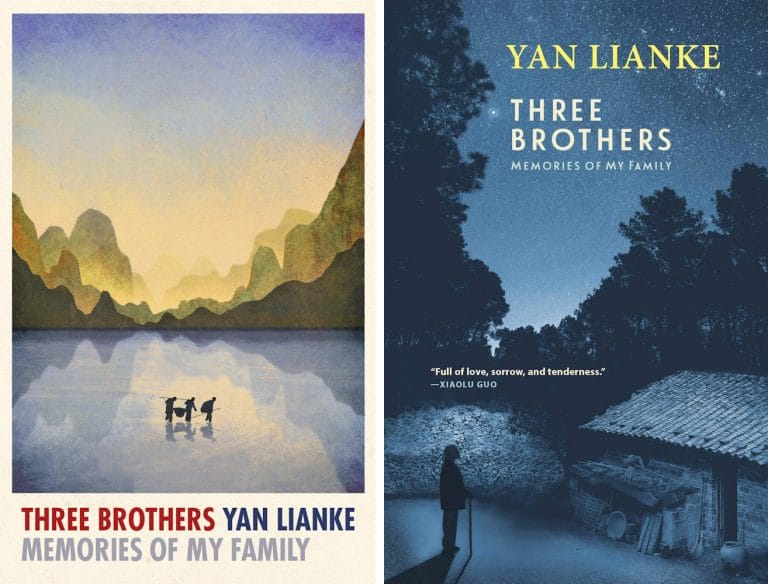
As it does to our lives at present, death—virulent, episodic, unbidden—haunts Yan Lianke’s memoir Three Brothers. First published in 2009, and rendered into English by translator and Sinologist Carlos Rojas, it is an elegiac homage to the people and places no longer present for Yan (at least not physically), who has spent the better part…

Perhaps because it transcends language and even thought, there is something about food that both reinforces and crosses culture. Food has been a cultural and emotional touchstone for Nina Mingya Powles since her earliest days.
Rated R Boy: Growing Up Korean in 1980s Queens is a memoir of one family’s move from South Korea to the United States. Told by its child narrator, it describes life in mid-1970s Korea and compares it to life in America, where he is exposed to things that challenge what he’d held to be sacrosanct.

When Sophie Cairns’s parents announced they were leaving Hong Kong, where she was born and raised, she vowed to return. A teenager, biracial and fluent in Cantonese, she never felt like she belonged in the UK, and longed for the Hong Kong of her childhood.

When Emily Clements finds herself alone in Vietnam after her best friend suddenly departs for Australia, she tries to make the best of her opportunity to see Southeast Asia. Only nineteen, Clements quickly picks up the language and goes out of her way to meet Hanoians. This memoir of her year in Vietnam is not,…

The first two decades of the 20th century saw the emergence of urbanism in sociology and philosophy: Georg Simmel wrote about the metropolis and mental life, and Walter Benjamin penned portraits of Western cities like Paris and discussed the work of Charles Baudelaire and Edgar Allan Poe in the context of the flâneur, the dandy…

Agnès Bun’s collection of vignettes echoes Theodor Adorno’s famous comment that “There can be no poetry after Auschwitz.” All debates surrounding the quote aside, how does one manage to express anything at all when faced with the extremes of human suffering? I guess one way would be poetic language, because it oozes out of the pages…

In the 1940s, a third of Baghdad was Jewish. Today, fewer than a dozen remain.

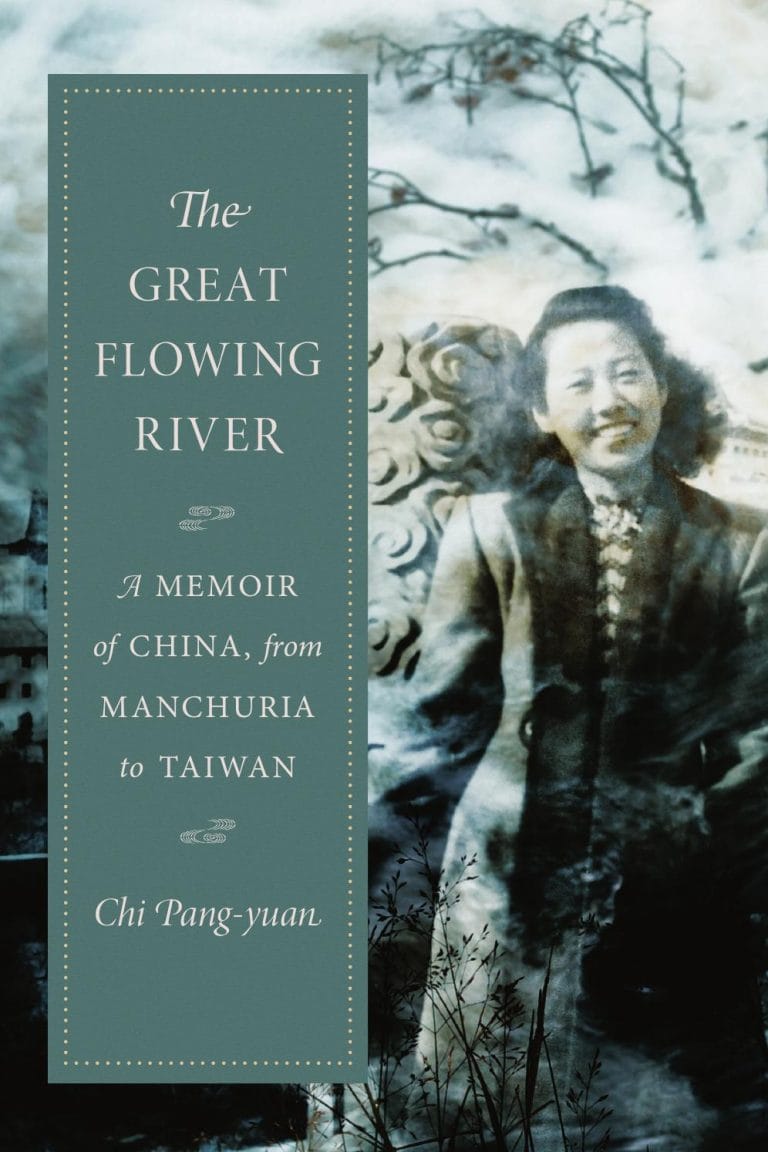
When Chi Pang-yuan was a young girl, her father Chi Shiying was wanted by warlord Zhang Zuolin and his son, Zhang Xueliang. The crime was siding with a rival general, Guo Songling, at a time when the Republic was still relatively young and northeast China in constant turmoil. For most of her childhood and teenage…

The twilight of the Ming Dynasty in Southern China, with its elegant courtesans, poets and playwrights, pageants, drinking bouts and boat rides, bedazzled the generation which witnessed its fall in 1644. It inspired a literary legacy which has fascinated readers ever since. The Ming twilight in “Southland” is immortalized in Kong Shang-Ren’s (d. 1719) classic…

Year of the Rabbit is a graphic memoir that follows the journey of Lina, Khim, their son Chan, and their extended family members, as the Khmer Rouge take over Phnom Penh. Graphic in format, graphic in content, it is a story of resilience and hope, a profound testimony to one of the greatest tragedies of…

In 1935, Ruth Day paid a six-week visit to her mother and step-father who were at that time living in Shanghai. When she returned, she published a short book on the trip. The book had a run of just 200 copies and seems to have quickly disappeared—but at least one copy found its way to…

Amber Scorah’s time in Shanghai was not the typical expat sojourn. “Revolutions do not come without violence,” she writes in her new memoir. “If I hadn’t come to China, I would never have even noticed. Somehow, in one of the most restrictive places in the world, I had found freedom.”