Royal patronage gave impetus to great works of art. In a period when artists’ craft required years of apprenticeship, when the raw materials included costly powders and rare preparations, when collaboration among a large number of artists was required, the final result is practically a celebration of the presiding monarch. So it is with two manuscripts from the British Museum, covered in Treasures of Herat, Addendum 25900 and Oriental 6810. They represent the apogee of the Herat school of art, under the last great Timurid ruler, Sultan Husayn Bayqara (1438-1506).
Persia
Of the three empires that dominated late antiquity, Rome, China and Iran, it is the last whose legacy we understand least. “Proportionally to its historical significance, Iranian Inner Asia in this period is probably the least known and most grossly understudied time and place in world history,” writes Minoru Inaba in the introductory essay to The History and Culture of Iran and Central Asia.
“Ancient Iran and the Classical World”, an exhibition currently running at the J Paul Getty Museum, is the second in a series that examines how ancient Greece and Rome interacted with the other civilizations of the Mediterranean, the Middle East and beyond. A sequel to the inaugural exhibition, “Beyond the Nile”, the current exhibition considers the significance of ancient Persia (Iran) and follows interactions between Persia and the Classical world from the Achaemenid Empire (550-330 BC) through the Arab invasion in 638 BC.
In one sense, this book is the story of Agnès Benoit’s decades-long fascination with a princess, whose statue of chlorite and steatite beguiles us from a distance of 4,000 years. Her mysterious sisters began to appear in antique shops in Kabul in the 1960s. In the beginning, we knew little to nothing about the civilization that produced them. They dazzled with their fine workmanship, the elegance of their shapes, the feminine beauty and power they conveyed.
If you happen to have a few hours to spare and a swash to buckle, here are two rousing epic adventures from Persia and the Middle East to fill in the time. If we think of Persian epics, the two titles which probably come to mind are Ferdowsi’s Shahnameh and Vis and Ramin by Fakhruddin As’ad Gurgani, both available in excellent Penguin translations by Dick Davis. There’s also Matthew Arnold’s Sohrab and Rustum, which is based on an episode in Ferdowsi’s poem. As for Arabic ones, the massive (and anonymous) Thousand and One Nights is the best-known.

The adventures of Samak, a trickster-warrior hero of Persia’s thousand-year-old oral storytelling tradition, are beloved in Iran. Samak is an ayyar, a warrior who comes from the common people and embodies the ideals of loyalty, selflessness, and honor—a figure that recalls samurai, ronin, and knights yet is distinctive to Persian legend. His exploits—set against an epic background of palace intrigue, battlefield heroics, and star-crossed romance between a noble prince and princess—are as deeply rooted in Persian culture as are the stories of Robin Hood and King Arthur in the West. However, this majestic tale has remained little known outside Iran.
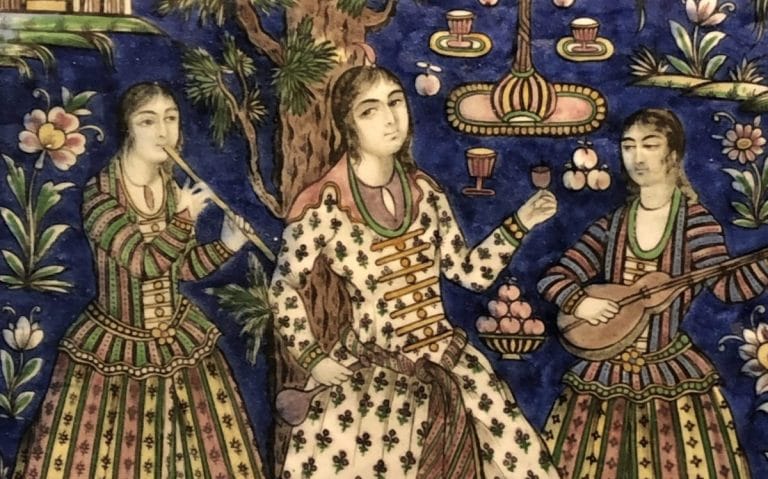
They gaze at you, the fashionably-attired youths of Esfahan, from a distance of 300 years. Swaying like cypress trees, their tresses floating in the air like clouds, their faces surrounded by peach fuzz, they smile like the Gioconda and with more mystery. Who are these young men and what do they say to the viewers? After the lucidity of the great 16th-century Persian and Mughal painters like Behzad and Sultan Mohammad, who painted kingly battles and hunts, the 17th century brings us the works of Reza Abbasi and Mohammad Qasem, and their ambivalent but sexually-charged portraits of young men and occasionally young women.
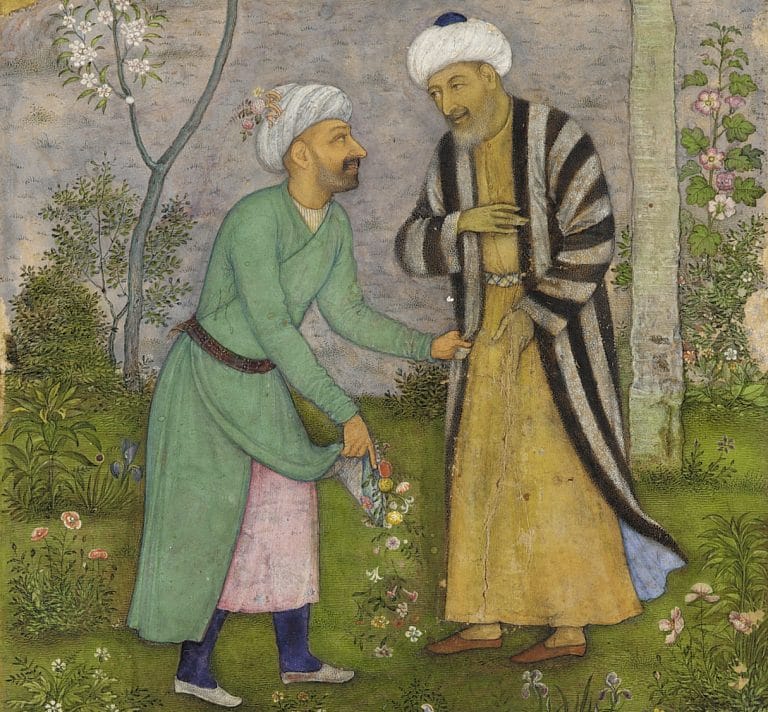
The European Enlightenment relished Sheikh Sa‘di of Shiraz, 13th-century Persian poet and moral philosopher for his work, The Rose Garden, a witty mixture of prose and poetry, morality and ribaldry, lyric and proverbial wisdom.
The “diva” is a common trope when we talk about culture. We normally think of the diva as a Western construction: the opera singer, the Broadway actress, the movie star. A woman of outstanding talent, whose personality and ability are both larger-than-life.
Many years ago, before international direct dial, two young telephone operators, a man in Zurich and a woman in Cairo, began to pass the milkman shift chatting together. They became friends, decided to meet, and married. The language of their courtship was French. This was the day when many international organisations, including the Global Postal Union that coordinated the national PTTs (Post, Telegram and Telegraph), considered French an official language.

You must be logged in to post a comment.