“Early Southeast Asia: From First Humans to First Civilizations” by Charles Higham
Quite a lot of archaeological water, to say nothing of history writing, has flowed under the bridge since Early Southeast Asia’s first edition in 2014.
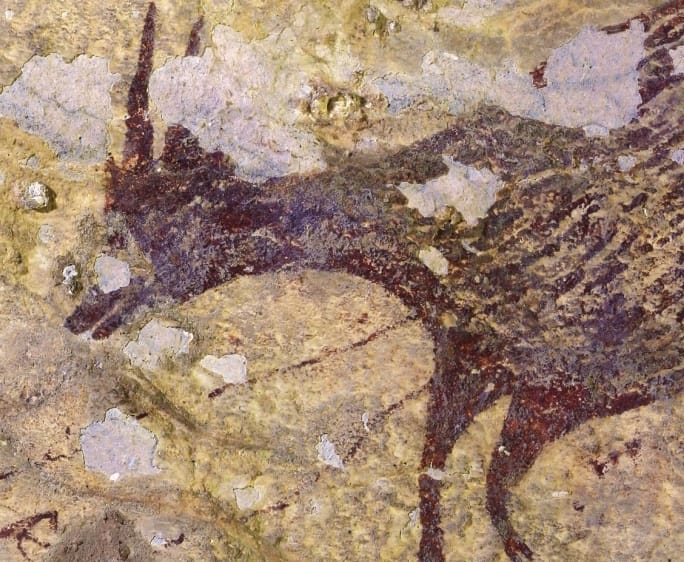
Quite a lot of archaeological water, to say nothing of history writing, has flowed under the bridge since Early Southeast Asia’s first edition in 2014.
In Praise of Floods is the final book by James C Scott, a renowned anthropologist and political scientist, published posthumously after he died in 2024. Much of Scott’s earlier work has focused on agrarian politics and acts of political resistance, this is a rather different book, focusing instead on the life history of a river,…
Does the world need a 700-page book about one people within the Indian Union? Considering that Gujaratis number 65 to 70 million, you could argue that they deserve as much attention as, say, the French. Indeed, Ted Zeldin’s “The History of French Passions” only covers the period 1848-1945 in twice as many pages. Western readers…
Some years back as a graduate student enrolled in a mandatory DEI training for college teaching, I distinctly recall raising a question about dealing with the unabashed misogyny, depictions of sexual violence and child abuse bursting out of the primary sources so often used in the history classroom. Encountering More Swindles from the Late Ming:…

China’s history under the Communist Party has been demarcated, like geological ages, into neat, self-contained phases. There is the Great Leap Forward (1958-62); the Cultural Revolution (1966-76); and Reform and Opening (December 1978-1989). The bits outside these branded groups of years, including the first nine years of CCP rule, can feel a little fuzzy, while…
The Dead Sea—and its environs of Jericho and the Jordan River—is perhaps second only to Jerusalem as a place where history, archaeology, religion, politics and international relations meet and mix. It is, as Nir Arielli points out in his new book, quite a bit older, and today is as much a place of environmental as…
Released in late 2024, 100 years after the most infamous mountaineering event in history, Other Everests: one mountain, many worlds is not a retelling of the Mallory expedition, but rather an attempt to widen the framing of Everest beyond western mountaineering exploits. Everest has often been seen through the eyes of western explorers and been…
After student protests toppled Bangladesh prime minister Sheikh Hasina last year, New Delhi and Dhaka have been at odds. Indian politicians complain about Hindus being mistreated in the Muslim-majority country; Bangladesh’s interim government fears that Hasina may launch a bid to return to power from India.
Chie Ikeya’s InterAsian intimacies across race, religion and colonialism focuses on inter-Asian marriage in colonial Burma. Ikeya argues that over time these marriages became “the subject of political agitation, legislative activism and collective violence”.
China has been one of the leading sources of overseas visitors to the Maldives in recent years. Bin Yang, a professor of history at City University of Hong Kong, makes the argument in Discovered but Forgotten that this is to some extent a rerun of the situation in the 14th and 15th centuries when the…
A picture, they say, is worth a thousand words. Gonçalo Lobo Pinheiro’s photographs of Macau are certainly worth that and more. This latest collection consists of 100 photos taken during the last five years, a period which included Covid-19. The photojournalist, who been resident in Macau for well over a decade manages both to capture…
Most people “collect” stuff, but Paul Bromberg is a “collector”, the difference being that he proceeds with intent and purpose, focusing on a relatively narrow group of objects.
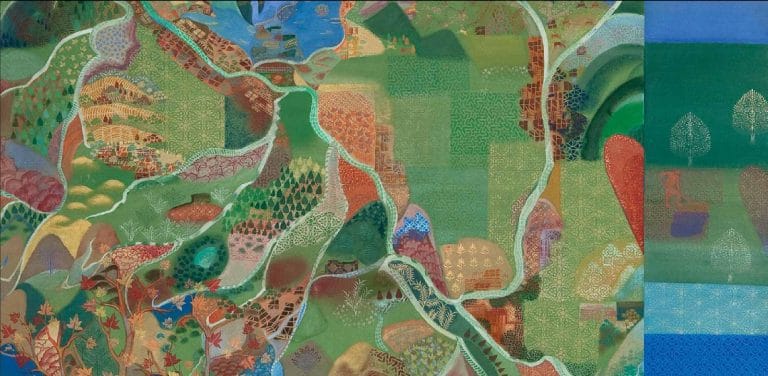
The word miniature in fact comes from the Larin miniare or “to paint red”; early European miniatures—palm sized pieces that are parts of manuscripts and books facing a verse or an intense moment in a story or placed behind one—were initially delineated in that pigment. There was an Asian tradition of such painting as well,…

It is a tribute to the literary diversity of India that this anthology of ten excerpted classics includes eight or nine different languages. They also represent four different religious traditions. Yet the texts are unmistakably Indian, sharing a love for words, sounds and images and exhibiting an exuberance rarely found in other cultural traditions.
Pirates and piracy seem to be about as universal as death and taxes, and Chinese and Western piracy bear much in common, from violence and hardship, to oppression from the authorities as both cause and consequence, as well as a certain amount of popular romanticism. In Outlaws of the Sea, Robert J Antony provides an…