“Maoism: A Global History” by Julia Lovell
Despite Chinese amnesia and Western disdain, Maoism’s impact on history has been global and persistent.
Despite Chinese amnesia and Western disdain, Maoism’s impact on history has been global and persistent.
Hagiography. What a fascinating word; at one time I thought the “hag” implied the study of witches! The word, which of course literally means “writings on [the lives of] saints”, has also taken on a pejorative meaning, in the sense that since saints are supposedly exceptionally good people, even considered “perfectly-formed at birth” as Alexander…
Although Aigerim Tazhi is Kazakh, she writes in Russian. “I live in Kazakhstan,” she is quoted in translator J Kates’s introductory essay as saying, but I was born in the Soviet era. We had a common country then, a common capital (Moscow), and the main language was Russian. Therefore, in school we were taught…
An imagined love affair between two great architects of the 20th century is the foundation of this lyrical novel by Shiromi Pinto.
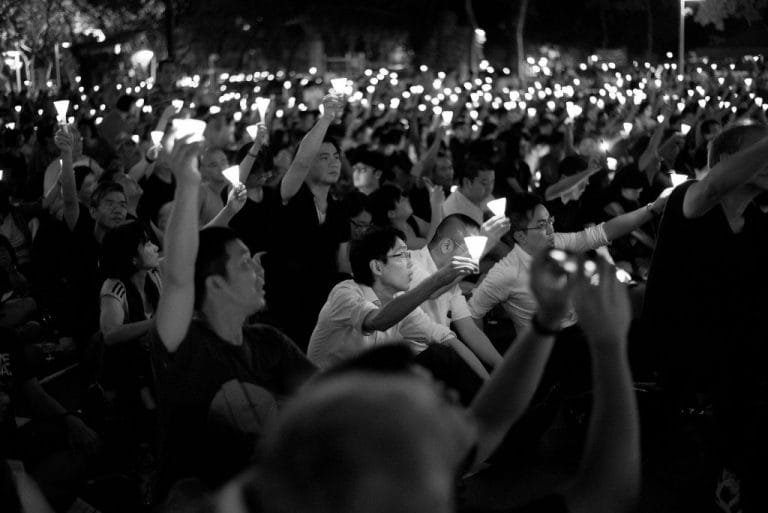
It’s a sign of the times that this novel about Hong Kong’s June 4th vigils, Chinese dissidents, and village protests seems almost quaint compared with recent real-life events. In the same way, Chinese Spring is an apt story. While Hong Kong has endured weekly protests, police clashes and mass triad attacks over the past two…

The cover of Somewhere Only We Know, Maurene Goo’s latest young adult novel, isn’t inordinately different from other contemporary romantic comedies: a young Asian woman is seated while a young Asian man leans into her back, only part of his face and an arm are visible. Yet the story is unusually set almost completely in…
It can be difficult to remember today, but before 1978—the beginning of the reform era—famines struck China with depressing regularity. Many (or perhaps most) of them were human-induced. That certainly goes for the terrible famine of 1959-1961, which resulted from Mao Zedong’s so-called “Great Leap Forward” economic development program. A key element of this murderous…
A pious canine argues with a camel, a windy night lasts for years, and a Javanese keris blade is wielded to murder a village witch in Fairoz Ahmad’s enchanting short story collection Interpreter of Winds. A quick and charming read, this book includes four magical tales across Islamic communities in the Indonesian and Malay world….
Anyone who has ever studied literature has probably come across the now rather hackneyed line by the American poet Archibald MacLeish (1892-1982), “A poem should not mean, but be.” Steven Carter, the Yamato Ichihashi Emeritus Professor of Japanese History and Civilization at Stanford University, notes that the Japanese poet Shōtetsu (1381-1459) expressed similar sentiments long…
The backstory—as given in the publisher’s blurb—to this English-language debut seems itself worthy of at least a short story: One of Taiwan’s most celebrated authors, Wang Ting-Kuo … began writing fiction when he was 18 and quickly took the literary world by storm, only to disappear from the literary scene when his soon-to-be father-in-law…
A new kind of politics is taking over the world, leaving most of those who thought they understood the business quite baffled. Very few were able to predict the movement across the world that led to the rise of what is now described—inevitably, a posteriori—as right wing populism.
Society consists of more than just people; many studies of society, indeed, focus on people’s interaction with material things. Fewer delve into the relationships between people and animals.
At the end of a network of quiet alleys just to the east of Beijing Railway Station sits Kuijiachang Hutong—Armor Factory Alley. Few stumble across it; you have to search it out. In imperial times, as the name suggests, this was an area dedicated to the manufacture of munitions and the paraphernalia of war. It…
Much of early-modern history, up until the early 20th century, was characterized by empire—not just or even particularly the colonial projects of Britain and Spain, but contiguous empires of Russia, Austria-Hungary, China and the Ottomans. These latter were multi-ethnic and—using modern sensibilities—in some ways multinational edifices. They all came to an end around the time…
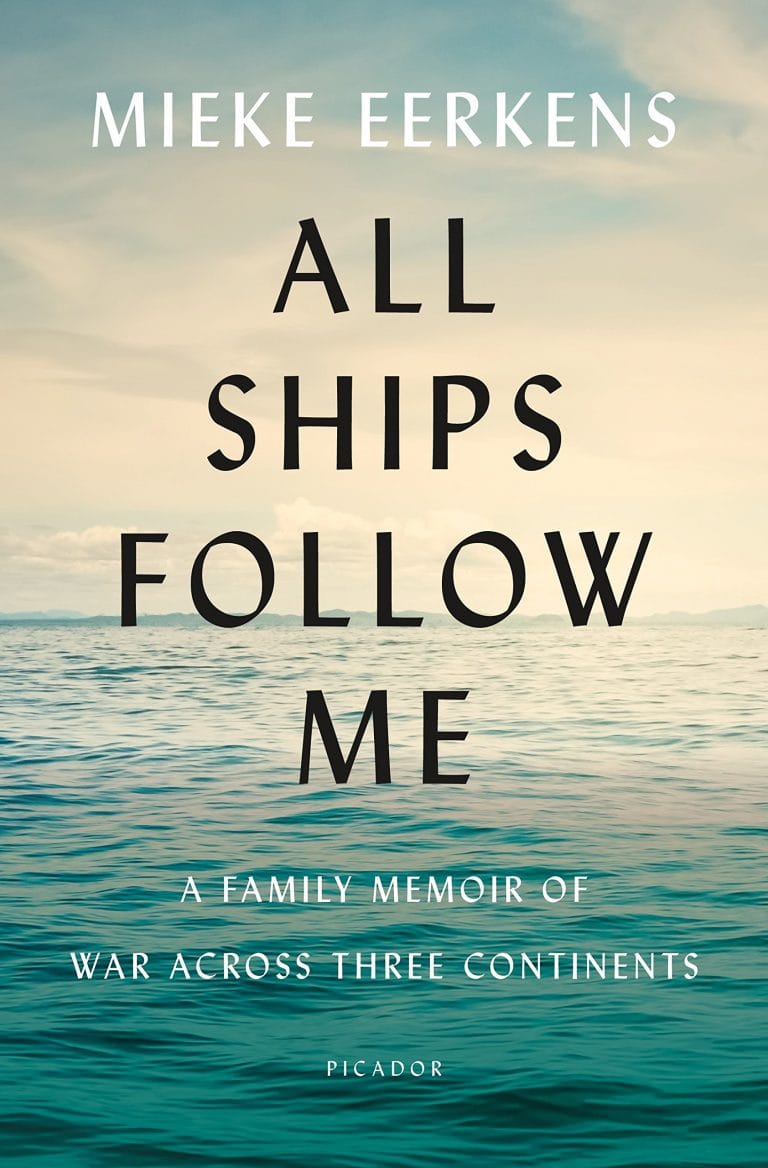
Relatively little had been written about Indonesia during World War II and the conflict between the Dutch and Japanese in the Pacific. In her recent memoir, All Ships Follow Me, Mieke Eerkens starts with the complexity of her father’s upbringing in colonial Indonesia. The son of a Dutch family that had lived in what was…