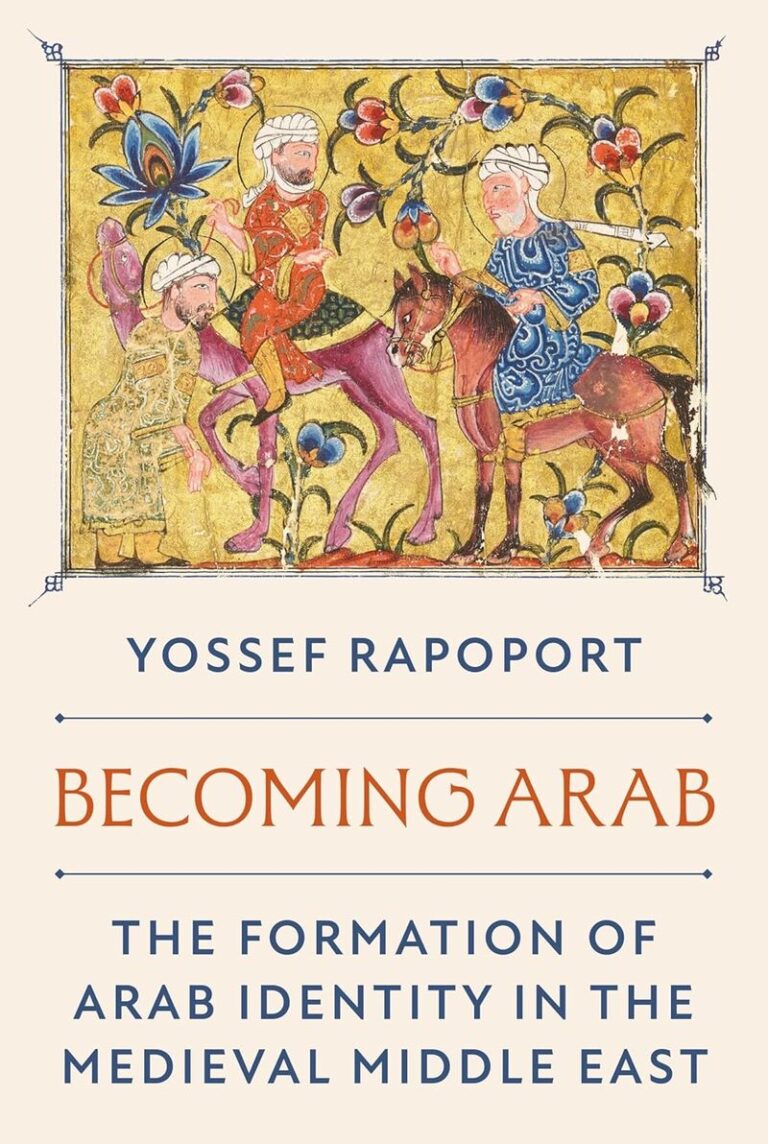
Today, much of the Middle East is “Arab”—an identity that now extends across North Africa and up through the Near East to Syria. Yet how did this region become Arab? How did this identity spread? Was it due to migration, or conquest?
Arabs
In Egypt’s eastern province, the annual Arabian Horse Festival celebrates the deep historical connection between the province, the Arabian horse, and the settlement of Bedouin tribes in Egypt during the 7th century. Except that, according to Yossef Rapoport’s new book, Becoming Arab, this perceived connection doesn’t represent a historical event, but rather a lengthy process of ethnogenesis. For the conquering Arab armies settled in the cities of Egypt, not in the countryside, where Islam remained a minority religion for centuries. Yet today, many Egyptians consider themselves scions of ancient Arab tribes, just as they see their horses as pure blood Arabs. How and when did this Arab identity take hold in Egypt?
Tarab comes from an Arabic word to beat a rhythm. But it has come to denote the ability of the musician to unite his or her audience in a common experience of ecstasy. Some of the most moving moments in this show dedicated to the Divas of Egypt are not the films or stills of Um Kalthum or Warda, but the faces of the audience captured during their performances.
At first hearing, Stories of the Sahara sounds improbable: about a half-century ago, a young Chinese woman from Taiwan decamps to El Aaiún in the then Spanish Sahara.

You must be logged in to post a comment.