Old post
This post was published before January 2026. Some links, images or other content may no longer display or work as originally intended.
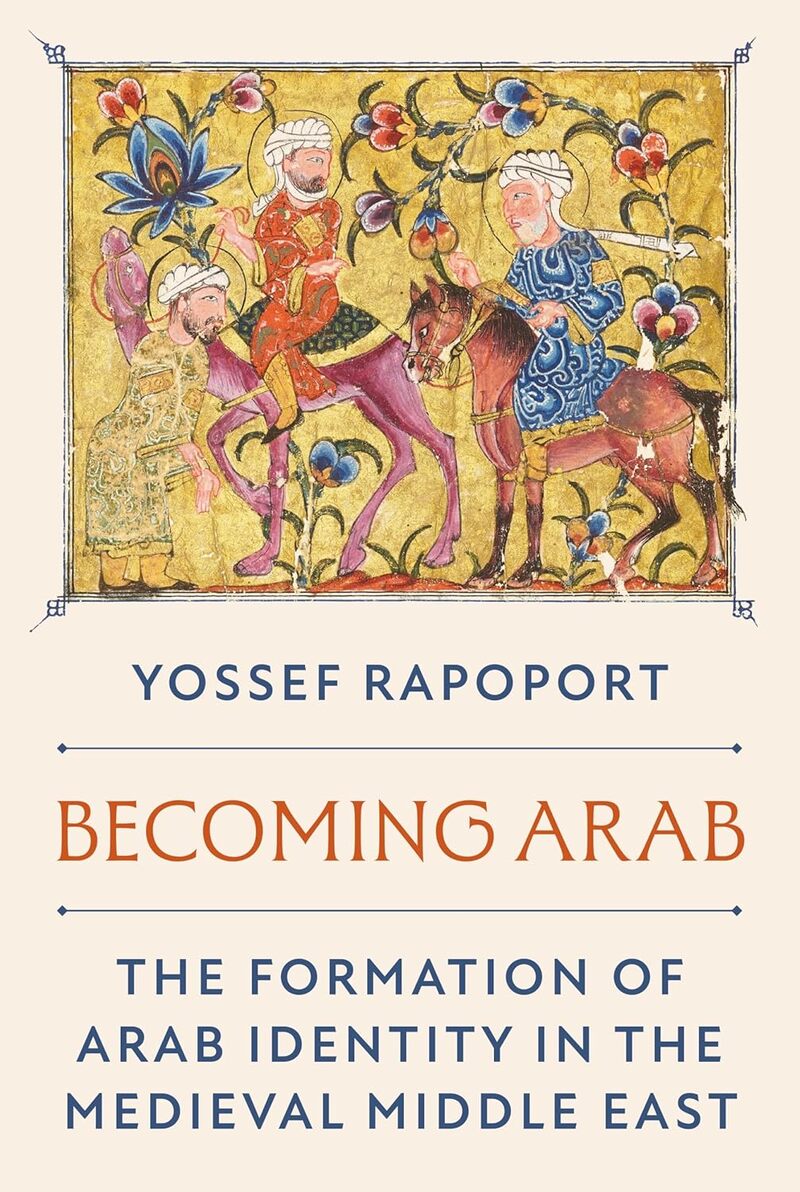
“Becoming Arab: the Formation of Arab Identity in the Medieval Middle East” by Yossef Rapoport
In Egypt’s eastern province, the annual Arabian Horse Festival celebrates the deep historical connection between the province, the Arabian horse, and the settlement of Bedouin tribes in Egypt during the 7th century. Except that, according to Yossef Rapoport’s new book, Becoming Arab, this perceived connection doesn’t represent a historical event, but rather a lengthy process of ethnogenesis. For the conquering Arab armies settled in the cities of Egypt, not in the countryside, where Islam remained a minority religion for centuries. Yet today, many Egyptians consider themselves scions of ancient Arab tribes, just as they see their horses as pure blood Arabs. How and when did this Arab identity take hold in Egypt?
Rapoport argues that Coptic Christians (along with their brethren in Palestine and Syria) gradually adopted Arab tribal identities to protect themselves against the increasingly turbulent political regimes. Under Roman rule peasants owned their land, and enjoyed protection under law. As the Fatimids, Ayyubids and Mamluks increasingly confiscated arable land and handed it out to military feudatories (under the ‘iqta system), the peasants lost all rights, except what they could assert as members of a larger political group. They gave these political groupings prestigious Arab tribal names, inventing for their members a common kinship. Similar transformations occurred among the Turkmen and Kurds of Anatolia, and probably the Pashtun of Afghanistan.In the disorders that rocked Egypt and Syria in these centuries, including the fall of the Fatimids, the Crusades, the Mongol invasions, the black death and the rise of the Mamluk slave regime, the rural population became more militarized. They could raise formidable cavalry units. They waged long and bloody revolts against their urban rulers. Even unsuccessful uprisings often ended with the rebel leaders achieving legitimation as local governors. These rural increasing replaced direct administration from Cairo or Damascus. It was around these rural militias that villagers rallied for protection.Thus sedentary cultivators, who had worked the land since Pharaonic times, transformed themselves into the descendants of Arab nomads. They also super-imposed upon themselves the schema of blood feuds that embroiled their putative ancestors, that of the Qahtan (northerners) and Yaman (southerners). Peasant villages in the Mediterranean are no strangers to blood feuds, but few attribute the quarrels to the pre-Islamic Arabia.The transition from Coptic Christianity (and Judaism) to Islam, according to Rapoport, followed logically from the necessity to assert an Arab identity. It was not so much that Christians were persecuted, as cultivators without an Arab tribal affiliation faced all kinds of threats and exactions from their government.Rapaport’s arguments are lucid and refreshingly free of methodological overlays that make reading many academic books painful.
The traditional historical narrative fails to identify this transformation, relying on misleading anthropology and confusing terminology. The term “Bedouin”, for example, suggests camel herders, originating in the Arabian peninsula. Rapoport shows that in the 11th century the term referred to the rural population, indifferently agrarian or pastoral. So it has been easy to imagine a largely fictive infiltration of desert Arabs into the Egyptian countryside, based on early sources referring to Bedouin.
Readers expecting a clear topology of life styles, eg, the farmers vs nomads, have to accommodate themselves to zones of grey. While the inhabitants of Sinai most resemble the camel-herding populations of the Arabian peninsula, Rapoport calls out many intermediary cases: farmers who work on irrigated land (often sugar plantations), those who cultivate land when rainfall permits, but otherwise graze cattle and sheep to supplement their incomes, and those who live in oasis like Siwa. This reviewer was surprised by the number of these sedentary populations who raised horses. The Mamluk and also the Ottoman regime often tried to prevent these populations from possessing this critical military resource, restricting the possession of horses and arms to their loyal tribal levies.Rapaport cautions that the transformation of the countryside into a Muslim, Arab-identified population was overlooked by most contemporary sources. The elite spent little time in the countryside and didn’t write about it. He has used deeds, letters, marriage contracts and official complaints, documents which have survived in St Catherine’s monastery, in the Cairo Geniza, or recovered from archeological excavations. By analyzing the evolution of nomenclature and names over several centuries, he shows the steady emergence of an Arab identity among the native population.Surprisingly, the overthrow of the Mamluks and long, peaceful years of Ottoman rule resulted in yet another shift in the identity of the population. The cultivators began to call themselves “Fellah” (as they do today), while the term “Arab” came to refer only to the herding population. By that time, however, the overwhelming majority of Egyptians (and Syrians) spoke Arabic and practiced Islam.Rapaport’s arguments are lucid and refreshingly free of methodological overlays that make reading many academic books painful. On the other hand, there is an enormous amount of redundancy which better copy editing could have easily eliminated. Persistent readers will develop a better understanding of how the modern identities of this important part of the world emerged in the Medieval Era, as well as a general insight into the power of politics in shaping who we think we are.