“Sisters in Yellow” by Mieko Kawakami
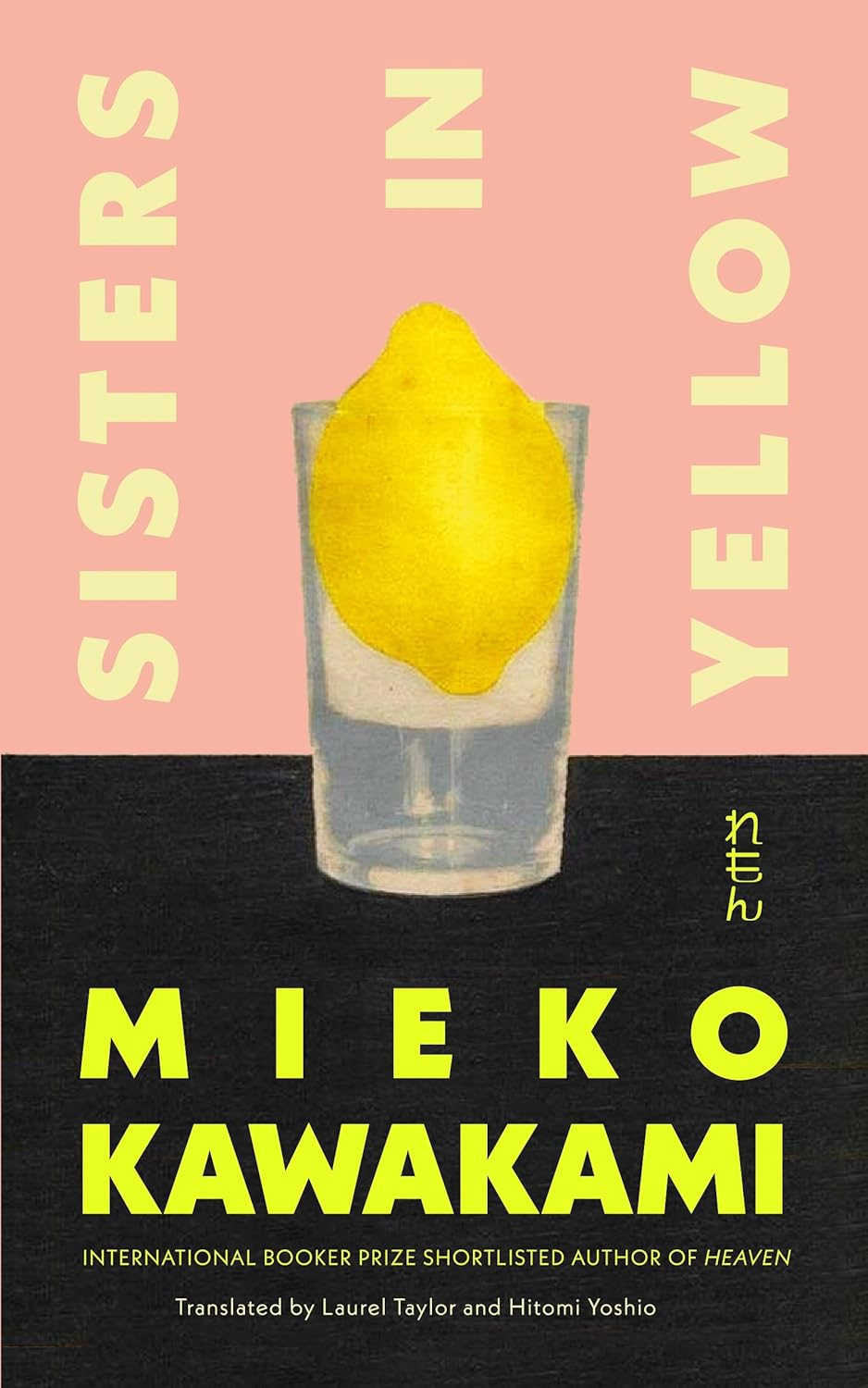
One day Hana Ito, a forty-year-old part-time cashier at a deli shop, clicks on a link to an article detailing a recent crime. She suddenly finds herself wondering whether she might know the culprit. Reading the article brings back memories from twenty years ago, ones she has been desperately trying to forget but from which she has never managed to escape.
Mieko Kawakami’s Sisters in Yellow, translated by Laurel Taylor and Hitomi Yoshio, begins in the middle of COVID-19 lockdown and then shifts back to the late 90s, when Hana drops out of high school to open a bar with Kimiko Yoshikawa, an experienced hostess and an acquaintance of her mother. They are joined by Ran Kato, a year older than Hana, trying to make ends meet by working in a cabaret club; Momoko Tamamori, a spoiled but lonely girl from an “old money” family; and Kimiko’s suspicious friends.
Hana and Kimiko name the bar Lemon and try to turn it into their own paradise. Sisters in Yellow is not, however, a happy tale, and the paradise here is never meant to last long. The more Hana and other characters attempt to stay afloat, the more they are drawn into the world of crime. Guided by nothing but their abiding yet seemingly superficial trust in the color yellow, which symbolizes happiness in feng shui, they start committing offenses that get increasingly risky.
Like Kawakami’s other novels in English translation—such as Breasts and Eggs, Heaven, and All the Lovers in the Night—Sisters in Yellow explores what it means to live on the margins of Japanese society, best expressed in Hana’s reflections on the unfairness of the world she finds herself in, one in which they are forced to live in the shadows:
We were alive, living in the real world, but without IDs, we didn’t exist; we were only half alive. With each day, I realized more and more that the way we existed in the world wasn’t normal. Maybe that’s what being a kid meant, but maybe age had nothing to do with it.
What unites all characters is their fragility. Without qualifications, ID, or money, they are forced to join one shady business after another, cornered by their circumstances. They have no one to turn to besides themselves, and even when they try to support each other, their bond appears occasional and passing. They gather together when it benefits them and disband immediately when it stops doing so. Although the English title calls the protagonists “sisters”, they can hardly be considered a family, as each ultimately remains enclosed within her own little universe: Hana and her financial worries, Ran and her toxic relationships, Momoko and her ennui, Kimiko and her profound indifference to material matters.
Hana starts out as a somewhat naive schoolgirl but grows more and more cynical and bitter as the story progresses. An overthinker with a strong sense of justice, she tries her best to escape from falling too far down the criminal world, yet ends up only getting deeper. Her love for her mom turns into pity and her wish to help Ran and Momoko into obsessiveness. The fact that the story is told from Hana’s perspective only highlights the gap between her thoughts and actions. She wants to care for the people she loves and be able to hold a regular job, but, with her mother and adults around her appearing equally dysfunctional, she can only do her best by engaging in credit card fraud, which leaves her deeply unsatisfied:
We all need money, and that’s why we sweat our asses off working, they’d say. But I wanted to tell everyone that I was sweating my ass off, too. With a half smile on my face, I wanted to ask every one of them—And you, who are you to judge what’s good sweat and what’s bad? Where do you spend your time sweating your ass off? Bet it’s some place real nice, right, so why don’t you tell me how to get there?
But she never gets “there” and instead ends up shifting from one fleeting gig to another just as her mother always did.
Throughout the book, Hana’s only solace is her obsession with feng shui and, in particular, the meaning of the color yellow. From her idolization of Kimiko (whose name contains the kanji for “yellow”), to naming the bar Lemon, to buying “all sorts of yellow things from hundred-yen shops and other stores around the neighborhood”, she believes that it will eventually bring her luck. She finds it hard to break free from its hold on her, just as she cannot stop seeing Kimiko as her role model.
The relationship between the two is entangled and controversial, leaving more questions than answers: is Kimiko a savior rescuing Hana from her colorless life? Or is she just using her and everyone around? Is Hana an innocent victim or a willing accomplice? What if she’s both?
Although the novel never offers a definitive answer to these questions, it is this ambiguity that moves the plot, turning the story into a captivating blend of psychological drama, slice of life, and, at times, even a soft thriller.