“The Memory Museum” by M Lin
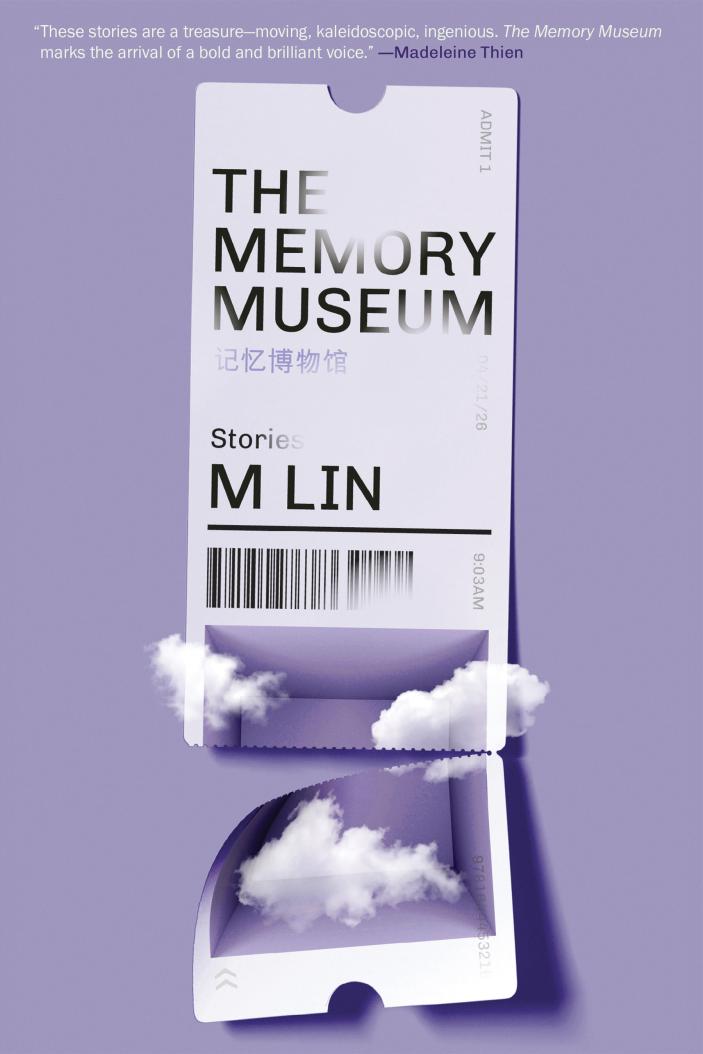
In 2020, when the pandemic forced the world into lockdown, M Lin—who had moved to New York City from Beijing first as a film student—began writing fiction. The result was the stunning collection of nine stories titled The Memory Museum.
These stories touch upon a wide range of experiences confronting China’s post-90s generation: seeking a sense of belonging away from home, feeling out of place within it, memories reshaped over time as if they were alive, and relationships burdened by political repression. Most of the characters are exposed to lives that transcend national borders: many have studied overseas, and some remain in their adopted countries. As a result, different stages of their lives become associated with different cultures. Returning to their birthplaces can invite both solace and discomfort—solace from the lingering familiarity with certain customs and manners, and discomfort in recognition of how differently they have grown.
These stories touch upon a wide range of experiences… seeking a sense of belonging away from home, feeling out of place within it, memories reshaped over time as if they were alive, and relationships burdened by political repression
In “Yulan”, a case in point, a high school reunion feels like a revisit to the past for everyone, yet for Yuchen it is even more so, because it coincides with her first homecoming from the US in a long time. Watching her previous classmates content with “drinking, singing, having a great time, without giving a shit about what the outside world” is fixated on, Yuchen reflects on the road she has not taken. Lichuan, the boy she loved at seventeen, asks her: “All night I was wondering if you’d be the same person if you’d stayed like the rest of us.” Yuchen herself has no answer to that question, but some things seem to endure across time: when she expresses her love for the smell of the Yulan flowers commonly found in Beijing, Lichuan reminds her that she said “the exact same thing” back in high school.
The pandemic, particularly the strict lockdowns implemented in China, is another recurring theme in the collection. In “Magic, or Something Less Assuring”, opposing views on pandemic policies tear a once-loving couple apart. Ting is fed up with the draconian measures enforced in Shanghai, but what frustrates her more is her husband Sibo’s defense of them. “It was good for the health and safety of the majority of the people,” Sibo argues, “people like you and me.” Tensions between the US and China further complicate their disagreement. To Sibo, Ting’s discontent signals a rejection of her own country and a preference for the US. To Ting, however, “whatever America does or doesn’t do is beside the point.”
This story captures a now-familiar reality: the infiltration of both local and global politics into intimate domestic spaces. Set during what is probably the couple’s last trip together, to Morocco, the story also explores how political views are often assumed to map onto moral character. For example, while Ting expresses anger over a stray cat being killed during quarantine, Sibo seems indifferent, emphasizing the importance of humans over animals. Nevertheless, however cold Sibo may seem, his care for Ting is never absent. The day after an intense fight in a touristy tea house in Tangier, Ting follows a tour guide—a complete stranger—into the Sahara desert and begins to fear for her safety, only to find that Sibo has already anticipated her arrival at the destination. Like a crack spreading across a windshield, “Magic” explores the complicated ways ideological clashes permeate intimacy and emotional attachment.
Women, as elsewhere, face challenges uniquely their own. Because IVF is inaccessible to unmarried women in China, a group of women in “Tough Egg” seek alternative paths to motherhood abroad. Fan Yanyan, a single mother and an actress-turned-producer, invites the young narrator to write a script based on this journey. The story thus reveals the young filmmaker’s predicament at the intersection of censorship and gender biases within China’s film industry. When the narrator points out that a story celebrating women’s fertility freedom is unlikely to pass the censors, Fan tells her to not worry, promising that the film can be produced in the US. But later, just as the narrator takes pride in her completed script, an established director offers to take over the production, proposing to reframe the narrative by giving the women characters boyfriends and estranged husbands. By recentring men, the production may now pass censorship. Fan agrees almost immediately. The trade-offs and loss are immediately apparent as reflected in this exchange between Fan and the narrator:
I think you understand how important this movie is to me. Help me, then: How should I pitch you to the investors? Who are you?
You are right. I’m nobody. But if I direct this movie, I can be somebody.
Somebody — do you mean someone with fame or money? Both?
I mean a real artist, I thought, unable to utter the words…
Many of the characters seem trapped, whether in an endless pursuit of professional breakthrough or in the search for belonging. Yet, a sense of transcendence may already be embedded in references to globally recognized cinema. The little girl in “LUCY” contemplates transcending death through the Disney movie Coco. Ting in “Magic” is drawn to Tangier in Morocco by The Sheltering Sky and Only Lovers Left Alive. These films become woven into a shared cultural memory, planting seeds of movement of migration, merging, and the crossing of boundaries between nations, cultures, and even life and death.