“Breakneck” by Dan Wang
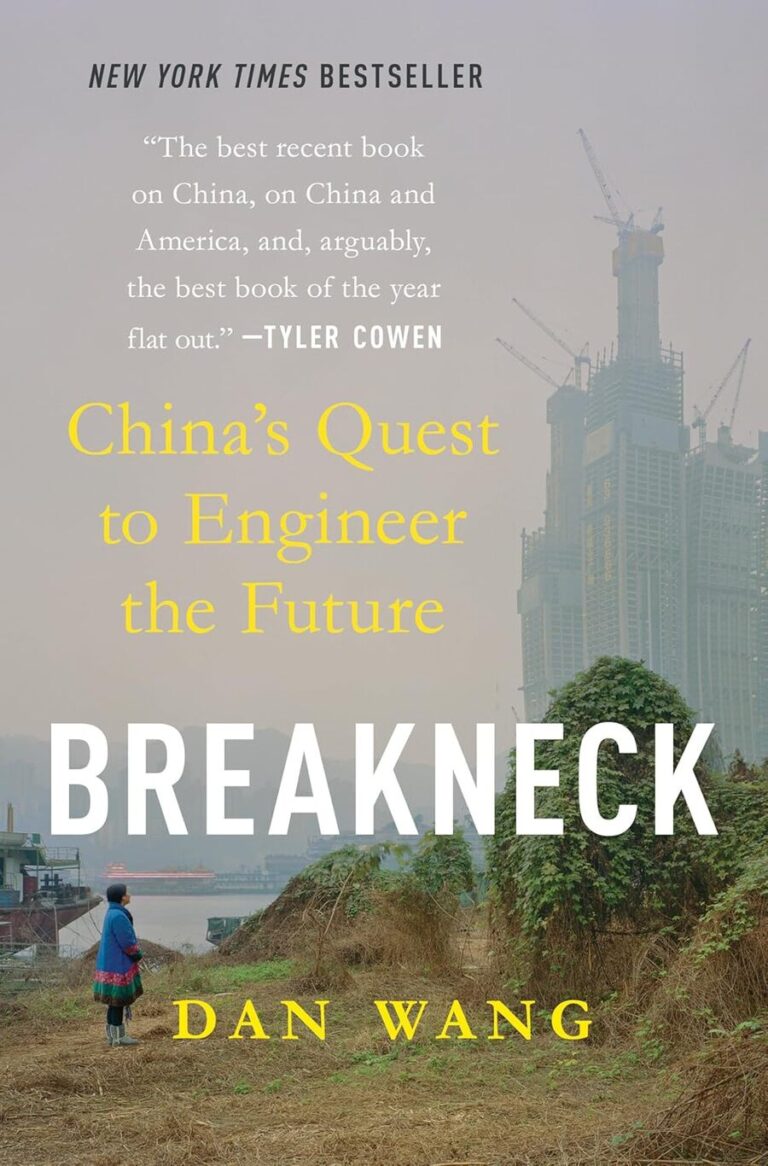
Dan Wang’s Breakneck opens with an assertion that will immediately ring true with many observers of both China and the United States: despite their ongoing sparring, “no two peoples are more alike than Americans and Chinese”.

Dan Wang’s Breakneck opens with an assertion that will immediately ring true with many observers of both China and the United States: despite their ongoing sparring, “no two peoples are more alike than Americans and Chinese”.

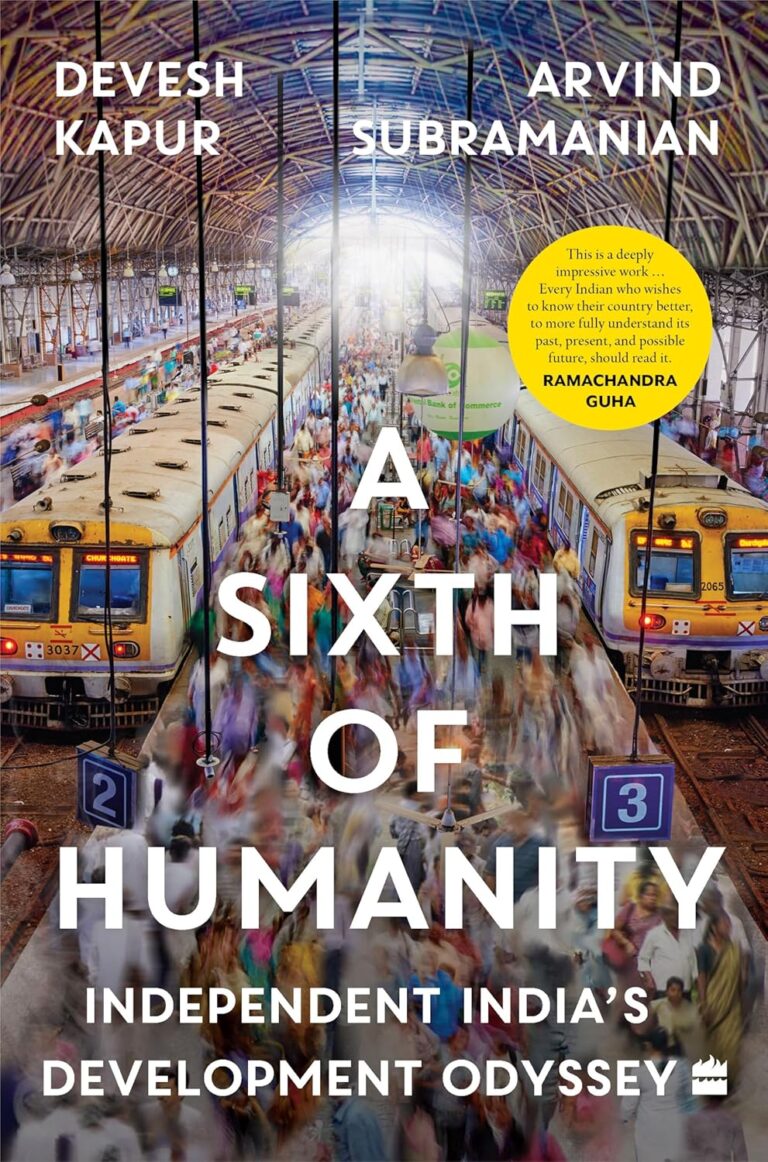
India’s development story has been told many times, but A Sixth of Humanity makes a compelling case that the familiar narratives no longer suffice. Authors Devesh Kapur and Arvind Subramanian seek to reinterpret India’s extraordinary, idiosyncratic, and often paradoxical economic journey over a 75-year arc as a single, interconnected developmental experiment whose successes and failures…

The term “Industrial Revolution” entered modern parlance in 1799, courtesy of the French diplomat Louis-Guillaume Otto. What began with incremental improvements in steam power and textiles would sweep the world, freeing societies from the Malthusian trap while upending the distribution of political power. But for all that epochal significance, scholars have never arrived at a…
Misery Beneath the Miracle in East Asia challenges prevailing views of the East Asian economic miracle. Existing scholarship has overlooked the severity, persistence, and harmful consequences of the social-welfare crises affecting the region. Arvid J Lukauskas and Yumiko Shimabukuro fill this gap and put a major asterisk on East Asia’s economic record.

Electrification is likely not the first thing that comes to mind when reflecting, as it were, on Hong Kong. But in Let There Be Light, a history of China Light & Power (CLP), Mark Clifford convincingly makes the case for the centrality of electricity in the Hong Kong story. Electricity not only made Hong Kong’s…

What does Mongolia bring to mind? Maybe Genghis Khan. It’s in central Asia somewhere, isn’t it? Unless you’re a fan of sumo wrestling, that’s likely to be about the extent of your associations. Johan Nylander sets out to correct that, at least with respect to Mongolia’s economy, with his The Wolf Economy Awakens. It’s a…

Ming China in 1642 had suffered a series of disasters. Floods, and then drought had destroyed successive rice crops, sending the price of grain to astronomical levels. As one schoolteacher wrote: “There was no rice in the market to buy. Even if a dealer had grain, people passed by without asking the price. The rich…

“The fall of the Ming dynasty,” writes Timothy Brook in his fascinating new monograph The Price of Collapse: The Little Ice Age and the Fall of Ming China, “has traditionally been narrated as a period of political factionalism, failed administration, dwindling tax revenues, and rural rebellion, all of which has been shrouded by the larger…
Electrifying Indonesia tells the story of the entanglement of politics and technology during Indonesia’s rapid post-World War II development. As a central part of its nation-building project, the Indonesian state sought to supply electricity to the entire country, bringing transformative socioeconomic benefits across its heterogeneous territories and populations.

Sir John Seeley once claimed that the British had “… conquered and peopled half the world in a fit of absence of mind.” This would have bemused the many adventurers, mercenaries, and administrators who dedicated their lives to displacing indigenous power across India. More pragmatic than perfidious, Albion accommodated hundreds of princely states ruled by…

Despite a reputation for abstruse thought, the French intellectual Michel Foucault once explained his research in a straightforward manner: “I set out from a problem expressed in the terms current today and I try to work out its genealogy. Genealogy means that I begin my analysis from a question posed in the present.” Keyu Jin…

Sometimes one ends up reviewing the book one read rather than the one that was written. Lin Zhang’s The Labor of Reinvention: Entrepreneurship in the New Chinese Digital Economy is more sociology than tech, more labor theory than business. But it is also a granular, grass-roots, bottom-up view of the past couple of decades of…

There is a general consensus that in 1820, China had the world’s largest economy. By the end of the century, it was suffering from an existential crisis. Much ink, scholarly and otherwise, has been spilled as to what went “wrong” and why; somewhat less common are discussions as to how China came to terms with…

In 2014, Indian Prime Minister Narendra Modi closed the Planning Commission, which he accused of stifling the country’s growth and being a holdover from the country’s time as a socialist country. It was an ignoble end to the government body, which in the early days of independence charted the country’s Five-Year Plans for economic development.
From start-up founders in the Chinese equivalent of Silicon Valley to rural villages experiencing an e-commerce boom to middle-class women reselling luxury goods, the rise of internet-based entrepreneurship has affected every part of China. Problematizing worldwide euphoria about digital entrepreneurship while complicating the dichotomy of “China threat vs. China model”, The Labor of Reinvention attends…