Sometimes one ends up reviewing the book one read rather than the one that was written. Lin Zhang’s The Labor of Reinvention: Entrepreneurship in the New Chinese Digital Economy is more sociology than tech, more labor theory than business. But it is also a granular, grass-roots, bottom-up view of the past couple of decades of the development of China’s digital landscape. As such, she provides color and detail to the developments that have been covered in a far more generalized and ad hoc way as business stories.

There is a general consensus that in 1820, China had the world’s largest economy. By the end of the century, it was suffering from an existential crisis. Much ink, scholarly and otherwise, has been spilled as to what went “wrong” and why; somewhat less common are discussions as to how China came to terms with the new globalized reality and what it, and Chinese society, did to emerge from the other side.

In 2014, Indian Prime Minister Narendra Modi closed the Planning Commission, which he accused of stifling the country’s growth and being a holdover from the country’s time as a socialist country. It was an ignoble end to the government body, which in the early days of independence charted the country’s Five-Year Plans for economic development.

The Labor of Reinvention: Entrepreneurship in the New Chinese Digital Economy, Lin Zhang (Columbia University Press, March 2023)

From start-up founders in the Chinese equivalent of Silicon Valley to rural villages experiencing an e-commerce boom to middle-class women reselling luxury goods, the rise of internet-based entrepreneurship has affected every part of China. Problematizing worldwide euphoria about digital entrepreneurship while complicating the dichotomy of “China threat vs. China model”, The Labor of Reinvention attends to the everyday labor of digital-centered entrepreneurial reinvention vis-à-vis China’s national remaking amid global technological transformations and changing geopolitical currents.

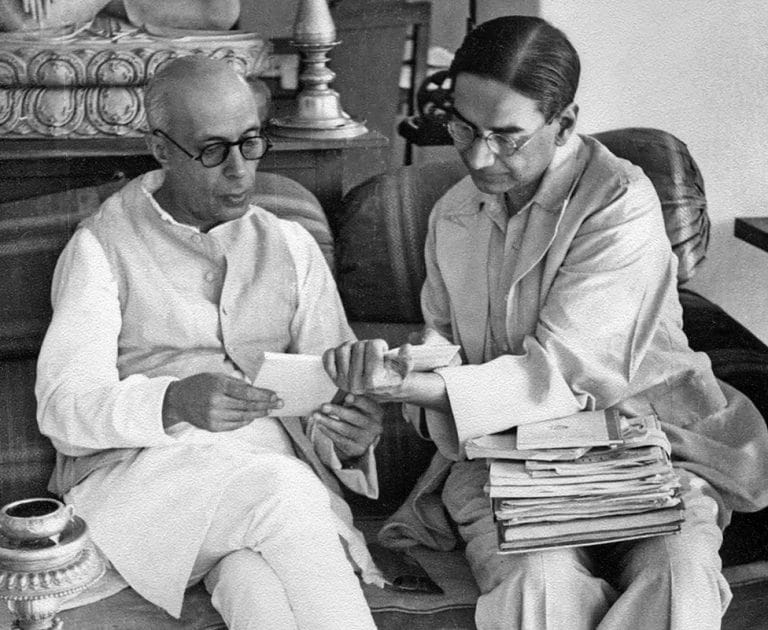
“Thou art the ruler of the minds of all people, dispenser of India’s destiny. Thy name rouses the hearts of the Punjab, Sindh, Gujarat and Maratha, of the Dravida, Orissa and Bengal.” Thus begins Rabindranath Tagore’s Jana Gana Mana. In 1939, Jawaharlal Nehru traveled to Calcutta and received Tagore’s blessing to make it India’s national anthem. That meeting took place in the home of Prasant Chandra Mahalanobis. Equal parts flawed, driven, and brilliant, Mahalanobis went on to steer the Five-Year Plans that promised to catapult India into modernity. Nikhil Menon’s new book Planning Democracy: Modern India’s Quest for Development captures this technocrat in full: how he amassed and exerted influence, and how reality fell short of his ambitions.

Whether the Manila Galleon—the crossings between Manila and Acapulco that began three-quarters of the way through the 16th century—really ushered what has since come to be called “globalization” remains a matter of some debate, but one which depends more on what is considered globalization rather than the global significance of this trade itself.

China’s Pearl River Delta recently surpassed Tokyo as the world’s largest urban area. Amid that vast conurbation of over 60 million people stands the city of Zhongshan. The birthplace of Sun Yat-sen, Zhonghsan’s factories supply China’s middle class with consumer goods like lighting, furniture, and appliances. Looking east across the Indian Ocean, one finds Antalaha, a small harbor town on Madagascar’s eastern coast. Bordered by three national parks and without a paved road to the nation’s capital, Antalaha’s 67,000 inhabitants might seem remote. But thanks to a tree growing in those parks, Antalaha found itself fueling Zhongshan’s furniture industry. Annah Lake Zhu’s new book Rosewood: Endangered Species Conservation and The Rise of Global China, explores the consequences of this unexpected connection.

La plata y el Pacífico China, Hispanoamérica y el nacimiento de la globalización, 1565-1815, Peter Gordon, Juan José Morales (Siruela, June 2022)
La plata y el Pacífico: China, Hispanoamérica y el nacimiento de la globalización, 1565-1815, Peter Gordon, Juan José Morales (Siruela, June 2022)

The Spanish translation of The Silver Way: China, Spanish America and the Birth of Globalisation, 1565–1815—the story of the Manila Galleon—with a new introduction by Elvira Roca Barea: “It explains to us not only what it meant in the past but what it still means today to understand the present and even the future of relations between East and West, and very especially, China’s relationship with Latin America.”