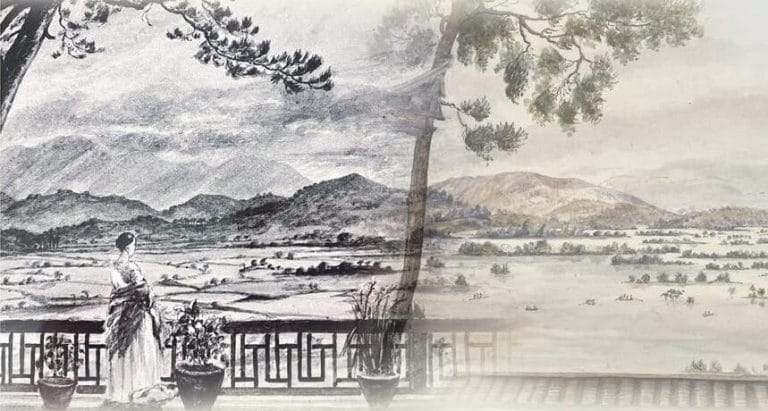
“American Han” by Lisa Lee

The Korean word “han” is difficult to translate precisely into English, but the concept revolves around a profound sadness, regret, resentment and a loss of a collective identity that arises from historical injustice, such as occupation, war, and separation. It is, in other words, a generational trauma with Korean characteristics. Lisa Lee’s debut novel American Han, set during the time of the first tech boom, is anchored in the despair and rancor that defines the Kim family of the San Francisco Bay. Jane Kim is a third year law student at a second tier law school in San Francisco, when her mother relocates to start a new life for herself, an impulse Jane understands.
I could see that the world had abused her—Korea had told her that she wasn’t pretty or thin or smart or successful, American had said she was inscrutably Korean, her family had disowned her, her husband had turned violent and tyrannical, friends wouldn’t help her when she wanted to escape him, she’d never been able to pursue a career that she wanted and couldn’t picture stability in old age, and her children were grown and didn’t want her around. Knowing this, I still couldn’t look past my own pain to acknowledge hers.
Just as Jane’s mother makes this move to San Francisco, Jane herself is planning to leave the city—and law school—to pursue her own dream of getting a doctorate. Law school had been her parents’ idea.
As Jane applies to doctorate programmes, is accepted and informs her parents she’s going to move across the country, Lee includes seamless flashbacks to Jane and her brother Kevin’s earlier years when their parents expect the impossible from them. Kevin is a star tennis player in school but sets this aside to become a quintessentially American police officer, an act of rebellion against the parental expectation that he go into one of the acceptable professions that immigrant parents dream of for their children.
Jane feels that her parents have never thought very highly of her; she’s neither married nor dating and lives in a part of San Francisco that pales in comparison with her Napa childhood. But as Jane begins to see a future for herself that doesn’t involve her parents, she also sees that they are also finding their own independence after decades of living in the US. Her mother has already left her father, and her father leaves his latest business venture—he’d owned convenience stores and diners—to become a truck driver so he can finally see America. As her father asks her to see the view from his truck, Jane realizes she and her family indeed share a strong connection.
I wanted to remain where I was, where at least life made sense and things were recognizable. I didn’t want things to change now. I wanted them to have been different from the beginning. I wanted what I’d always wanted: to start over, for my life to be mine, to feel that I was beholden to no one. I was beginning to see that in my family the wanting of things that seemed impossible, that no one would let us have, was our one true bond.
“Han” itself is not mentioned in the novel, and the title might bemuse non-Korean readers if they don’t look it up. But in Lee’s reflective and layered storytelling, “han” pervades the novel, as something Korean immigrants cannot leave behind and something they pass to the next generation.