“Stories We Wear: Status, Spectacle and The Politics of Appearance” by Shefalee Vasudev
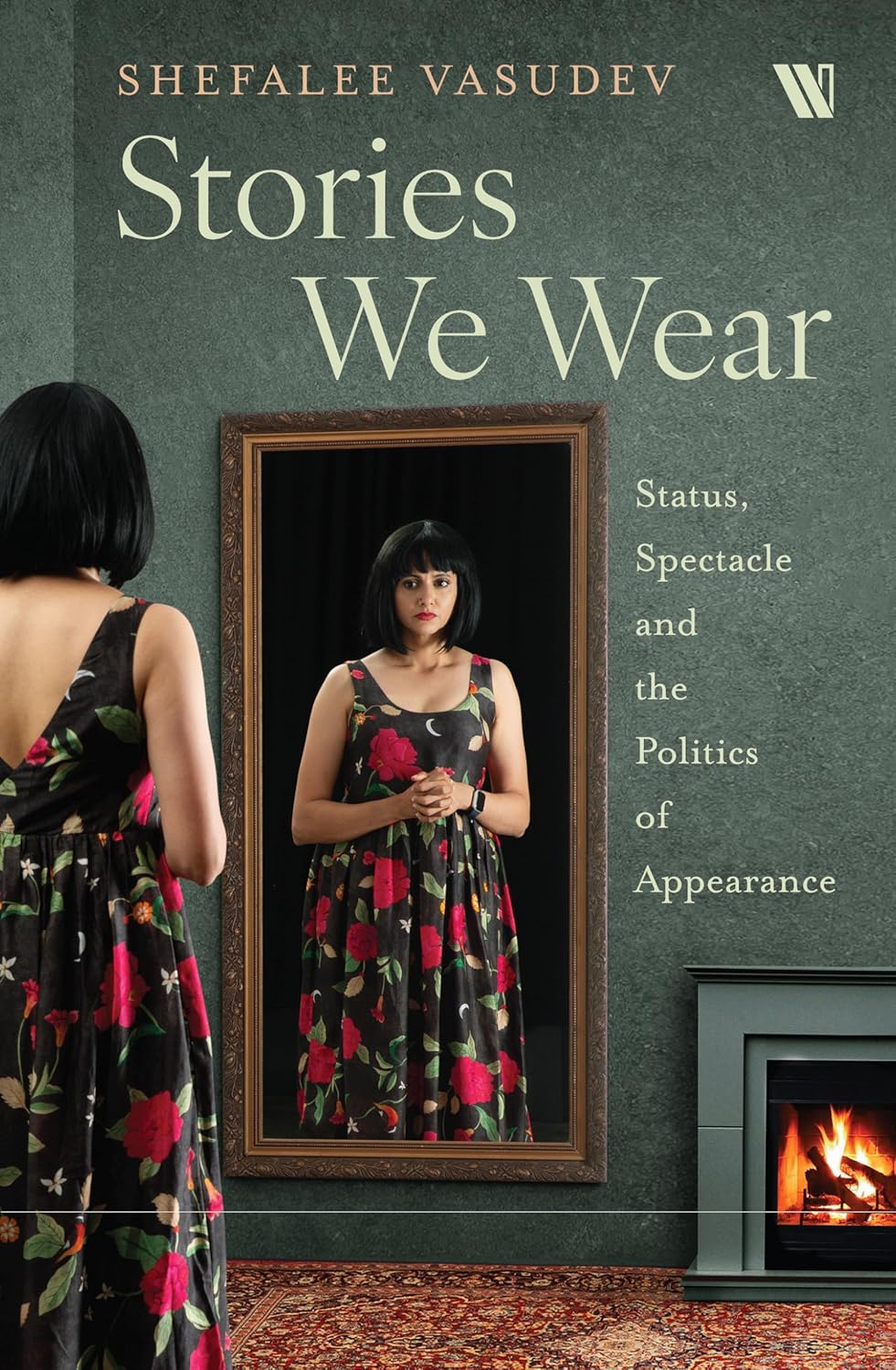
Shefalee Vasudev’s Stories We Wear unpacks the contradictions behind image and appearance in the vast and diverse land that is India. Vasudev’s approach to her subject is encapsulated in a chapter about the homespun fabric once championed by Mahatma Gandhi which she titles “How Khadi Became Uncool”. She interviews several hands-on designer-entrepreneurs who are deeply committed to making khadi alongside master spinners and weavers. But in the village of Sonarundi, she meets workers who are in a bind. The Indian government makes a pretense of supporting khadi, and then encourages scaling production or the “fashionization” of it. Workers end up managing both a hand loom setup and a power loom in the very same facility. In order to survive workers must produce at a faster clip.
Unfortunately, government incentives have pushed these weavers to “cheat” by using factory-made yarn or using a power loom to weave; such practices that cannot, according to Vasudev, properly be labeled khadi. She stresses that for khadi to remain within the realm of craft, creators, users and the government must acknowledge its value and serve it as slow fashion. She quotes designer Shani Himanshu, one of the people working on khadi in the way it was envisioned:
Scale is about industrialization; it disturbs meditativeness. We want to keep the meditative aspect of khadi production alive and build ideal systems around it. Khadi is not a product. Its process is its wealth.
The book opens with a chapter called “Kartavya Path”, named after a renamed New Delhi thoroughfare leading to Parliament House, where a myriad of characters, rich and poor, walk, run or ply their trade. “Kartavya Path” means the path of responsibility in Sanskrit. “The state may rename streets, pave roads and orchestrate optics. But the soul of a place resides in its people—not in what they declare but in what they endure,” Vasudev writes. In “Wearing Politics”, the author observes how the fashion-savvy Prime Minister, Narendra Modi, has a keen eye for fashion, yet never dwells overtly on his sartorial tastes. His silence complicates the narrative, Vasudev writes:
If he did speak about it, the world would learn just how much he likely knows about India’s craft lineages, textile histories and the cultural reinvention of handlooms.
Not everything about appearance is clothes.
In “The Airport Look”, Vasudev interviews airport security staff to glean how they gauge a passenger’s comportment in the interests of security; yet there are any number of entitled people, actors in particular, who use the airport as a ramp for an Instagram reel. “Masaba: Lovechild of the Instagram Era” probes India’s obsession over looks, especially its deep-rooted bias favouring fair skin, and narrates the story of celebrity Masaba Gupta who defies the archetypes of beauty standards set in the West.
Not everything about appearance is clothes. In “Coffee: Brewed in Translation”, the author points out how while Starbucks was aspirational “because it wasn’t Indian”, it may have led one man to start a coffee venture called Araku, the country’s first and only fair trade certified with home-grown coffee farmed by indigenous tribals. “The Devil Wears Green” argues that a garment must be carbon neutral, recyclable, organic and produced using “85% recycled water”, in order to meet the criteria for sustainability; yet labels continue to use words like “sustainable” loosely while consumers are seduced by the mirage of ethical fashion. The closing chapter, “Last Rights”, examines the callousness of a hospital’s medical staff towards the body of a manual scavenger and pits that against the fuss and fanfare around the death of the ultra-privileged whose end is managed by someone hired to be a formal “death manager”.
Despite a couple of chapters that feel force-fitted into the narrative, Stories We Wear is a well-researched work written with heart and grace. Shefalee Vasudev’s experience as a journalist, an editor and a 25-year chronicler of fashion informs the deep reportage that buoys this cultural commentary.