“No Man River” by Dương Hướng
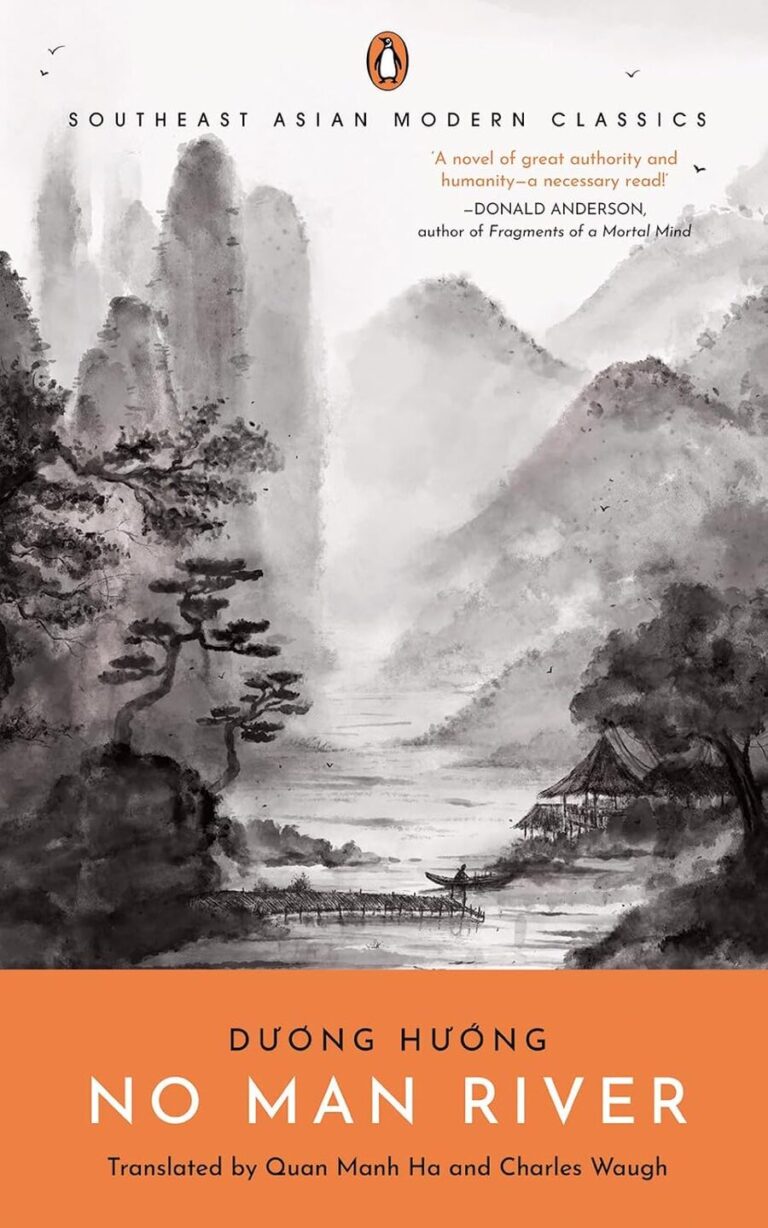
A sweeping historical novel, Dương Hướng’s No Man River charts Vietnam’s path to independence from the anticolonial struggle against the French to what is known locally as the “American War” and finally the brief Sino-Vietnamese border war in the late 1970s. It covers these conflicts in fewer than 250 pages, and without a single battle scene.
The wars of liberation take place off-stage. The novel concentrates on how they affect the community of the fictional Đông Village in the country’s north, a bucolic setting, “stunningly beautiful with its green bamboo groves, tall areca trees and lovely reflection of the mango trees and Silver Stone Bridge on the gentle Đinh river”, into which the conflicts and the associated social disruptions intrude.
As the title suggests, the river and its banks reflect the central theme of the novel. The locals call it “No Man River” (or, as in the literal translation of the book’s title, Bến không chồng, “riverside no husband”) because of the legend of the red-eyed water monster which is said to drag men below the surface and drown them. Echoing the legend, the novel is a story about absent men, who have left for the front, but mainly about the women who stay behind.
No Man River was originally published in 1990 during a brief period of cultural liberalisation following the introduction of the economic reforms dubbed Đổi Mới (literally “renovation”). This reform movement freed literature from its previous corset of prescribed socialist realism in favour of a more nuanced rendering of history and its effects on the individual. Unlike other texts from this period such as Nguyễn Huy Thiệp’s A General Retires (1987) and Bảo Ninh’s The Sorrow of War (1991), Hướng’s novel was only recently translated into English, even though it is considered a modern classic in its homeland.
Hướng’s novel eschews the formal and thematic radicalism of its contemporaries. It neither possesses the grim bleakness of Ninh, nor the surreal pessimism of Thiệp. Hướng offers the Vietnamese, and now the English-language, reader a panoramic view of rural life at a time of great upheaval, written in an unaffected, almost folksy style, involving a richly realised cast of supporting characters. The novel’s strength is Hướng’s ability to intimately portray individual sorrows amidst collective grief, something that was considered controversial at the time, and criticised for being too tragic.
No Man River opens with the return of Nguyễn Vạn, who left the village as an impoverished, orphaned buffalo herder and comes back as a decorated veteran of the famous battle at Điện Biên Phủ which sealed the defeat of the French colonial forces. His return marks the beginning of wide-ranging social and political changes in Đông Village. Despite his status as a war hero, Vạn fails to fully re-integrate into the community. He remains an outsider unable to connect his experiences as a soldier and his socialist ideals with the reality of village life. He cannot overcome his inhibitions, and his own notion of revolutionary purity to break the chains of the ancient feud between the Nguyễn and Vu clans and confess his love for the widow of a fellow soldier, Nhân, who hails from the Vu family.
The task of tearing down these old hostilities falls onto the next generation when the novel focuses on the love story between Nghĩa, a Nguyen, and Hạnh, Nhân’s daughter. Their love, though, is also doomed, not because of the family feud, but because of the war. Nghĩa enlists in the army to fight the Americans and disappears for almost a decade to the southern front leaving Hạnh to care for her mother and her mother-in-law. Hạnh’s female friends and acquaintances end up in loveless marriages with men rejected for military service, have affairs with soldiers on leave or resign themselves to staying single like Hanh’s best friend, Đau, whose fiancé is killed in the war. For a society that has a reputation for being very coy in all matters sexual, there is a lot of candour in this book as the female characters must navigate their own desires with societal norms such as family pressure to bear children. When Nghĩa finally returns, he is, like Vạn, unable to reconnect with his previous life. He eventually agrees to a divorce Hạnh (whose own story has a final surprising and controversial twist) and leaves the village for good.
The novel taps into the rich vein of longing for one’s ancestral countryside but without sliding into sentimentalism or nostalgia. Here, the river serves as an image of both permanence and renewal as Hướng’s characters try to steer a course between ancient customs and socialist modernity, between the sorrows of war and the toils of peace.
No Man River was also reviewed by Thảo Tô for the ARB in April. You can read the review here.
