“No Man River” by Dương Hướng
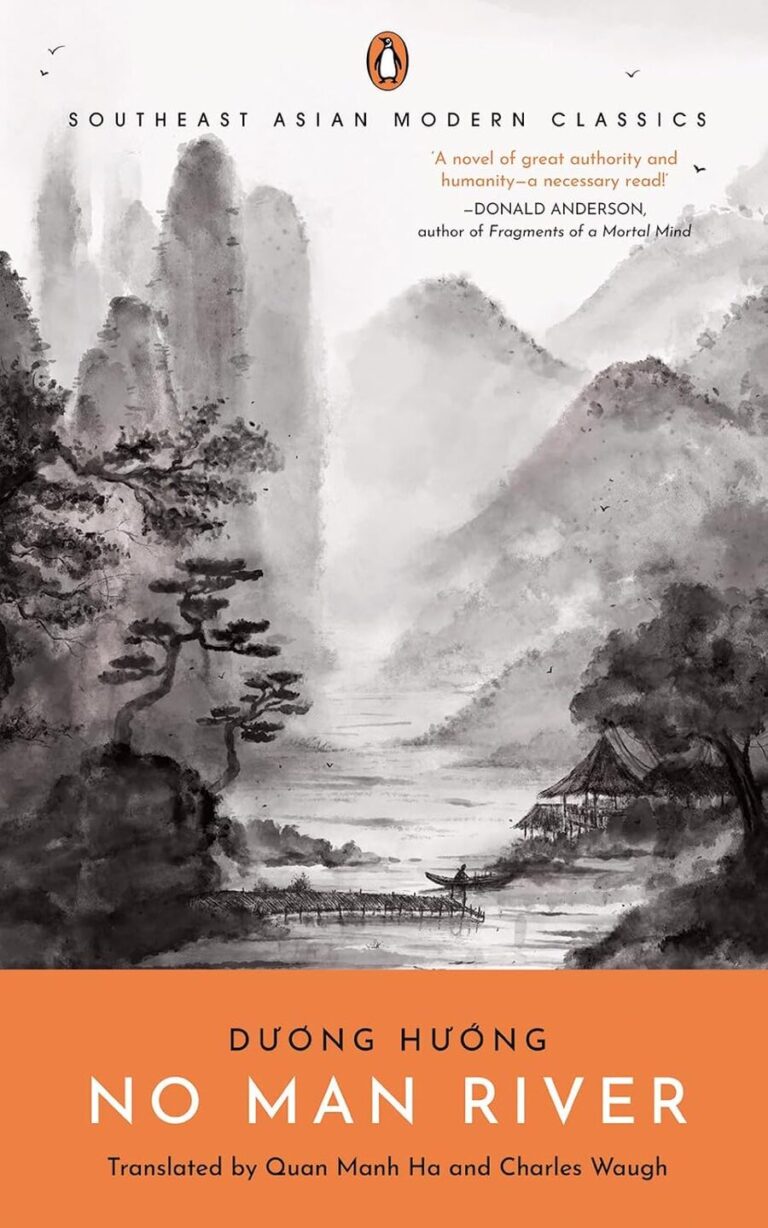
War, in No Man River, is an endless affair. Sprawling from the 1950s to the 1970s, the novel follows a close-knit cast of characters in a northern Vietnamese village from the end of the war for independence from the French colonial power to the war between north and south Vietnam. As fathers, brothers, sons headed to the battlefield, the women, children and the injured left behind toiled on without knowing when—or if—their loved ones would return. In the miasma of this endless anticipation, the structures, traditions, and relationships that have long upheld the community in the village crumble.
The story opens with Nguyễn Vạn, a soldier injured in the historic battle of Điện Biên Phủ against the French in 1954, returning to his village a hero. Decorated for his righteousness and battle scars, Vạn becomes the voice of reason and an advocate for modernisation as the village starts to re-organise itself following independence: he enforces the land reforms in line with directives from the new communist government, dismisses ancestor worshipping as superstitious, and supports the love marriage between his nephew, Nghĩa, and Hạnh from the rival Vũ clan despite both families’ distress over the curse this star-crossed union could bring to both families.
The nationalist modernisation that Vạn champions does not go uncontested as members of his extended family refuse to hand their ancestral altar over and are thus accused of being counterrevolutionary. Caught between the familial loyalty weaving the village together and the rising fervour of a defiant political movement, Vạn chooses the latter. When confronted by an uncle about whether he has forgotten his loyalty, he says: “I have forgotten nothing! I also remember the oath a revolutionary soldier takes—to be loyal to the Party.”
Vạn, the moral compass of the story, finds this decision straightforward, even though the competition between duty to the family and duty to the country ignites an internal struggle for many. For instance, Vạn’s nephew, Nghĩa, emboldened by the party’s support for his marriage, initially follows the call of the country and leaves his family and new wife, Hạnh, behind to serve in the army. He leaves against the wish of his family, without understanding the pain that would cause his parents, who treasured him as their oldest son, the person responsible for continuing their bloodline. This familial pressure falls on Hạnh, his wife who the family could hardly accept. Every return he manages to make is taken as a chance to fulfill this familial duty, and the pain he sees that his absence inflicts on his family makes him increasingly eager to take on his role as the eldest son.
For Hạnh, being able to have Nghĩa’s child appears to be the only option to prove to her in-laws that she is not the curse that fell upon their family—and the only way to ensure that she will always have something of him, no matter what happens on the battlefield. Fulfilling her duties to the family is also a way for her to make her peace with the sacrifice she is making for her country; though as fate would have it, the couple’s efforts appear futile. Meanwhile, around Hạnh, the war robs people of their youth, of normalcy, of their future family. One of Hạnh’s friends loses her betrothed to gun fire, another cannot bring herself to marry her husband-to-be after he returns from the front with a scorched face, and another still falls in love with a soldier from a passing unit and finds herself pregnant and alone. Life comes to be lived in the moment, the consequences not thought through because there is no telling what the future may or may not bring.
And yet the consequences of these actions are not non-existence; Dương Hướng refuses to strip his characters of agency and accountability. In the aftermath of the 1986 Đổi Mới policy, where the strict ideology-driven approach to governance was replaced by a more practical approach that emphasised economic growth, Dương was also part of revisionist literary movement that challenged the glorious, optimistic portrayal of sacrifice and martyrdom that the Party championed throughout the wars that Vietnam fought. Originally published in 1990, No Man River highlights the lingering dark side of such heroism. As the war with America drags to an end, injured and disabled soldiers return unrecognizable to their own family, children are born and grow up without knowing who their soldier father is or where to find him. The men and women who experienced and fought the wars are left to live with not only the ghosts of those who have passed and of futures that never came to be, but also with the living and breathing results of their actions in a time of collapsing order.
No Man River sheds light on the complexities of war beyond the battlefield. Surrounded by loss and uncertainty, belief in old systems, promises, and morals becomes difficult to hold on to. Society itself unravels, and with that the scars of war deepen, far beyond the skin of the soldiers or the wreckage on the land—they sink into every relationship, every interaction, every breath taken by those who survived.
No Man River was also reviewed by Andreas Pohl for the ARB in May. You can read the review here.