“The Dig: Keeladi and the Politics of India’s Past” by Sowmiya Ashok
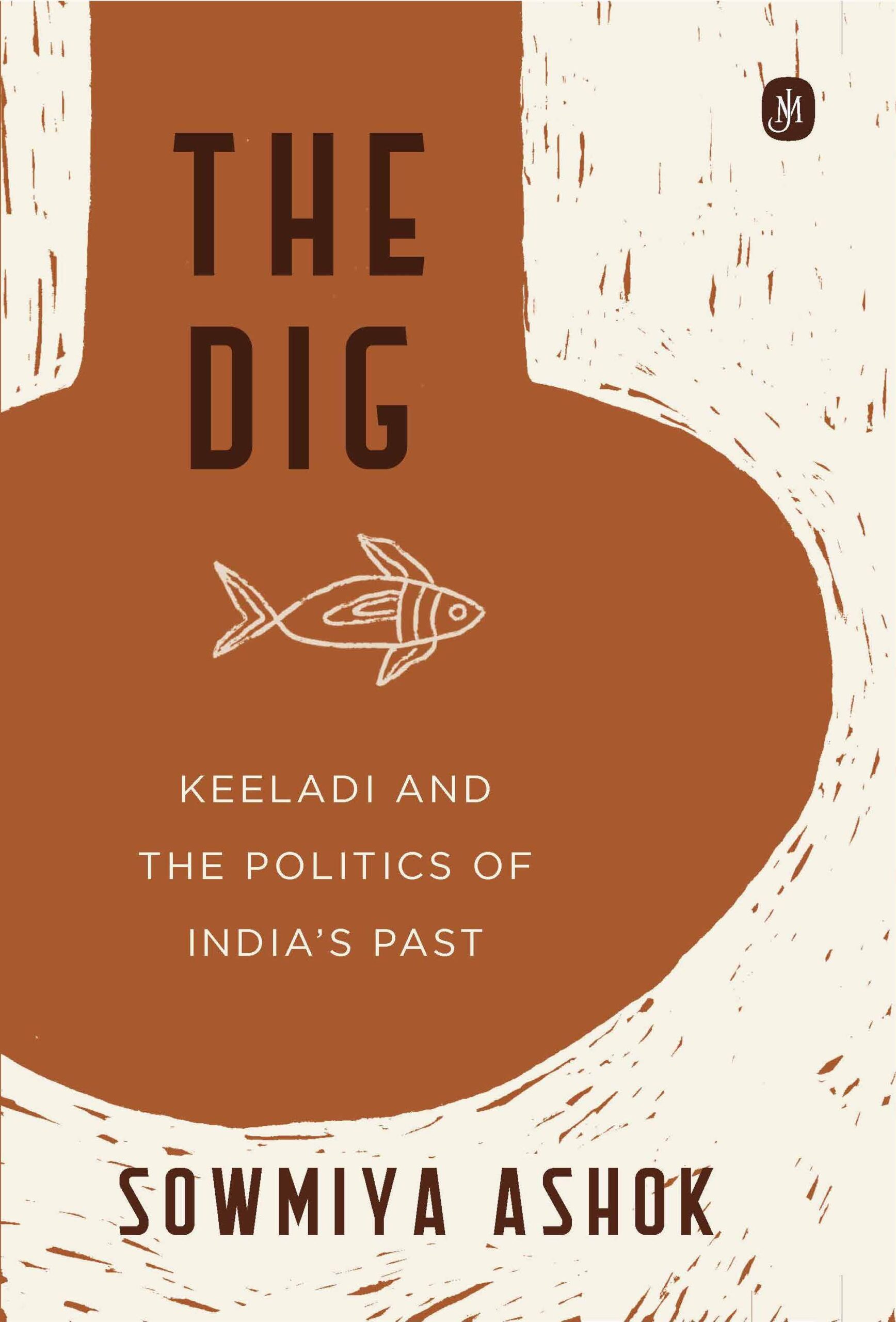
The importance of archaeological developments can take a long time to register in the general public consciousness. This is perhaps because excavations take years, results are often published long after the work begins, the significance is not immediately apparent, or conclusions are denied when they run counter to conventional narratives. Keeladi, near Madurai, is a site discovered a decade ago; its significance was appreciated pretty quickly in Tamil Nadu, where it is located, but has rather flown under the radar internationally.
The Dig: Keeladi and the Politics of India’s Past is really several books in one: an overview of the archaeology of the site and where it fits in Indian history, a discussion of how politics and archaeology interact in India and finally a blend of reportage and travel writing, as author and journalist Sowmiya Ashok recounts a decade of first-hand, on-the-ground investigation in Keeladi and at other sites throughout India. Unfortunately, the archaeology is often overshadowed by the discussion of the politics; while this is perhaps the book’s point, the history itself is far more interesting than what politicians have to say about it.The excavations at Keeladi gave physical reality to classical Sangam-era poems.
The primary importance of Keeladi is that it seems to be the first evidence of urbanization in India’s South during the so-called Early Historic Period (600-300 BCE). The precise dates—how far back the site in fact goes—are somewhat disputed. The importance of Keeladi is nevertheless twofold. First, it overturned a conventional narrative about urbanisation in South India lagging behind that of the “second urbanisation” in the Gangetic plains of North India (“second”, because it followed the collapse of the great cities of the Indus Valley Civilisation). Further, Keeladi fits firmly into the period during which Tamil-language Sangam poetry was flourishing; the excavations at Keeladi gave physical reality to classical poems that had previously hovered on the edge of mythology.
This should perhaps not have been as surprising as it seemed to some. It has been known for some time that Rome had extensive trade with South India, to the extent it had a significant effect on the Imperial budget (something covered in William Dalrymple’s The Golden Road). Urban centres might have been expected; indeed, archaeologists had gone looking for them.Keeladi, it must be said, doesn’t impress in the same way as its other classical cities: no marble temples, frescoes or flagstone-paved streets. But to an archaeologist, there is much of interest: brick walls, ring wells, drainage systems, evidence of workshops, burials. There was writing, usually scratched on potsherds, in the Tamil-Brahmi script; this was hardly unknown, but some finds at Keeladi challenge previous dating, while the quantity testified to literacy that was not restricted to elites or scribes.The politics is less interesting than the archaeology.
Ashok includes a lot of vox pop (visitors, workers, neighbours) as well as interviews with the professionals. Modern-day Tamils from all walks of life found in Keeladi a sort of validation, a confirmation of separate identity and a history distinct from the Vedic narrative that prevailed in the North. The latter raised some hackles for the Tamil/Hindi split has a long history. But in today’s India, Keeladi also got in the way of a Hindu nationalist narrative which draws history back to the epics.
Some early claims about Keeladi made the situation worse: links were intimated (despite a chronological discrepancy of a millennium or more) with Harappa and Mohenjo-daro, the large urban centres of the so-called Indus Valley Civilization (being in Pakistan, Ashok could not visit those; she had to settle for Rakhigarhi on the Indian side of the border). This stepped on other toes.The current historical consensus, based on evidence from linguistics and genetics more so than archaeology, is that North India’s Indo-European languages (Hindi, Bengali, Gujarati) derive, whether by invasion or migration, from peoples from the steppe, people who brought with them—in the mid-second millennium BCE—the horse, chariots, a language that became Sanskrit and the basis of the stories that became the Vedas. That Vedic India has its origins outside India—that the grand structures at Harappa might be something other than Indo-European and Vedic—rub a number of people, including some Indian archaeologists, the wrong way.Ashok points out that this has led to some pretty dubious interpretations of archaeological data, perhaps some less than strenuous evaluation of certain outlier lab results, and some controversial personnel transfers in the Indian archaeological establishment.Intellectually annoying, this attempt to bend archaeology to politics is less interesting than the actual history. While still a bit hazy, the evolving consensus is that the denizens of the Indus Valley Civilization spoke some early version of Dravidian, the same language family as Tamil. Whether the people who built Keeladi are descendants of the people who may have migrated south when their civilization went into terminal decline in the second millennium BCE or whether they had been here already remains unclear. What seems clear is Vedic culture had its origins outside India, as part of the great explosion of Indo-European speakers. One suspects that the alternative theory—that Indo-European originated in India and spread from there—will at some point prove itself untenable.There is another book to be written.
One drawback is Ashok is not herself an archaeologist; she is modest—perhaps a bit more than she need be—about her knowledge of the subject. The comprehensive coverage of the various meals she had on this journey seems at times like compensation.
There are indeed some anomalous results: iron from Tamil Nadu that dates back 5000 years, the supposedly third-millennium BCE chariot from Sanauli and some Tamil-Brahmi inscribed potsherds that predate by some margin the Northern Ashokan-era Brahmi script when it theoretically derives. If confirmed (and some think they are), these would upset several different apple carts. Despite dropping terms like IVC (Indus-Valley Civilization), PGW (Painted Grey Ware) and Chalcolithic, Ashok focuses on the political controversy and really only skims the surface of the actual archaeology.To be fair, the field and archaeological consensus is in a state of flux—narratives are rarely as simple as they first appear—and Ashok has at least gotten out in front of it. But there is another book to be written. Perhaps in a decade once things settle down. Until then, The Dig—and a lot of Googling—will have to suffice.