“Bearing Word” by Liu Liangcheng
Bearing Word opens with a donkey observing life at West Kun Temple through a crack in the stable door. She has been imprisoned here since she was bought two years ago by religious leader Kunmen Virtue.
Howard Goldblatt, known for his translations of such notable writers as Mo Yan and Su Tong, has a new translation of Chen Yixin’s novel Yuwa, which traces a year in the life of a young boy in a Gansu Province village much like that from Chen’s own upbringing. Chen’s prose is full of color and…
Yuwa is a novel originally published in Chinese in 2019. Set in a dirt-poor area of Gansu Province in China’s far west, it features a boy who rises above his marginal existence in a village bypassed by economic growth.

When development began in earnest in Beijing, migrants from around China flocked to the capital city for jobs of all sorts. There was money to be made and when young people did not pass their university entrance exams—or didn’t take them in the first place—they viewed Beijing as as good a place to make money…
A shimmering, fairy-tale city of glass towers where nothing is quite as it seems: this is the vision of Hong Kong presented by award-winning writer Dorothy Tse in her first solo novel.
The “six” in Dinner for Six is the number at the assembled table when a Chinese widow and widower form a temporary family with their respective son and daughter each. Author Lu Min, in this translation from Nicky Harman and Helen Wang, first focuses on the widow’s son Ash, who becomes shaped by all the…

Can Xue’s experimental novella Mystery Train opens in total darkness: a chicken-farm employee named Scratch wakes up to find himself “in one of [the] pitch-dark sleeper cars” of a train. Confused, Scratch gets out of bed and looks at his wrist to check the time, but is unable to make out the face of his…
On 12 March 1867, an American merchant ship, the Rover, capsized near Kenting, on Taiwan’s southern coast. A handful of survivors managed to come ashore, but almost all were promptly killed by a local indigenous tribe.

Hospital by acclaimed Chinese science-fiction writer Han Song is a kafkaesque trip through a fictional hospital turned nation-state that explores the Buddhist philosophy on suffering, the nature of the doctor-patient relationship, and the mental state of patients who suffer from chronic conditions.

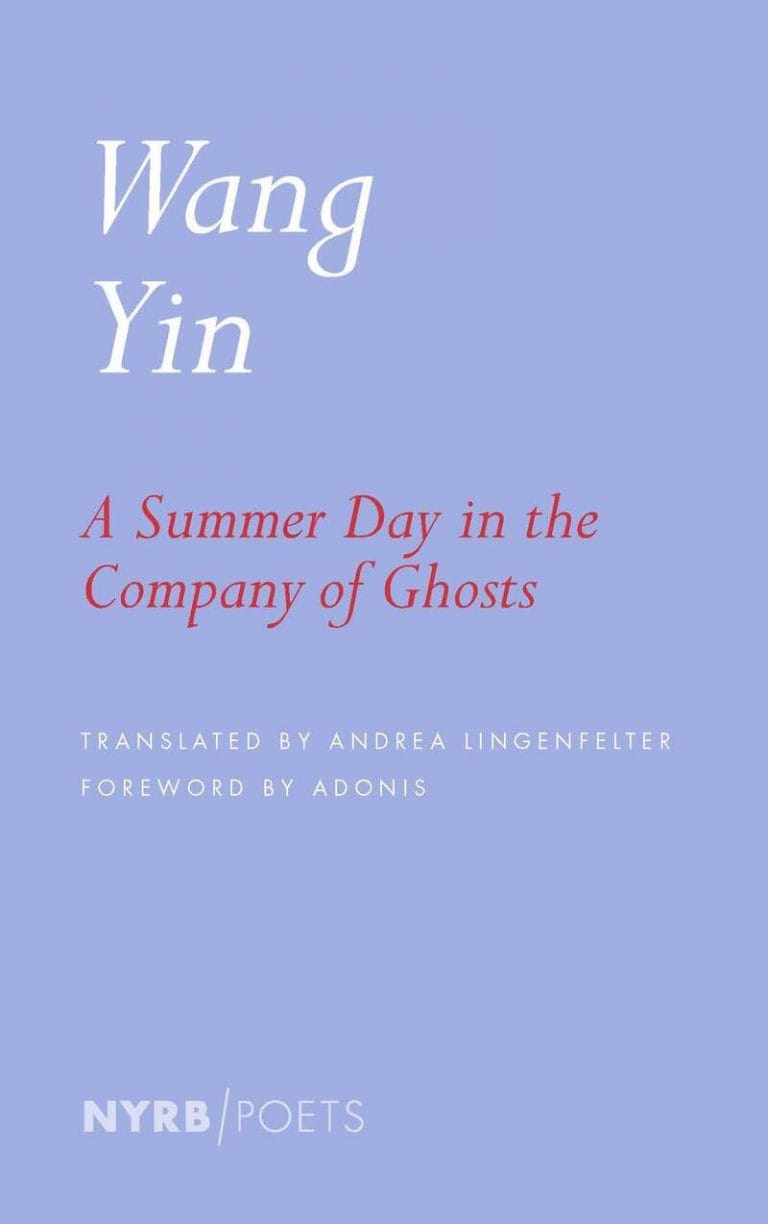
One of the first poems in Wang Yin’s recent collection, A Summer Day in the Company of Ghosts, finds the Chinese poet in an unexpected place: Vermont. “The Task of the Poet, Written in Vermont After Robert Bly” opens with a pastoral scene on a front lawn, where the poet peacefully observes—and records—the sights and…

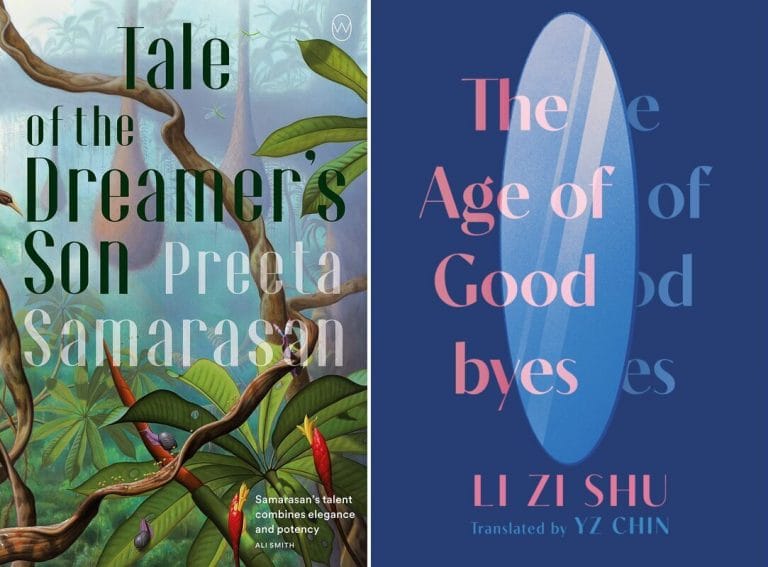
In Preeta Samarasan’s new novel, Tale of the Dreamer’s Son, the caretaker of a commune in Malaysia’s Cameron Highlands states that “some nations were sending people to outer space while our countrymen were busy butchering each other.” Mrs Arasu, the caretaker in question, was referring to the 1969 race riots in Malaysia, namely the May…
Whether Jeremy Tiang chooses the books to translate or the books choose him, his name on the cover nigh guarantees that the novel is extremely good, remarkable or, in the case of Zhang Yueran’s Cocoon, a triumph.

How the world has changed in a few years. When Rong Xinjiang first published the papers collected in this volume, between 2002 and 2015, China’s Belt and Road Initiative had captured the world’s imagination. A flurry of scholarly research rediscovered historical ties between China and its western neighbors. Nowadays managing Covid is China’s highest priority….
This captivating translation assembles two volumes by Lu Xun, the founder of modern Chinese literature and one of East Asia’s most important thinkers at the turn of the 20th century. Wild Grass and Morning Blossoms Gathered at Dusk represent a pinnacle of achievement alongside Lu Xun’s famed short stories.

Power corrupts, so the saying goes. Award-winning author Li Peifu suggests there is more to it than that in his novel A Man of the Plains, now translated into English by James Trapp and retitled Graft.