“Graft” by Li Peifu
Power corrupts, so the saying goes. Award-winning author Li Peifu suggests there is more to it than that in his novel A Man of the Plains, now translated into English by James Trapp and retitled Graft.

Power corrupts, so the saying goes. Award-winning author Li Peifu suggests there is more to it than that in his novel A Man of the Plains, now translated into English by James Trapp and retitled Graft.
Nobel laureate Gao Xingjian presents his primary concerns of the past decade or so. He indicts the lingering impact of ideology on contemporary literature and art, and for this reason calls for “a new Renaissance”, a result of which would be “boundary-crossing creations” such as the three cine-poems that he produced and describes in detail…
Zheng Xiaoqiong has come to be known as a “migrant worker poet”, accurate in the sense she is, or has been, both, and that a great deal of her work is informed by the life and hardships endured by Chinese migrant factory workers.
Dung Kai-cheung’s A Catalog of Such Stuff as Dreams Are Made On is an exercise in the influence of late-90s, mainly Japanese, popular culture on young women in end-of-the-century Hong Kong. The “catalog” consists of ninety-nine sketches, perhaps in an homage to Raymond Queneau’s Exercises in Style, where Queneau took an unremarkable short episode and…
We are used to novels by expats written in the language of home and then occasionally translated back, sometimes as a curiosity, into the language of the place where the work is set. But the expats are usually Western and the language English. Xue Yiwei’s Celia, Misoka, I, translated from Chinese by Stephen Nashef, is…
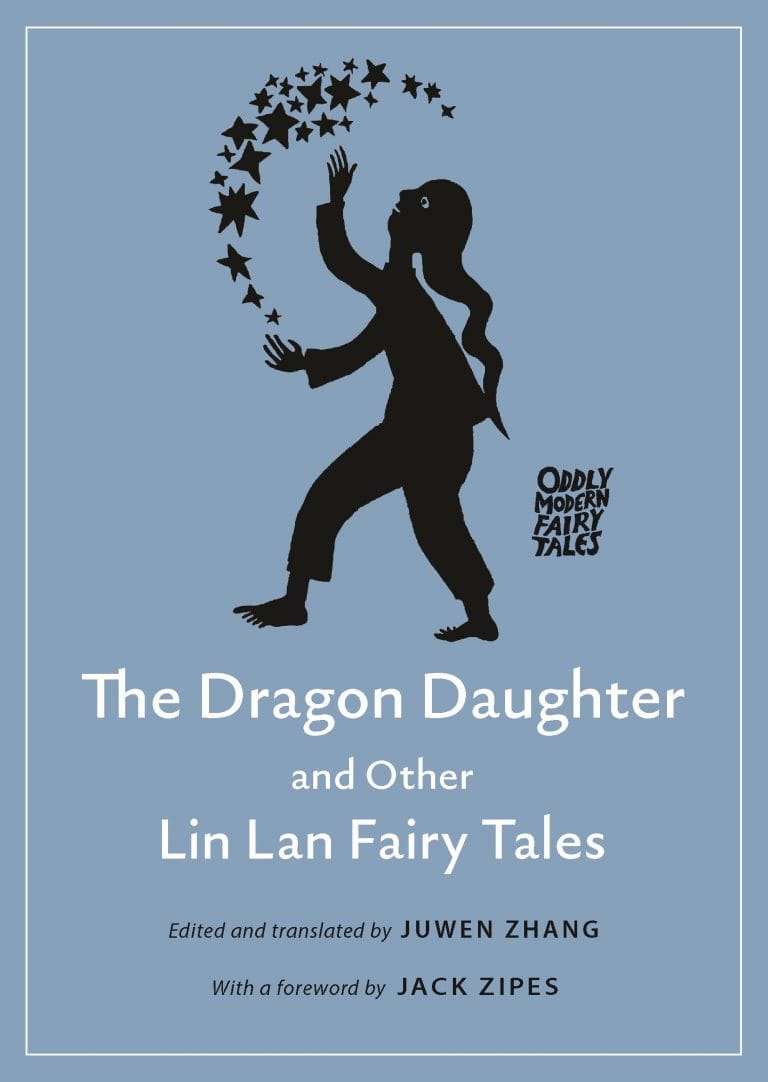
A swamp turns into a castle. A princess shapeshifts into a squid of one pound and four ounces. An ugly toad by day transforms into a handsome young man at night. A betrayed sister reincarnates into a black bird to haunt who hurt her.
This is the story of two women in Western China in the 1990s, on the edge of the Gobi Desert, near the site of the ancient Silk Road. Bound together by both poverty and tradition, they embark upon a perilous journey to change their lives. In Into the Desert, acclaimed Chinese author Xuemo has recreated…

The Chinese claim to have invented many things. To paper and gunpowder, we should probably add historical novels. The English language only came into this genre with Walter Scott’s Waverly novels in 1814, while Chinese readers had been enjoying The Romance of the Three Kingdoms already for five centuries. Late Ming literatus Feng Menglong’s Chronicles…
‘The world is yours, as well as ours, but in the last analysis, it is yours. You young people, full of vigor and vitality, are in the bloom of life, like the sun at eight or nine in the morning. Our hope is placed on you. The world belongs to you. China’s future belongs to…
Surrealism is usually connected with the visual arts: Salvador Dali’s limp watches or René Magritte’s rainstorm of bowler-hatted businessmen. Whilst surrealist writing is perhaps not as well-known, French poet André Breton declared in his 1924 Surrealist Manifestos that in surrealism “the agonizing question of possibility does not arise,” and that “the man who cannot visualize…
In the opening scene of Liu Zhenyun’s 2017 novel, recently translated into English as Strange Bedfellows by the widely acclaimed translators Howard Goldblatt and Sylvia Li-chun Lin (some critics have gone so far as to assert that Goldblatt’s translations of Nobel Prize winner Mo Yan are better than the originals), we witness the negotiation of…
China’s increasingly dominant position in global economic and political affairs has so far not been matched by similar progress in international use of either the Chinese currency or language. This can at times seem curious to some of those charting China’s rise. Jeffrey Gil of Adelaide’s Flinders University offers The Rise of Chinese as a…
Many Chinese poets, ancient or modern, seem to Western readers sometimes obsessed with landscapes, and Yang Jian (born 1967) is no exception.
Chinese remains inaccessible to most English-speakers; Chinese poetry doubly so, so Western readers should be grateful to Zephyr Press for issuing these two excellent bilingual versions of contemporary Chinese poetry, which introduce us to two unfamiliar and very different voices, Ya Shi from the mainland, and Wu Sheng from Taiwan.

“All the world’s a stage”, said Shakespeare, “ and all the men and women merely players.” His near-contemporary, Chinese dramatist Li Yu goes one step further and says that even in love, or perhaps especially in love, we can only play out our roles.