Kiyoko Murata’s A Woman of Pleasure is a story of Japan’s pleasure quarters in 1903 and 1904. Fifteen-year-old Aoi Ichi grew up on a rocky volcanic island, “the sort of place where stumbling upon a folkloric demon would come as no surprise”. She always expected to grow up like her mother, a strong swimmer and diver who supports her family with the fish and shellfish she catches. But now, to support a loan to her impoverished family, she has been sold to an exclusive brothel in Kumamoto, a regional capital along an inland sea on Japan’s southern island of Kyushu.

Mariko Tatsumoto has made her name as a children’s author; her new book, Blossoms on a Poisoned Sea: A Novel of Love & Betrayal in Minamata, Japan, set during the 1956 industrial disaster, is suited for a more mature audience of adults and young adults. It’s a thrilling coming of age romance of a poor daughter of a fisherman family and a wealthy son of a corporate executive, one that probably resonates more than ever with contemporary readers after the recent pandemic. 

In her letter to readers at the beginning of her debut novel, The Storm We Made, Vanessa Chan writes that Malaysian “grandparents love us by not speaking” and goes on to explain that this only pertains to the four years of Japanese occupation during World War II. In every other subject, she writes, Malaysian grandparents do speak and at great lengths. But when it comes to the war, they cannot bring themselves to talk about the horrors from that time.

Art imitating life, or is it the other way around? Sherlock Holmes is a fictional character so popular and ubiquitous in popular culture that he almost seems real; many, indeed, have thought him so. Samuel L Clements, by contrast, was a real man so flamboyant, omnipresent and iconic that he can seem almost fictional, a character far better known, of course, by an entirely fictional name: Mark Twain. Anuradha Kumar’s interleaving of fact and fiction in her recent “Bombay mystery”, The Kidnapping of Mark Twain, seems somehow fitting.

As Buddhist scriptures have it, when Gotami, the Buddha’s foster mother, asked for ordination from the Buddha, he refused. The Buddha’s cousin and disciple, Ananda, intervened: since, according to the teachings of the Buddha, women were capable of achieving awakening, they must be let into the monastery. The Buddha, outsmarted, let the women into his fold but he also dictated that the women will have to live as second class citizens, subordinate to the monks. 

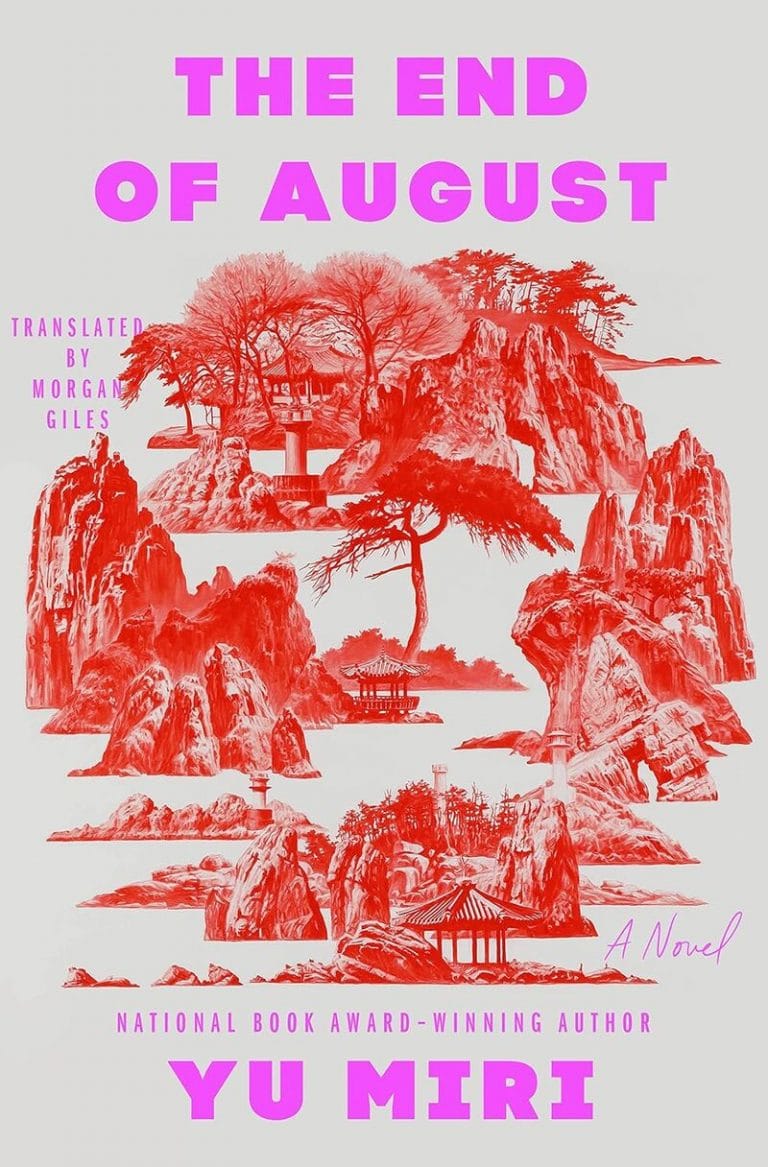
Yu Miri in her novel The End of August tells an extraordinary tale: the saga of her Korean family and the story of their nation. Her story spans space and time, giving voice to both the living and the dead. It is a tale of Korea, from the brief, failed attempt to stand at the end of the 19th century as an empire against Imperial Japan, through the colonial period that ended with Japan’s surrender in the Second World War in 1945, to the postcolonial period that came to a close at the end of the 1970s. Settings range from her ancestral village in colonial Korea to Japan’s wartime continental empire in Manchuria and occupied China to Japan. Characters speak Korean, Japanese, and Chinese, some of them switching from one language to another as circumstances demand.

Kingdoms in Peril: Volumes 1-4, Feng Menglong , Olivia Milburn (trans) (University of California Press, October 2023)
Kingdoms in Peril: Volumes 1-4, Feng Menglong, Olivia Milburn (trans) (University of California Press, October 2023)

One of the great works of Chinese literature, Kingdoms in Peril is an epic historical novel charting the five hundred years leading to the unification of the country in 221 BCE under the rule of the legendary First Emperor. Writing some fourteen hundred years later, the Ming-era author Feng Menglong drew on a vast trove of literary and historical documents to compose a gripping narrative account of how China was forged.