“Fixing Inequality in Hong Kong” by Yue Chim Richard Wong
Anyone who wishes to opine on Hong Kong’s perceived troubled present and possibly fraught future would do well to read Richard Wong’s Fixing Inequality in Hong Kong first.

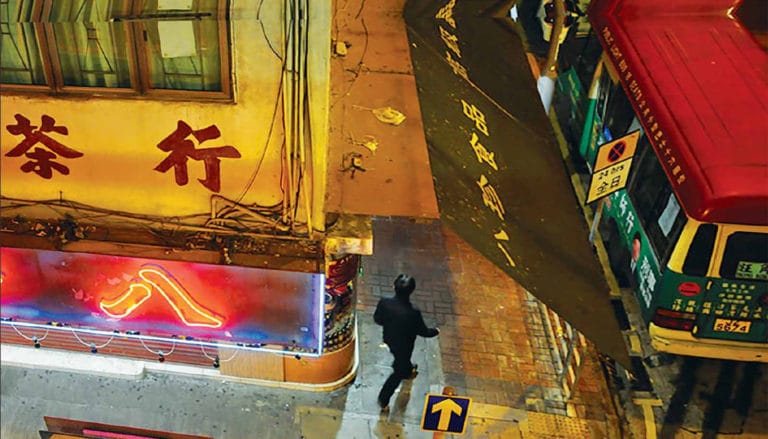
Kwan Chun-dok is “the genius detective… the man who never forgets a place, and can identify a suspect just from the way he walks.” And even in a coma, in what might be his last day of life, Kwan, known as the “Eye of Heaven”, is going solve one final murder.
At first glance, “Can we say Hong Kong?” might appear a slightly silly question, superfluous indeed. Of course we can say “Hong Kong.” I am saying the name of my city right now and no one is stopping me. And you can say it, too, without any difficulty. In fact, we can collectively say it,…
Hong Kong in the Cold War, edited by Priscilla Roberts and John M Carroll, is an academic collection of essays about the city’s history during the first half of the Cold War. The collection can roughly be split into two halves: Hong Kong’s security situation, and its cultural development.
Hong Kong is currently going through something of an identity crisis, both literally and figuratively. The literal crisis is the rise of a so-called “localist” political movement, some proponents of which have even called for Hong Kong independence. The more figurative crisis are the regular pronouncements that Hong Kong is having difficulty working out its…
Hong Kong’s Sir David Tang has for several years had a column at the Financial Times answering reader questions on various matters of modern living, from how to dress for a job interview to (only in Britain) what to take as a house gift when invited up to shoot. These, or least a selection of…
The good news is that is Musica Viva’s four-performance run of Carmen was completely sold out.
Macau is endlessly fascinating in no small part because it is so anomalous. Dating back to the “Age of Exploration”, it was the only Iberian possession in East Asia that survived as such into the 20th century—and two years longer than Hong Kong. In spite of all the recent development, it is still a city…
An article in the most recent Economist was subtitled “China’s newest export hit is classical music” with a lede about the China Philharmonic Orchestra on tour in New York. Once, classical music generally travelled from the West to the rest. Now China is reversing the exchange, not merely performing Western classical music in China,…
Lee Fook Chee’s Hong Kong: Photographs from the 1950s is a remarkable book with many levels of meaning. It tells the story of a lone immigrant photographer and presents his collection of photographs portraying 1950s Hong Kong. A photo book, and of the highest standards at that, it also brings sharp and fresh research into…
No opera composer turned to William Shakespeare more often than Giuseppe Verdi, who composed three works, Macbeth, Otello and Falstaff, based on the Bard’s plays. But if it hadn’t been for the persistence of his publisher Ricordi and would-be librettist Arrigo Boito, Verdi might well have stopped at one. He had to be coaxed out…
Hong Kong is pretty conservative when it comes to culture, so Musica Viva’s current production of four opera scenes based on Shakespeare might therefore qualify as innovative. Performing full-staged scenes from different operas—neither, in other words, a full-scale opera nor a recital—is something that is usually confined to galas.
When Fleurs de lettres approached me about interviewing Sarah Howe, winner of the 2015 TS Eliot-prize, I didn’t need to think twice about accepting the invitation. Before Howe won the prestigious award, I had already admired her work in the anthology Eight Hong Kong Poets (Chameleon Press, 2015) and a special issue of Law Text…

The concept for this new production Madama Butterfly was been influenced the work’s literary background: the western perception of Japan present throughout the autobiographical novel of Pierre Loti (Madame Chrysanthème, 1887) and the diary treatment of the subject by Félix Régamey (The Pink Notebook of Madame Chrysanthème, 1894). These two sources present the protagonist Madame…