“The Lost Pianos of Siberia” by Sophy Roberts
Writers have, over the years, given many excuses for a trip to Siberia—tigers, stories, trains, shamanism, Jews, rivers, solitude, cycling—but the most unexpected must surely be “pianos”.
If you’ve never met Arkady Renko, erstwhile Soviet and now Russian cop, his most recent set of cases, this time in Asia—well, Siberia, to be exact—is as good an opportunity as any to finally become acquainted.
It is tempting to label Rollan Seisenbayev’s The Dead Wander in the Desert as an early example of what has now been come to be known as “cli-fi” (“climate fiction”): the book’s central motif, after all, is the human-engineered collapse of the Aral Sea.
Although Aigerim Tazhi is Kazakh, she writes in Russian. “I live in Kazakhstan,” she is quoted in translator J Kates’s introductory essay as saying, but I was born in the Soviet era. We had a common country then, a common capital (Moscow), and the main language was Russian. Therefore, in school we were taught…
Two young girls are snatched off a city street; the crime ripples through the wider community. A story that might have been set anywhere, but Julia Phillips sets hers in Kamchatka, one of the remoter parts of Russia’s remote Far East.
The daughter of a Jewish Azerbaijani father and a Russian mother, Sophia Shalmiyev grew up in 1980s Leningrad hearing her grandmother recite anti-Semitic jingles, ruffling Sophia’s hair as if this act of act of affection could erase the sting of her words.
Although Ak Welsapar is Turkmen, and one of the few Central Asian writers to have any international presence, The Revenge of the Foxes—his latest novel (or, given its length, perhaps novella) to appear in English—was written in, and translated from, Russian. It shows: Russian influence is very clear and, the nationality of the protagonist and…

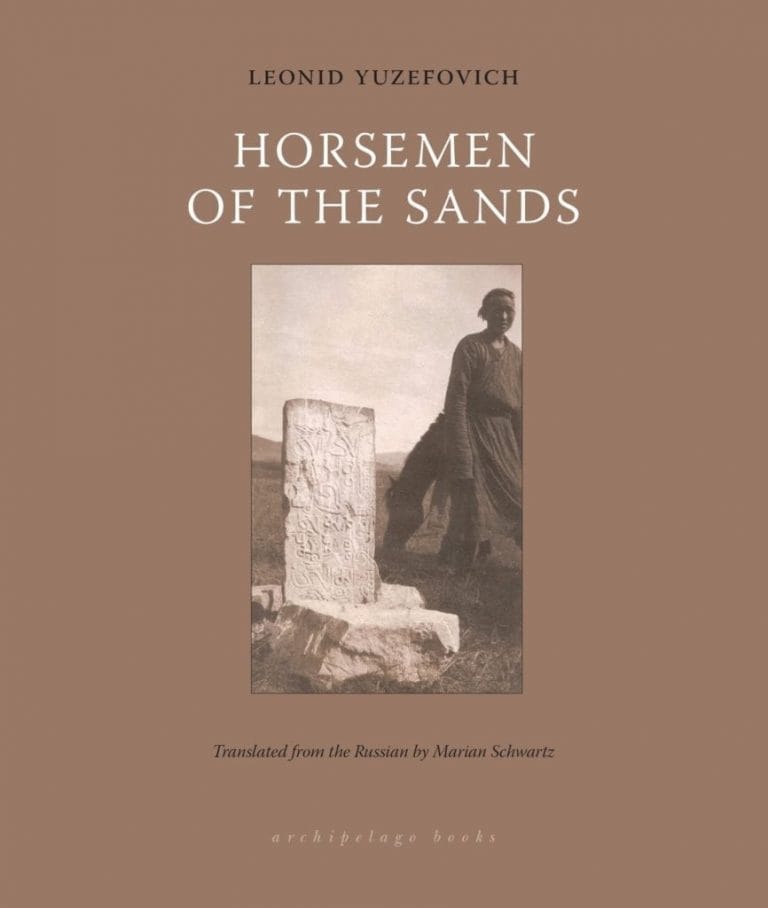
The story of Roman Fyodorovich Ungern-Sternberg—“a Russian general, Baltic baron, Mongolian prince, and husband of a Chinese princess”—more or less writes itself. In his novella, Horsemen of the Sands, Russian writer Leonid Yuzefovich tells the story largely from the perspective of the Buryats—ethnic Mongols living in Russia—through the medium of a lost talisman.
To get the details out of the way first: Alisa Ganieva is a Russian writer of Avar/Dagestani extraction. She has been called “the first Dagestani author to have their [sic] work translated into English”, and her most recent translated novel, the 2015 Bride and Groom—which was shortlisted for the Russian Booker Prize—is set in the…
Russia is once again much in the news, although the focus has been mostly westward-looking with the occasional southerly diversion to the Middle East. It’s worth remembered that Russia is the only major power other than the US which straddles a continent, giving it a physical presence that faces east as well as west. Here…

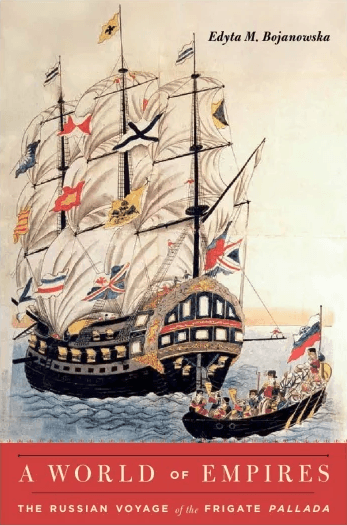
Anton Chekhov, it appears, was not the first Russian literary luminary to visit Hong Kong. Chekhov had stopped off in October 1890 and wrote about its “wonderful bay”. English-language literature had to wait until Somerset Maugham came through more than a quarter-century later. But Chekhov was beaten to the punch by Ivan Goncharov who stopped…
It’s pretty hard to compete with the invention of the chariot, the Silk Road, Genghis Khan and Tamerlane, so Christoph Baumer’s fourth and presumably final volume in his magisterial history of Central Asia is something of a mopping up operation.
Moscow’s Red Square and Bangkok’s Imperial Queen’s Park wouldn’t seem to have much in common but for the main characters in Anatoly Kurchatkin’s enjoyable and fascinating novel Tsunami, translated by Arch Tait from the original Russian, there is much that unites these disparate locales.
China shares borders with 14 other countries, more than almost any other nation. Its near neighbors represent a diverse collection of countries, from dominant powers such as Russia and India, to the smaller emerging nations of Laos and Bhutan. Throughout China’s history, it is through these borders that the influencing forces of trade, ideology and…
Shukshin’s Stories is a dramatization of eight short stories by Soviet-era writer Vasily Shukshin (1929-74). If you know little or nothing about him or Moscow’s Theatre of Nations which presented it, you would not—at least among English-speakers—be alone and would have, at least until last night, had me as company. Ignorance may not be bliss,…