“Sylvia” by Maithreyi Karnoor
Like shapes in a kaleidoscope, poet and translator Maithreyi Karnoor bends and refracts her characters in this mercurial novel, Sylvia.

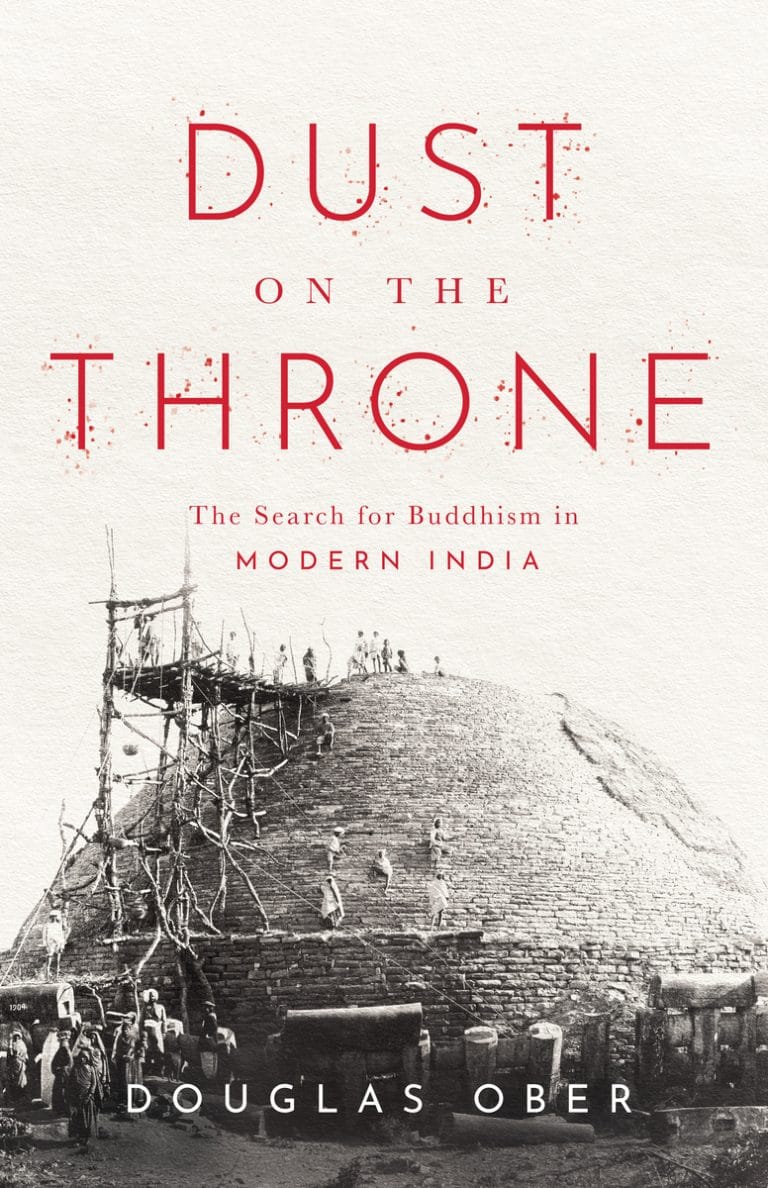
Buddhism in modern Indian history is generally believed to be marked by Western intellectual input in the 19th century on the one hand and the mass conversion of the “untouchable” castes under the leadership of Dr BR Ambedkar in 1956. But what was going on between these two moments about a century and a half…
Assam, which shares borders with Bhutan, Bangladesh and used to border Myanmar and China, is the largest state in India’s volatile Northeast region. Many of the Indian states that now border Assam; Nagaland, Meghalaya, Mizoram and Arunachal Pradesh, were all carved out of Assam’s territory post-Independence following fierce political battles for representation and autonomy. Therefore…

If one thought, as I admit I did, that a book with “Silk” and “History” in its title would be (yet another) about China and the Silk Road, one will soon be disabused. Aarathi Prasad, a biologist and science writer, opens with the Lepidoptera floors at London’s Natural History museum. Silk, argues Prasad, has a…
Nod Ghosh begins her new novella, The Two-Tailed Snake, with some wise words from the perspective of a snake.
It is appropriate (and perhaps not entirely coincidental) that John Zubrzycki’s Dethroned: The Downfall of India’s Princely States—the story of how India came to be a unitary state rather than a patchwork of autonomous if not independent polities—appears during India’s 75 anniversary.
When we think of Nepal, we think of its high Himalayan mountains, or maybe the highlands of Kathmandu. But somewhere between a quarter and a third of the country is nothing like that: marshy, forested, malaria-infested swampland, along the southern border with India.
Shah Hussain was a 16th-century Punjabi Sufi poet based in Lahore. His kafis, (mostly) short rhymed poetry with refrains, referring to the relationship between God and devotee with metaphors of lover and Beloved, or Murshid (literally, the master but also a metaphor for God as well) and mureed (disciple), are sung and relished even today…
The characters in Nishanth Injam’s The Best Possible Experience, his debut short story collection, are like many in India or in Indian communities in the United States: Working hard and enduring hardships to try to get a better life for themselves. They don’t always succeed—and even those that do lose something along the way.

One knows one has a great Delhi novel in one’s hands if it says that the lines “If there’s an paradise on Earth, it is this”—attributed to the 13th century Indian sufi poet Amir Khusrau speaking of the glory of Kashmir—were actually spoken in praise of Delhi “because when did Khusrau go to Kashmir?” Anjum Hasan’s…
For much of the past three months, the northeastern Indian state of Manipur—nestled right up against the border with Myanmar—has been the site of a conflict between two groups: the majority Meiteis and the minority Kukis. The fighting—with scenes of brutal violence, looting of police stations, and burnt places of worship—even sparked a motion of…
When Robert Clive, the man who established Company rule in India was hauled in front of Parliament to answer for crimes of corruption, he allegedly responded by saying, essentially, he could have been worse.
Siddhartha Deb’s The Light at the End of the World is a massive novel filled with conspiracies, uncertainty, madness and marvels, the inability to process the wide array of what is noticed and reported, and, indeed, what counts as reality. Here is the world, specifically India, except it isn’t. As one character responds in a…
Josef Wirsching (1903-1967) was a German cinematographer credited with changing “the future of Indian filmmaking” to quote his grandson Georg Wirsching. His filmography starts with The Light of Asia (1926) and includes many superhits including Pakeezah (1972), one of Hindi cinema’s most loved films. With his graceful filming of Indian heroines and his ability to…

Jyotirmoyee Devi Sen (1894-1988), a pioneering Bengali feminist writer in the first part of the 20th century, is well-known for her novel Epar Ganga, Opar Ganga (The River Churning: A Partition Novel) and her short story collection Sona Rupa Noy (Not Gold and Silver) for which she received the prestigious Rabindra Puraskar, the highest honorary…