“Enheduana: The Complete Poems of the World’s First Author” by Sophus Helle
The Mesopotamian high priestess Enheduana lived over 4,000 years ago, but her words ring down to the present: “I am Enheduana.”
The Mesopotamian high priestess Enheduana lived over 4,000 years ago, but her words ring down to the present: “I am Enheduana.”
A compilation of reviews in the past twelve months for Women in Translation month (August 2024), including non-fiction and poetry and well as novels, short stories and children’s books. These include translations from Bengali, Chinese, French, German, Japanese, Kazakh, Korean, Hebrew, Malayalam, Swedish and Vietnamese.
It seems that so little solid, verifiable information has reached the outside world from North Korea since the nation’s founding in 1948 that we might as well, in the manner of medieval cartographers, inscribe maps of the Korean Peninsula between the Yalu River and the Demilitarized Zone with illustrations of dragons and lions as an…

Kazi Nazrul Islam (1899-1976), aka “Dukhu Mia” and known as the “rebel poet” of the Bengalis, was born in Churulia, a village in the Bardhaman district of West Bengal. A litterateur, lyricist, revolutionary, communist and freedom fighter, he was declared the national poet of Bangladesh in 1987. These Collected Short Stories are a joint endeavour…
In an interview subsequent to the publication of the translation into English of Thuận’s novel, Chinatown, interviewer Phuong Anh observes that the author’s main characters are searching for an answer to a question that ultimately drives that novel.
Yoko Tawada’s Paul Celan and the Trans-Tibetan Angel, originally published in German in the fall of 2020, was an early—one might even say premature—response to the anxiety caused not only by COVID-19, but also government lockdown policies implemented worldwide. The novel is narrated in the third-person by Patrik, a literary researcher who most frequently refers…
Paul Bevan is the one of the most prominent scholars of early 20th-century Shanghai and it’s thanks to him that English language readers have learned of the contributions of Chinese illustrators, writers, publishers and other artists in late-Qing and Republican-era Shanghai. A few years ago, he translated a novel titled The Adventures of Ma Suzhen:…
Sikhism, born in India, about six centuries ago, is not a religion that has travelled far and wide the way Buddhism did in ancient times, and Hinduism continues to do even today through concepts of yoga, karma and so on. As the Sikh diaspora in the West struggles with its identity in contemporary times, there…
Nanako Hanada’s The Bookshop Woman chronicles the unique magic books have to connect people. In her 30s with her marriage and career on the brink, Nanako joins an online matching service that she refers to as PerfectStrangers. Though it resembles a dating site, it’s meant to connect people for thirty-minute conversations around shared interests. To…

Rogelio Sicat (or Sikat), often referred to as “one of the greatest pioneers of Philippine fiction”, along other young writers in the 1960s, chose to write in Tagalog in deliberate reaction to the literature written in English during the American occupation. Sixty years after his Bleeding Sun was written, this translation by his daughter Maria Aurora…

All three of the short pieces included in Asa: The Girl Who Turned into a Pair of Chopsticks by Akutagawa Prize-winning author Natsuko Imamura are stories of escalation—in each, the mundane finds itself quickly replaced by the tragically absurd.
On the evening streets of Tokyo, in the heart of the Shinjuku district, a white sedan “reeking of blood and cigarettes” hosts Shindo, the battered and bruised protagonist of The Night of Baba Yaga. These elements—inconspicuous cars, bloody seats, violent people—make up the bulk of Akira Otani’s novel. Beyond the gore lies a queer love…

Alexander Grigorenko’s previous book Mebet, set among the Nenets people of the Siberian taiga, was such an unique literary experience that one could be forgiven for opening Ilget, the next book in the trilogy (a rather loose trilogy, it would appear), with some trepidation, anxious that it repeat or at least not surprise in same…
Riko, the first-person narrator of Hiromi Kawakami’s densely intertextual The Third Love, is a forty-year old woman in contemporary, Reiwa Era Japan recalling her life. Riko isn’t even two years old when she falls in love with her cousin, Naruya Harada (“Naa-chan”). It’s almost a fated love, and it has shaped the narrative of her…
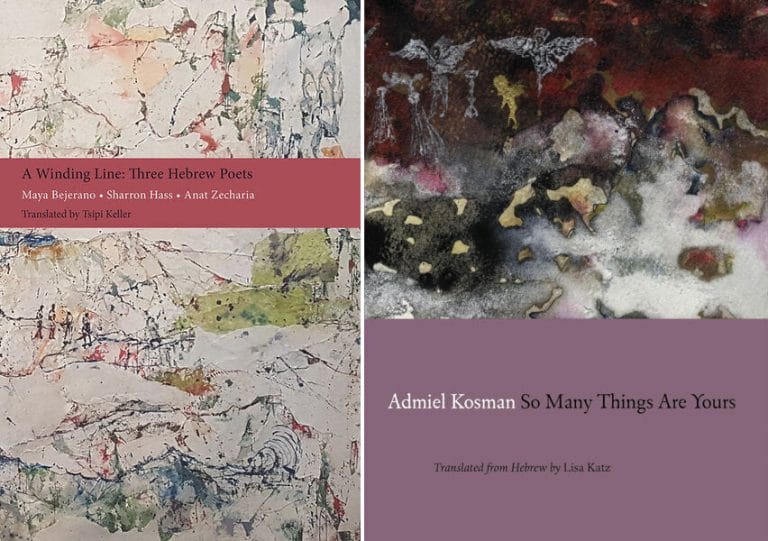
Hebrew is unique, an ancient tongue that was all but lost for millennia as a spoken language, but was revitalized in the late 19th century and is now the official language of Israel, a country of nine million. Despite this relatively small number of native speakers, Hebrew literature is robust, yet Hebrew literature in English…