“Graft” by Li Peifu
Power corrupts, so the saying goes. Award-winning author Li Peifu suggests there is more to it than that in his novel A Man of the Plains, now translated into English by James Trapp and retitled Graft.

Power corrupts, so the saying goes. Award-winning author Li Peifu suggests there is more to it than that in his novel A Man of the Plains, now translated into English by James Trapp and retitled Graft.
Nobel laureate Gao Xingjian presents his primary concerns of the past decade or so. He indicts the lingering impact of ideology on contemporary literature and art, and for this reason calls for “a new Renaissance”, a result of which would be “boundary-crossing creations” such as the three cine-poems that he produced and describes in detail…

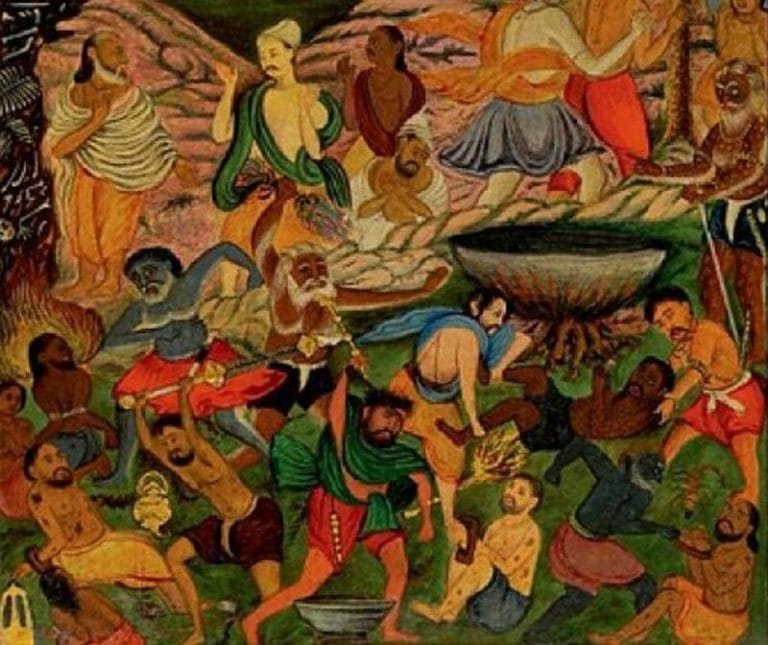
Long related orally, the Sanskrit epic Mahabharata is believed to have been composed in written form between 300 BCE and 300 CE, the epic narrates the tale of greed and compassion between two clans, the Kauravas and the Pandavas, and has life lessons that transcend any particular civilization. The family feud over a kingdom speaks…
Osamu Dazai is one of Japan’s most celebrated modern writers. He was born in 1909, at the end of Japan’s era of rapid modernization known as the Meiji Period. He began writing as a high school student, moved by the suicide of the great Japanese short story writer, Ryonosuke Akutagawa in 1927.
Island of Bewilderment is a recent English translation of Jazire-ye Sargardāni, a historical novel by the late Simin Daneshvar, originally in Persian and published in 1992. Daneshvar (1921- 2012) was considered Iran’s first female novelist. Her books were about the lives of ordinary people, especially women, through the lens of political and social events in…
It helps to be reminded from time to time that literature, all other objectives aside, is at bottom storytelling. And Turkish Nobel Prize-winning author Orhan Pamuk’s latest novel Nights of Plague is storytelling so luxuriant that one cannot help but soak in it.
Set in a disturbing dystopia, Saha, Korean author Cho Nam-joo’s latest work following the wildly successful Kim Jiyoung, Born 1982, tells the story of the bottom rung of a dark society.
For such a small girl, this dignified-sounding name was certainly somewhat startling. But even more surprising was her temperament. Until something was broken, she did not believe in fixing it. For one, at such a young age, she took care of a couple of children as if she were a mother. And, on top of…

Indians take their gods and goddesses seriously, holding them extraordinarily close by means of innumerable festivals round the year, and striving to find every possible opportunity to pray to the divine, wish-granting beings in as many ways as humanly possible. As a result, everything from personal problems to social evils becomes a matter of divine…

The most substantial selection in English of short stories by Dhumketu, a pioneer of the short story form in Gujarati literature, is brought together in this new translation by Jenny Bhatt. Dhumketu, the pen-name of Gaurishankar Govardhanram Joshi, was a prolific writer in the first half of the 20th century, producing 500 short stories, over…
The narrator of Hiroko Oyamada’s Weasels in the Attic wants to start a family with his wife. They’ve been together for three years, but they haven’t had any luck. Meanwhile, it has been getting more and more difficult to see other people their age with kids of their own.
“My watch reads ten o’clock,” opens Thuan’s Chinatown, a novel that displays a writer in full play with language and story-telling. Her narrator begins a two-hour interior monologue that is the bulk of the novel. She is on a stopped train in the Métro in Paris. Her twelve-year-old son is asleep against her shoulder. An…
Lee Geum-yi has published more than fifty books in her native South Korea, many of which have been adapted to film and stage, as well as into a number of languages. But it’s only now that one has been translated into English. That book is The Picture Bride, a story set mainly in a Korean…

The prolific career of acclaimed mystery and detective fiction author Seicho Matsumoto spanned the latter half of the 20th century. His 1958 novel, Tokyo Express, provides a glimpse into daily life during the postwar period in Japan. Previously published in English a generation ago under the title Points and Lines, the novel has been freshly…

In her new book High, Erika Fatland traverses the Himalaya. Her journey starts in Kashgar in Western China. From her starting point in Xinjiang, she crosses the border into Pakistan and travels down the Karakorum highway onto Gilgit, Chitral and the Swat Valley. Dropping down to Lahore her journey takes her across the Punjab and…