“Like a Sword Wound” by Ahmet Altan
Although set in an exotic late-Ottoman Istanbul, a city of harems, dervishes, veils and fezzes, Ahmet Altan’s Like a Sword Wound nevertheless reads like a familiar and recognizable Western European period classic.

Although set in an exotic late-Ottoman Istanbul, a city of harems, dervishes, veils and fezzes, Ahmet Altan’s Like a Sword Wound nevertheless reads like a familiar and recognizable Western European period classic.
With its unvarnished look at infidelity, drug addiction, war, and fractured families in mid-20th century China along with a jarringly abrupt non-linear narrative and burly eight-page character list, Eileen Chang’s final novel Little Reunions is a difficult read.
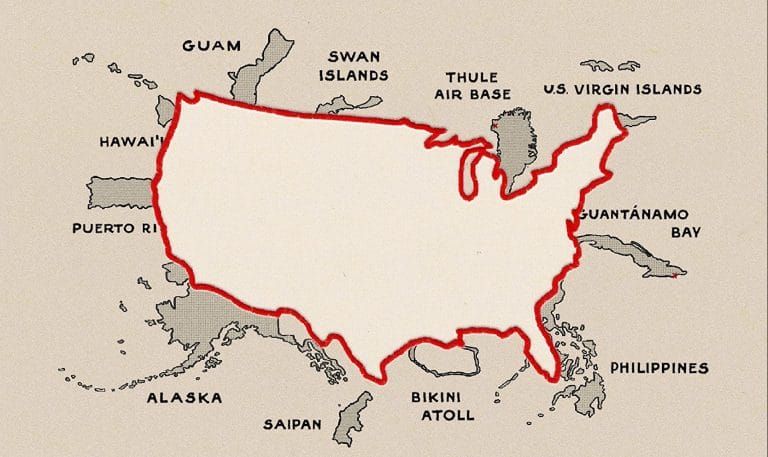
Hawai’i is the one part of the USA proper that is unambiguously Asian, both in its origins as well as in its current demographics and orientation. Its idyllic image, writes Sharon Chang in her new book, Hapa Tales and Other Lies, is fraught with problems, namely that the Native Polynesian culture has been exploited over…
In the concluding chapter of Glyn Ford’s new book, Talking to North Korea, the author proposes diplomatic measures to bring about the denuclearization of North Korea. He suggests that any deal that works must resemble the Agreed Framework of 1994 that he claims “halted Pyongyang’s nuclear programme for a short decade.”

One of the major casualties of the Asian financial crisis was President Suharto who had been in power for thirty-two years. The crisis was a key point in Indonesia’s history, at the time it was unclear if the nation would make the necessary reforms to move forward or fall into further chaos. In Resurgent Indonesia,…
Evidence of the scarcity of earth’s resources is all around us, in water shortages in Cape town, a choking tropical haze in Indonesia, or increasingly overcrowded and unaffordable Asian cities where people live in “coffin cubicles” and “cage homes”. Action is required. But what kind of action, and which actor is best suited to bring…
There are some cities that lend themselves to darkness and intrigue. Macau is one of these places. First settled by refugees fleeing the Mongol invasion in northern China, it became a fishing village and later a haven for pirates. The Portuguese arrived in the 1500s and built a slice of the baroque Mediterranean in South…
When a work of non-fiction opens with “On the last day of his old life, the dinosaur hunter went to the beach,” it’s a strong hint that tragedy is in store.

Yan Ge’s The Chilli Bean Paste Clan should come with a warning on the cover: “contents may cause readers to break into a sweat and consume unhealthy amounts of Laoganma spicy chilli crisp.” The setting for this complicated and often humorous story of the Duan-Xue clan, a family consumed by resentments, betrayals, matriarchal machinations, and…

In the summer of 1792, the Qianlong Emperor was confronted with a uniquely Tibetan Buddhist problem: Qing authorities had discovered the Eighth Dalai Lama, Seventh Panchen Lama, the Fourth Jetsundamba, several other prominent reincarnate lineages, and a distinguished Tibetan statesman, were embedded in a web of kinship ties. “… How is it possible that the…
Chi Zijian’s novel The Last Quarter of the Moon was set among the Evenki reindeer-herders in remotest Heilongjiang. Her latest novel in English translation, Goodnight, Rose, has as its center the relationship between a Chinese country girl making her way in Harbin and an elderly Jewish woman who arrived, as did many, after the Russian…
As a place that doesn’t fit any of the world’s standard pigeon-holes, it seems fitting that Taiwan would have an unconventional book such as Formosa Moon written about it. Not a travelogue nor a memoir but both, Formosa Moon is about what happens after Joshua Samuel Brown, a longtime Taiwan expat moving back from the…
Author Louis Cha, whose wuxia martial arts novels became Chinese cultural touchstones and who heralded an explosion of Hong Kong literary and media production, died 30 October. Though Cha leaves a legacy of massive sales in Asia, his books have not yet taken hold in the west. Efforts this year to expand his English readership,…
Ling Hon Lam encourages us to think of emotions in terms of space; when we sympathize with a character in a play or feel something for another person, that emotion takes place, for it moves us outside ourselves. In Chinese this relation between space and emotion is described by the term qingjing; a scenery of…
History by way of “things” has itself become a “thing”. Archaeologists, of course, always did history this way. But they would focus on, usually, assemblages of objects, rather individual pieces. While perhaps not the first—nothing is ever the first—the BBC and the British Museum’s A History of the World in 100 Objects by Neil MacGregor…