“The Analects”, translated by Moss Roberts and “Confucianism and Sacred Space” by Chin-shing Huang
Is Confucianism a religion, or is it a philosophy?

Is Confucianism a religion, or is it a philosophy?
In 1935, the writer Baburao Patel wrote the following about Bombay’s film industry: In India, with financing conditions still precarious, the professional film distributor thrives… He comes with a fortune made in share and cotton gambling, advances money to the producer at a killing rate of interest plus a big slice of royalty and…
For nearly seventy years, Kazuo Odachi, a respected police officer, insurance investigator, and Kendo-sensei in Japan, kept secret that during the last months of World War II he was a young kamikaze pilot who flew eight suicide missions but miraculously survived. Odachi’s memoir was published in Japanese in 2016, and has now been translated into…

One of the most recognizable garments in Japanese fashion, kimonos were closet staples for people of all classes, ages, and genders. Literally translated as “a thing worn”, it is a term broadly used to describe a T-shaped costume with sleeves partially detached under the arm that can be wrapped around the body and secured with…
Endearingly referred to as “Mother Volga” in Russian, it is the longest river in Europe, flowing from forests to the steppes and marshlands of the Caspian Sea. In The Volga, Janet M Hartley pens a vivid, human-centered story of the great river standing at a crossroad of peoples and cultures. She explores and contextualizes its…
The Russian cultural presence in Japan after the Meiji Revolution was immense. Indeed, Japanese cultural negotiations with Russian intellectuals and Russian literature, art, theology and political thought, formed an important basis for modern Japanese transnational intellectual, cultural, literary, and artistic production.
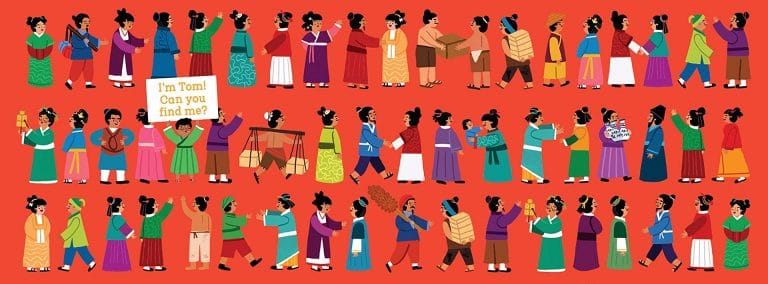
Tom is a young boy who is “ordinary most of the time”—that is, unless he’s visiting his grandmother Bea, an archaeologist whose artifacts have the power to transport Tom back into time.
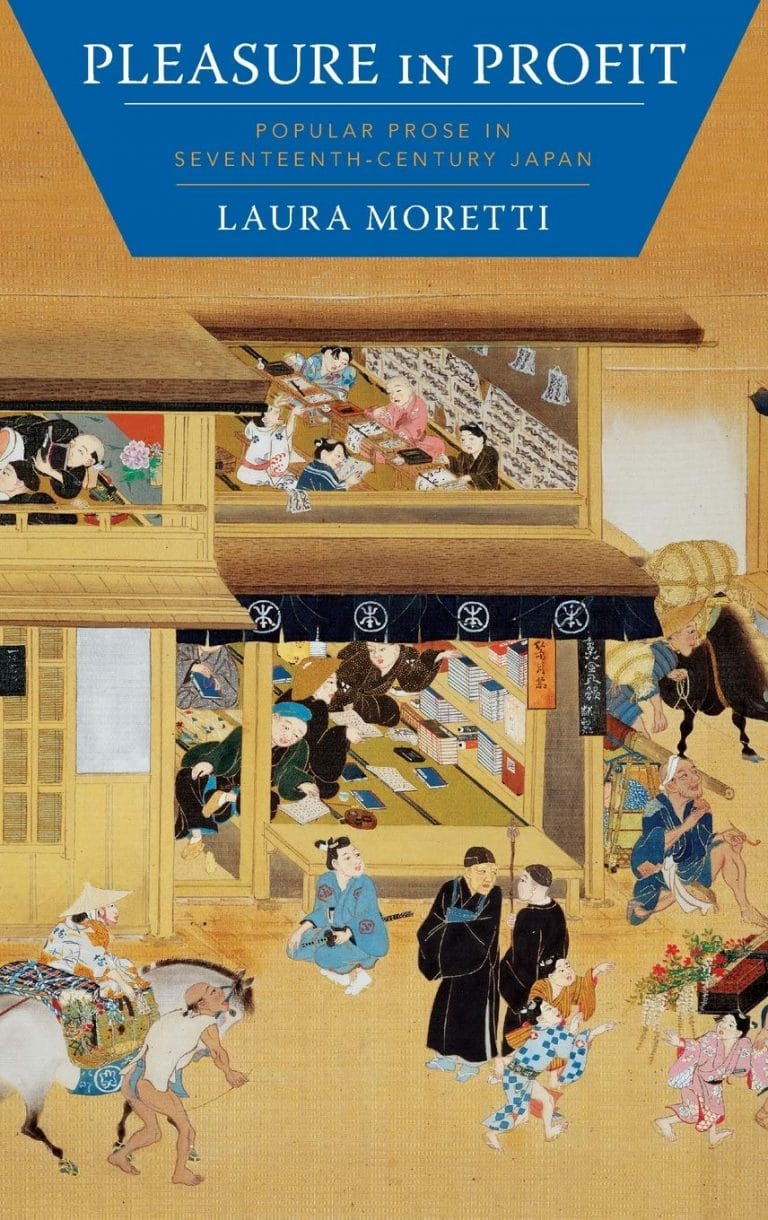
Laura Moretti’s Pleasure in Profit begins and ends with the image of a bookshop in 17th-century Kyoto: Now step back in time, to seventeenth-century Japan. Imagine yourself on Teramachi Street, in the heart of Kyoto.
From about 1765 to 1840 Japanese finding themselves in Edo might have been amused by skimming over a few senryū, short satirical or comical poems which made fun of the pretensions of the administrative capital.
The gold of the Scythians exploded into the world of museum goers when Leningrad’s Hermitage Museum sent these treasures touring to London and New York in 1975. An equally noteworthy exhibition, Masters of the Steppe, took place in 2017 at the British Museum. This copiously-illustrated volume enables readers to revisit that exhibition, and to ponder…
Retired Captain Pao Yang was a Hmong airman trained by the US Air Force and CIA to fly T-28D aircraft for the US Secret War in Laos. However, his plane was shot down during a mission in June 1972. Yang survived, but enemy forces captured him and sent him to a POW camp in northeastern…
In his perennially wonderful (if now dated—the abridged version was issued by its author in 1922 based on the 12-volume full one) Golden Bough: A Study in Magic and Religion, Sir James Frazer tells us that magic was the precursor to religion. Van Schaik uses Frazer’s analysis as an example of what has by now…
Made in Hong Kong seeks to reframe the city’s role in the modern history of US foreign policy and globalization by focusing on a group of “mobile, pragmatic, and adaptive” Chinese elites author Peter E Hamilton calls kuashang, or “straddling merchants”. An academic study of families whose profitable relationships straddled the US, colonial Hong Kong…

A hero in Japan, Beate Sirota is hardly a household name in her home country of the United States. Jeff Gottesfeld’s No Steps Behind: Beate Sirota Gordon’s Battle for Women’s Rights in Japan is a new picture book illustrated by Sheilla Witanto that tells Beate’s story and how she brought change to Japan after World…
In 1933, Maurice Wilson—First World War hero, drifting veteran, and amateur aviator, lands in the aerodrome at Purnea in British India. His goal is to be the first man to climb Mt Everest. And nothing—not his complete lack of climbing experience, the lack of official permission, and the efforts of British civil servants—will stop him.