Podcast with Audrey Truschke, author of “India, 5000 Years of History on the Subcontinent”
How do you tell the story of India—not just the modern-day country, but the whole region of South Asia, home to over two billion people?

Rosinka Chaudhuri’s latest work, India’s First Radicals: Young Bengal and the British Empire, is the first book-length study of the Young Bengal movement and the contribution of its members to the history of India’s anti-colonial struggle. In this book, Chaudhuri delves deep into their activism, examines their socio-political agenda and analyses the neglect and misrepresentation…
How did Tokyo—Japan’s capital, global city, tourist hotspot and financial center—get to where it is today? Tokyo—or then, Edo—had a rather unglamorous start, as a backwater on Japan’s eastern coast before Tokugawa decided to make it his de facto capital.

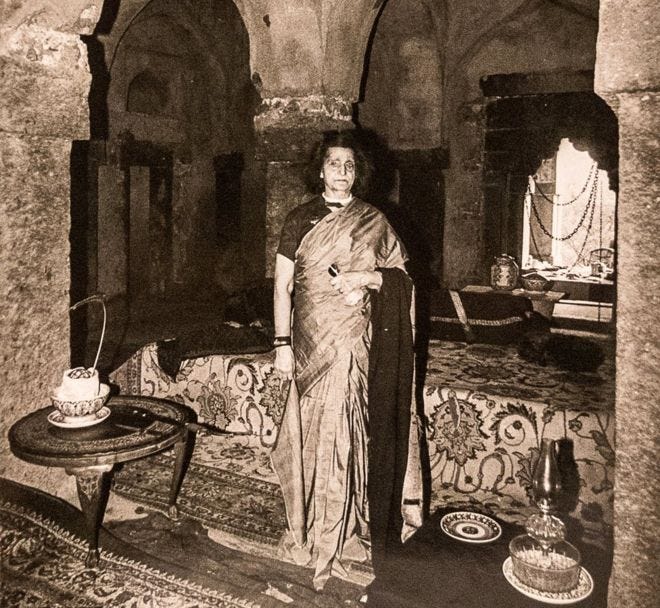
This epic story centres on an irresistible premise: is the main character “Her Royal Highness, The Begum of Oudh, Shehzadi Wilayat Mahal, Heir to the Last King of Oudh Begum Hazrat Mahal and Wajid Ali Shah” … or just plain old “Mrs Butt”? Satisfyingly, even the latter more prosaic option “Mrs Butt”—horse-loving wife of an…
Yoga has become highly popular worldwide and is generally received with enthusiasm in the western world. But it is mysterious in nature as, several interpretations have been offered by scholars from antiquity to recent times. Earlier, Yoga was practiced in the spiritual, philosophical and metaphysical sense in Indic traditions. In the medieval period, it was…
The Russians came late to Japan, arriving after the Portuguese and other European powers. But as soon as they arrived, Russia tried to use spies and espionage to learn more about their neighbor—with various degrees of success. Sometimes, it failed miserably, like Russia’s early attempts to make contact with pre-Meiji Japan, or the debacle during…
Macau—onetime Portuguese colony, now casino hotspot—has long captured the imaginations of travelers, reporters, artists and writers. The city served as the only gateway to China for centuries; then, after the rise of Hong Kong, its slightly seedier vibe made it a popular setting for books, articles and movies exploring the more criminal elements of society.
The noun “Partition” (with a capital “P”) has, in South Asia and perhaps globally, come to mean the 1947 split of India and Pakistan, a climactic event that still roils, if not poison, domestic and international politics.
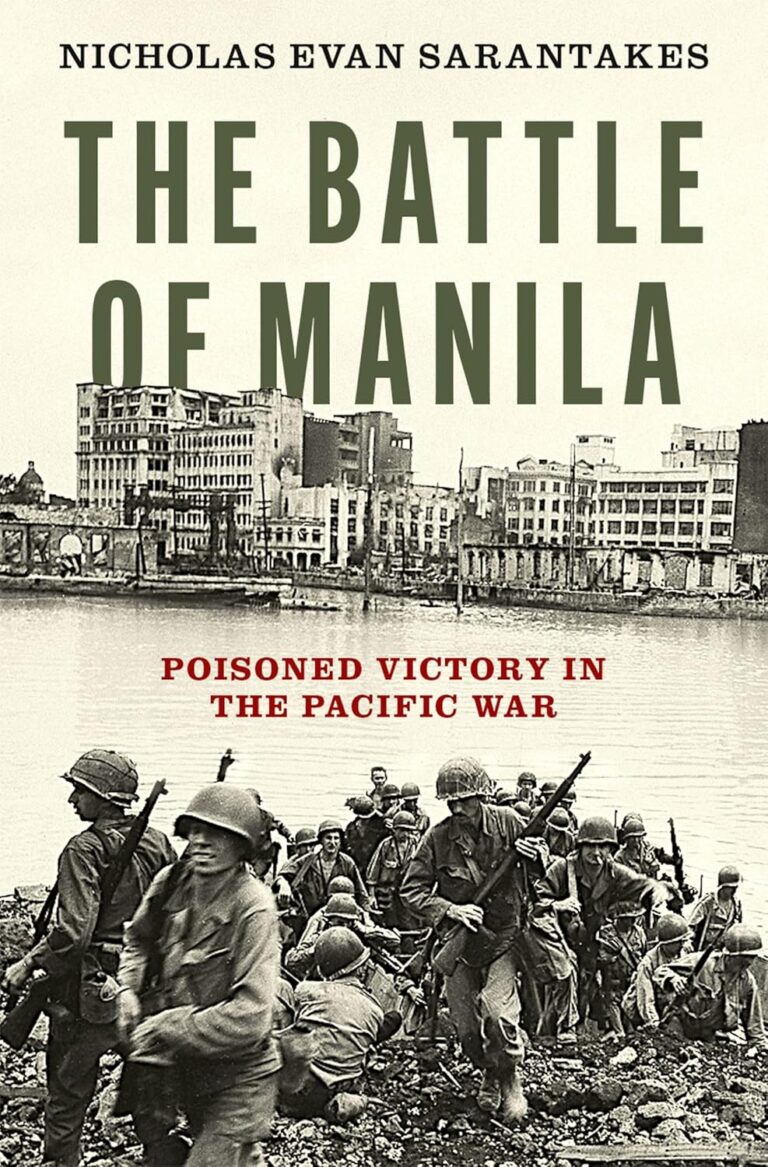
In 1898, during an era of racial terror at home and imperial conquest abroad, the United States sent troops to suppress the Filipino struggle for independence. The deployment included three regiments of the famed African American “Buffalo Soldiers.” Among them was David Fagen, a twenty-year-old private in the Twenty-Fourth Infantry, who achieved notoriety after deserting…
For centuries, scribes across East Asia used Chinese characters to write things down–even in languages based on very different foundations than Chinese. In southern China, Japan, Korea and Vietnam, people used Chinese to read and write–and never thought it was odd. It was, after all, how things were done.
That Before Colonization can be read in several ways is to its favour, but also makes it hard to review. It takes aim at the way international relations (referred to by the field’s formal initials IR) has tended to go about its business; it is also a refreshingly straightforward discussion of, as in the subtitle,…
In his book Tianjin Cosmopolis, Pierre Singaravélou remarks that “The history of modernity is a history of possible futures as much as a study of the processes of modernization.” Thanks to a new translation from the original French, English readers now have a chance to consider one possible future of China that never came to…
China, famously, built the Great Wall to defend against nomadic groups from the Eurasian steppe. For two millennia, China interacted with groups from the north: The Xiongnu, the Mongols, the Manchus, and the Russians. They defended against raids, got invaded by the north, and tried to launch diplomatic relations.
An illuminating portrait of how Shanghai’s Catholic community surged back to life after the Cultural Revolution—and of a Church divided between allegiance to the Vatican and loyalty to the Communist party-state.
The Kims, of North Korea, are perhaps the 21st century’s most successful family dictatorship—if only due to sheer longevity, having run North Korea for the almost eight decades since the country’s post-war founding. Kim Il-sung led North Korea for over half that time, from its founding in 1948 to Kim’s death in 1994.