Six months of fiction in translation
A round-up of novels and short-fiction reviewed in the first six months of 2019.
A round-up of novels and short-fiction reviewed in the first six months of 2019.
First published in Japanese in 1995 and now in English translation, The Ten Loves of Mr Nishino by Hiromi Kawakami takes the form of ten short stories linked by a central character, the titular Mr Nishino. Each encapsulates one of ten affairs Nishino conducts through his life ranging from schoolboy romance to extramarital liaisons. Sadly,…
More than 70 percent of the thousands of documented migrant workers who depart Indonesia for overseas jobs each year are women. The reason for this remarkable statistic is simple: the well-established demand for Indonesian housemaids in the wealthier countries of the region, particularly Singapore, Hong Kong and Malaysia. Around 45 percent of registered foreign domestic…

Short story anthologies for a given country or genre tend toward the predictable in their choice of stories, gathering the one or two most well-known from the most well-known authors. This is not the case with The Penguin Book of Japanese Short Stories. Edited by translator and scholar Jay Rubin (Disclosure: I edited Jay Rubin’s…
The desire to get one’s name right can exceed the confines of a misspelt Starbucks cup. To Shakespeare’s Juliet, famed for asking her lovestruck question, “What’s in a name?”, Zahia Rahmani, the Franco-Algerian author of the novel “Muslim”, would respond: “Everything”. Call a rose by any other name, and it might doubt its own sweetness. The…
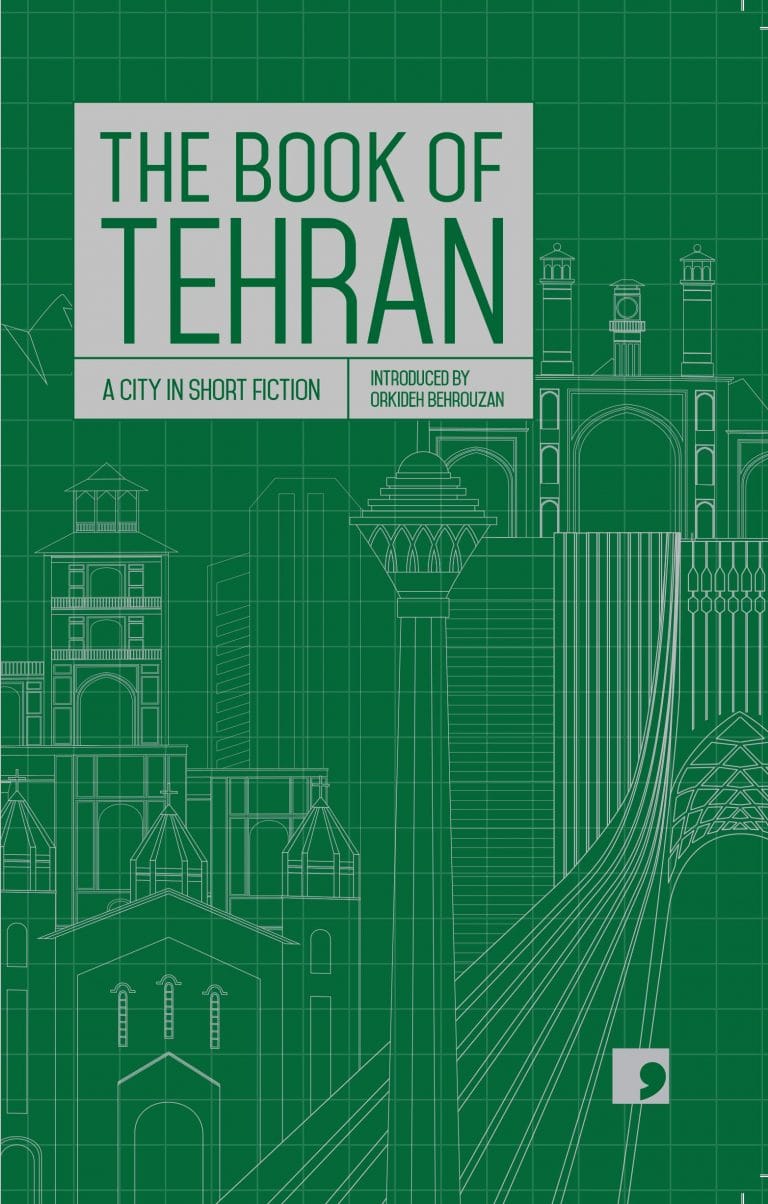
Fiction exploring the interior life of contemporary Iranians is not well represented in translations readily available in the West. The Book of Tehran aims to begin to redress the shortage by offering ten stories set in the Iranian capital, with the authors’ different voices maintained by having each story translated by a different translator.
When Salimah, the African refugee at the center of Iwaki Kei’s Farewell, My Orange, arrives in small-town Australia with spouse and sons, her situation is dire. She can hardly speak English and her options for gainful work are few.
In 1932 a new Asian country suddenly came into being in northeastern China. It was named Manchukuo, and it had been created as a result of the so-called “Mukden Incident”, in which Japanese soldiers had detonated a small charge of dynamite on a Japanese-built railway line and then claimed that Chinese dissidents had done it.

Chinese writer Jia Pingwa is rooted in his own origin story. He says in the Afterword to his most recent novel in English translation, Broken Wings, “Your birthplace has determined who you are,” and that here, “I have written about myself, and only myself.” Jia is from Shaanxi Province, which has places so remote that…
From her early interest in Russia’s hinterlands to her recent focus on the culture and places of Japan, German poet and novelist Marion Poschmann’s writing continues its eastward drift. Her latest novel (and first in English thanks to Jen Calleja’s translation) The Pine Islands, which recounts the tragic-comic journey of a middle-aged German university professor…
Translating poetry gives rise to a number of problems which may not be present in prose. Poetic language is different from that of prose; it employs many more literary devices. Furthermore, its rhythms may be quite different or varied. Then there is the question of rendering form and meter, not to mention rhyme, if it’s…
With her sinuously taut sculpture “The Arch of Hysteria” (1993), French artist Louise Bourgeois addressed deep-seated Western cultural associations between women, hysteria, and sexual dysfunction. Drawing on the ideas of 19th-century French neurologist Jean-Martin Charcot, under whom Freud had studied and whose ideas enjoyed a great deal of currency among many Surrealist artists years later,…
“Pardon me for asking,” says an elderly lady called Kaoru (a unisexual Japanese name meaning “perfume” or “fragrance”) to the protagonist, Mitsuki Katsura, and another hotel guest, “but has either of you come here to commit suicide?”
Ah, Tibet! This is the land of stupendous mountain vistas, prayer flags flapping in the breeze, monasteries perched precariously on hillsides and gentle orange-clad lamas chanting Buddhist prayers in incense-filled temples. And then, along comes Tsering Döndrup to spoil it all.
Krishna Sobti, the grande dame of Hindi literature (as she is often called in India), passed away in January this year. She was an unusual writer, writing as a woman and publishing some of her work under a masculine name. Her writing in Hindi is inflected with Urdu and Punjabi ways of speaking and makes…