“Shadowless” by Hasan Ali Toptaş
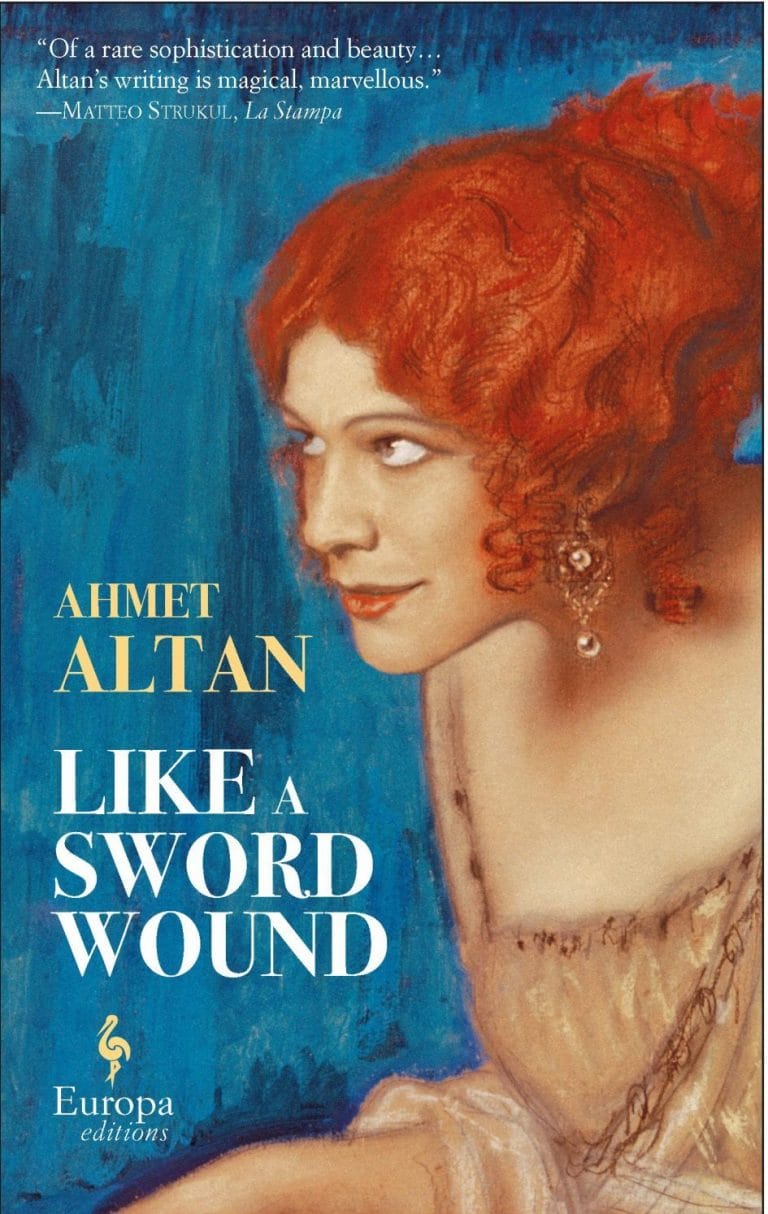
The misdirection starts with the novel’s cover. Hasan Ali Toptas’s Shadowless is, in spite of its title, full of shadows.

The misdirection starts with the novel’s cover. Hasan Ali Toptas’s Shadowless is, in spite of its title, full of shadows.

The West tends to think and speak of ancient India as a spiritual lot, as a place and time which gives extraordinary importance to religion, and other dimensions of otherworldliness. The poet R Parthasarthy goes to the texts, different from the usual epics, that engage with love in all its corporeality.

There are various translations of the Life of Milarepa available, but since Garma C Chang issued his translation of the Hundred Thousand Songs in 1962, there has been a gap of more than fifty years, and Tibetan Buddhist scholarship has made a great deal of progress over that time, which makes 2017 an ideal year…

On November 18th of this year, a blaze killed nineteen people in a textile manufacturing district of Beijing. Most of the victims were migrant workers, scores of whom continue to live peripheral lives in makeshift, pop-up neighborhoods on the outskirts of major cities across China. In response to the tragedy, the city government instituted a…

For a number of logistic, commercial and territorial reasons, books rarely circulate much outside the market they were published in. Asian-published books can as a result often, regardless of merit, end up largely unknown outside a relatively small domestic market, something that goes in spades when the book was originally published in a language other…

Can the present save the past? Can the living save the dead? As South Korean author Han Kang revealed in a 2016 interview with the London-based magazine The White Review, these questions interested her during her twenties, only to resurface years later when drafting her novel Human Acts about the 1980 Gwangju Uprising and its…

This story is drawn from The Book of Swindles, a collection whose oldest known edition dates to 1617. The author, Zhang Yingyu, collected stories about swindles large and small that are mainly set in the highly commercialized and mobile world of late-Ming China.

Think hard; use your imagination. Try to remember the time when the world was not an oyster, with its pearl geolocalized on Google Maps, rated on TripAdvisor, its best sights already pre-dissected on The Lonely Planet and travel blogs. There was an era during which the world had not shrunk yet to a global playground…

Author Sangeeta Bandyopadhyay tackles the ultimate taboo in this clever novel which uses the metaphor of a mother abandoning her child to explore the artist’s struggle to fulfill the responsibilities of life as well as the demands of creativity.

Late Ming China didn’t have the “Nigerian advance-fee scam”, but if Zhang Yingyu’s contemporary The Book of Swindles is any indication, it had just about every other con ever tried. This collection of short cautionary tales is, according to translators Christopher Rea and Bruce Rusk, “said to be the first Chinese story collection focused explicitly…

Eka Kurniawan is the Quentin Tarantino of Indonesian literature: a brash wunderkind, delivering gleeful references to pulp fiction, lashings of stylized violence, and an array of characters and scenarios that far surpass the tropes and clichés which inspire them. But as with Quentin Tarantino, one might occasionally wonder just how much substance lies beneath the…

Born and raised in Beijing, Bei Dao spent decades in exile in Europe because of his alleged involvement in the Tiananmen Massacre in 1989. City Gate, Open Up is his eloquent, moving memoir in which the foremost Chinese poet rebuilds Beijing, his fond hometown and lifelong anchor, through poignant memories and portraits, rendering the generations…
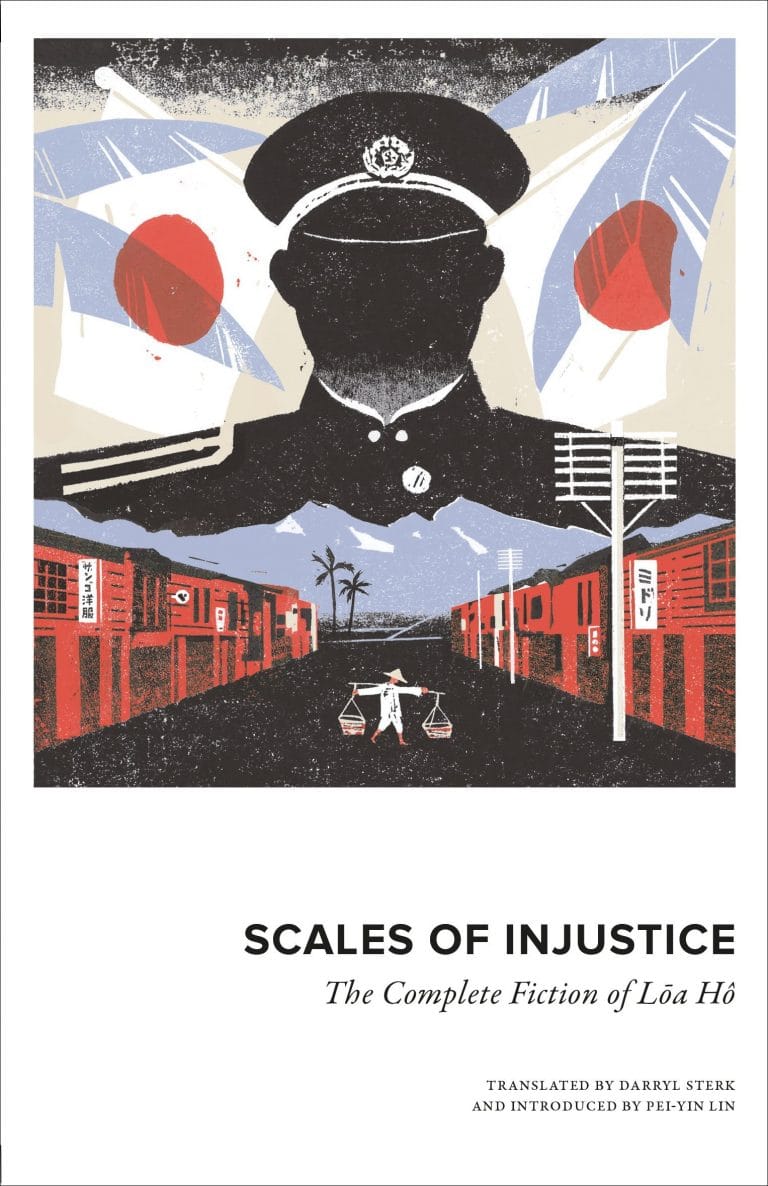
The Musha Incident is a dark moment in Taiwan’s colonial history (1895-1945), as well as a long-forgotten one. On 27 October 1930, the indigenous Atayal people decapitated 134 Japanese soldiers. Japanese revenge was brutal, bringing the Atayal tribe to the edge of extinction. Later, the Nationalist government labeled the Incident a heroic retaliation against Japanese…

Arabia Felix: Happy Arabia. Who wouldn’t want to go there and find out why it was such a happy place? In fact, in 1761 not that many Europeans were going there, which left an opening for the culturally and scientifically minded king of Denmark, Frederik V, to make a name for himself and his country…

Most places other than those where English is the main language are usually—in terms of literature—defined by works in the local language; English-readers view this tradition via translations. But the situation in Hong Kong is reversed: because Hong Kong Chinese works are so rarely translated, and because there is a considerable body of Hong Kong…