“Lands of Lost Borders: A Journey on the Silk Road” by Kate Harris
So you’re planning a trip on the Silk Road. You’re looking for tips on what to take, routes, currencies, visas.
It’s pretty hard to compete with the invention of the chariot, the Silk Road, Genghis Khan and Tamerlane, so Christoph Baumer’s fourth and presumably final volume in his magisterial history of Central Asia is something of a mopping up operation.

The ancient Indian epics carry a kind of authority different from their Western equivalents. The Indian audience has been ready to stay invested in the story for longer, unto the present times. The story of Rama is performed every year in India before the Hindu festivals of Dussehra and Diwali celebrated to mark, respectively, Rama’s…
Although “Subjunctive Moods” is the name of the second of the stories in CG Menon’s debut collection, it is apt for the entire collection. In grammar (albeit less so and increasingly rarely in English), the subjunctive is used when a condition of uncertainty or conditionality prevails; “if I were the author,” for example, “I might…

Nagaland is located in the north-east of India, with an eastern border to Burma, the name by which Myanmar is referred to throughout this book. The population of Nagaland is about two million people and consists of 16 tribes, each of which retains to this day its own traditional customs and language.
China shares borders with 14 other countries, more than almost any other nation. Its near neighbors represent a diverse collection of countries, from dominant powers such as Russia and India, to the smaller emerging nations of Laos and Bhutan. Throughout China’s history, it is through these borders that the influencing forces of trade, ideology and…
According to the ancient Indian Hindu scriptures called the Puranas, the Earth is shaped like a disc and it rests upon different animals in different versions—the cobra, the elephant or the turtle. In her new book Terrestrial Lessons, historian Sumathi Ramaswamy says that in the process of signing treaties and carrying out diplomatic negotiations with…

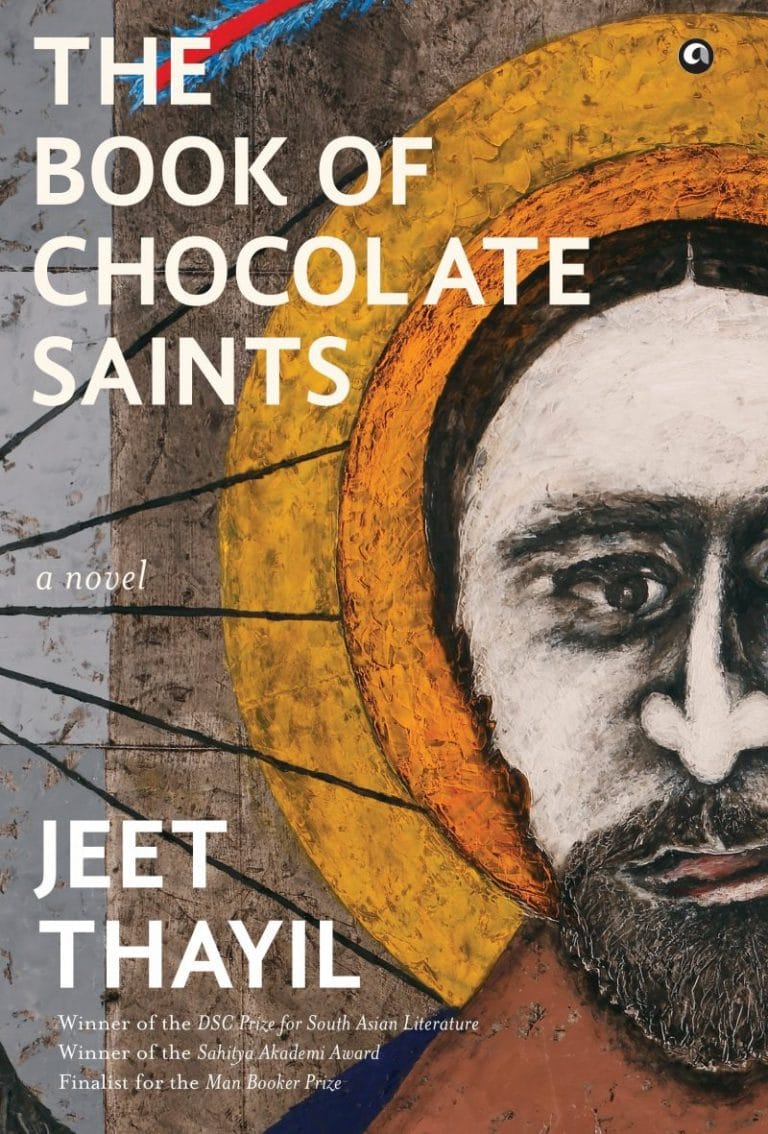
East is East, and West is West, but the twain did meet and influenced each other unpredictably. For instance, the post-colonial Asia encountered Christianity during its first interactions with the West. The fruit of such a meeting is the post-colonial religion that is practiced in different parts of the continent as Christianity. Jesus is a…

In 1934 Gendun Chopel, a former Tibetan monk, arrived in India in the company of an Indian scholar, Rahul Sankrityayan, just after giving up his monastic vows. He would remain there for some time before returning home in 1945 and getting himself arrested on a (probably) trumped-up charge of forging banknotes. While in India, he…
It is so difficult to live in Mumbai, an old Bollywood song about Mumbai goes, for there is everything here—cars, trams, mills— everything except a heart. Perhaps it is because of this absence that the heart is invoked in so many ways in countless songs and love stories set in the city. Dil Dhadakne Do:…

Like its title, this third novel by Peter Kimani waltzes between decades and characters to form a memorable family drama set against radical social changes in pre-independence Kenya.

There is nostalgia for a gentler time as well as bloody depictions of real-life historical events in this genre-crossing work by author and publishing stalwart Ashok Chopra.

The West tends to think and speak of ancient India as a spiritual lot, as a place and time which gives extraordinary importance to religion, and other dimensions of otherworldliness. The poet R Parthasarthy goes to the texts, different from the usual epics, that engage with love in all its corporeality.
Nicholas Gordon interviews Victor Mallet, author of River of Life, River of Death.

The rise and fall of Brazil, Russia, India, and China, the so-called BRIC nations, is the great geo-economic story of the twenty-first century. In the early 2000s, these countries were tipped to redraw the economic map of the world. With a combined population of nearly 3 billion, they constituted roughly 40 percent of the world’s…