How Singapore Beat the Odds: Insider Insights on Governance in the City-State, WL Terence Ho (World Scientific Publishing, July 2025)

This book tells the inside story of how Singapore defied considerable odds to develop a dynamic economy and cohesive society in the 60 years since the city-state’s independence.
Through in-depth interviews with some of the nation’s most influential leaders—Abdullah Tarmugi, Chan Sek Keong, Cheong Koon Hean, Halimah Yacob, Peter Ho, Khaw Boon Wan, Lim Siong Guan, Ravi Menon, Seah Jiak Choo, Tan Yong Soon, Eddie Teo, Teo Ming Kian—How Singapore Beat the Odds explores various facets of public policy that shaped Singapore’s remarkable transformation.

The marketing blurb for Amitav Acharya’s most recent book From Southeast Asia to Indo-Pacific begins, rather portentiously, “Southeast Asia was created by geopolitics, and it might die with it.” The book itself, thank goodness, is a considerably more measured (and clearly-written) overview of how Southeast Asia and ASEAN came to be more or less synonymous and how the region, as a region, might fare in the newly-turbulent world of the second quarter of the 21st century.

Living Outside the Village, Ma Thanegi (ThingsAsian Press, March 2025)

Ma Thanegi’s roots are deeply planted in Myanmar. She’s the great-niece of a noble scoundrel who once ornamented the court of King Thibaw, her country’s last king, and the great-granddaughter of one of the last queen’s ladies-in-waiting. The daughter of a sophisticated, mercurial intellectual and the brilliant, tempestuous beauty who was his wife, Ma Thanegi has spent her life in Myanmar with the ambition of revealing its beauties and virtues to the rest of the world. She’s achieved her goal through her writing, with six books written in English and published internationally, but until now her own story has been told only in fragments.

The Malay Experiment: The Colonial Origins and Homegrown Heroics of The Malay Regiment, Stuart Lloyd (CatMatDog Storytelling, March 2025)

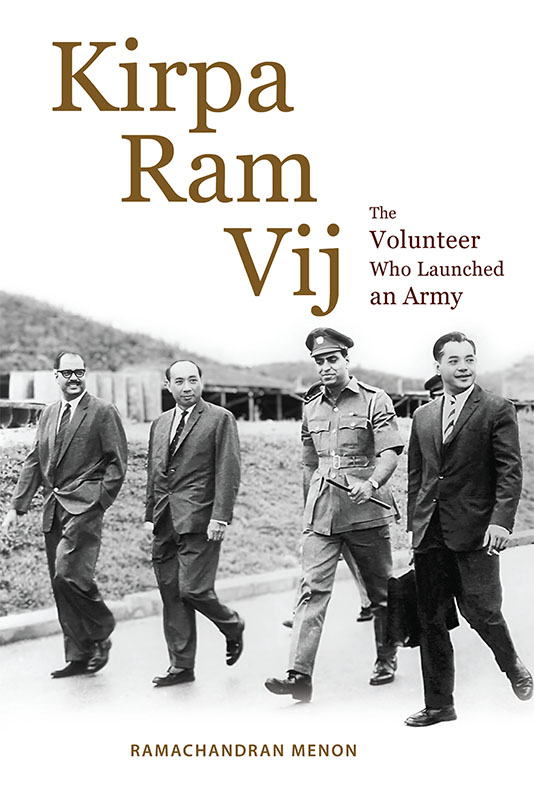
It started as a British experiment in 1933: Could the Malays form an effective modern fighting force? From an experimental company of 25 raw recruits, within 10 years the regiment created legendary heroes in their gallant last stand against the Japanese in Singapore, February 1942.

A collection of 49 poems of varying forms, from scattered verses to prose poetry, Primordial is more than the sum of its parts. Mai Der Vang, equipped with the eloquence and talent for crafting vivid imagery that had made her previous collection a finalist for the Pulitzer Prize, brings together the overlaying experiences of the Hmong people, ravaged and displaced by war, and of the elusive, ethereal, endangered saola, a rare species of bovine with a pair of long sword-like horns that only came to be known and classified in scientific terms in 1992.

A dynamic and interactionist multiplex order existed in the classical eastern Indian Ocean corresponding with modern Southeast Asia (~1st—15th centuries CE). This regional order was not the product of superior Chinese imperial/material power, or some essentialist version of the tributary system. Nor did Indic ideas spread “naturally” into an ideational vacuum in Southeast Asia. This order was in fact an outcome of Southeast Asia’s active agency in fostering connectivity with Chinese and Indian polities, and the consequent material and ideational interactions that ensued. The multiplex order in the eastern Indian Ocean was a highly robust and resilient order that lasted for centuries even in the absence of a grand design. It did not depend exclusively on any single polity, not even imperial China.