“The Merry Widow”, Hong Kong, December 2019
If there is any work that typifies “Viennese operetta”—waltzes, romantic comedy, catchy tunes and a certain silliness—it is Franz Lehár’s The Merry Widow.
If there is any work that typifies “Viennese operetta”—waltzes, romantic comedy, catchy tunes and a certain silliness—it is Franz Lehár’s The Merry Widow.
“Prima la musica” (“The music comes first”) once said opera composer Antonio Salieri (at least in the title to one of his operas). Perhaps as a consequence, opera has provided, once the words are dispensed with, other composers with marvelous opportunities for transcriptions and adaptions.
The Chronicles of Lord Asunaro is a curious little volume. In length, perhaps 10,000 words, it is long for a short story but short for a novella. The protagonist, a minor feudal lord in late Tokugawa Japan, was an actual person (apparently: like much else here, it is hard to be sure), his life heavily…
Some books are next to impossible to review. Silk Roads is one: encyclopedic in scope and structure, made up of several dozen short essays by almost as many different authors, each lavishly illustrated with indescribable photos of objects and places.
Surrealism is something of an outlier in mainstream English fiction, yet it seems to crop up with some frequency in contemporary Chinese-language literature, at least in those works that find themselves in English-translation. This penchant for surrealism can seem even more pronounced, or perhaps concentrated, in the wider Chinese world and diaspora: Dorothy Tse, Hon…
Ricco Villanueva Siasoco knows a good lede when he writes one: “Viva wants her boobs back”. So starts the first story in this debut collection.
Chinese soprano He Hui made her Metropolitan Opera “Live in HD” debut on 9 November in the lead role in Giacomo Puccini’s Madama Butterfly. This might not be quite the first time a Chinese singer has the lead in one of these international broadcasts—but then again, it might be—but it is still an extremely rare…
In Giovanni Battista Pergolesi’s 1733 comic opera La Serva Padrona (“The Maid Made Mistress”), a maid sets her sights on her boss, and through a combination of flirtatious behavior and well-meant duplicity, convinces him that he has really loved her all along. The work is small and intimate with a deceptive simplicity that belies the…
As part of the new Italia Mia festival and in a joint production of the Italian Cultural Institute and Opera Hong Kong, soprano Wang Bing Bing headlined an instrumental vocal and lyrical recital entitled “Passion of Italy”.
Hiroko Oyamada’s debut novel in English was drawn, it is said, from her experiences working as a temp in the subsidiary of an automaker. If The Factory is any indication, she didn’t take to it.
Giuseppe Verdi’s Rigoletto was plagued by politics at its inception. Based on Victor Hugo’s (banned) play Le roi s’amuse, about a licentious king, the opera required considerable negotiation with the imperial Austrian censors before it could be performed in Austrian-controlled Venice. The King was demoted to a Duke, and the action moved to medieval Mantua…
A new book by William Dalrymple is always something of an event. The Anarchy doesn’t disappoint: readable, informative, full of color. Dalrymple lets the protagonists speak for themselves as much as possible, protagonists which thankfully, but not surprisingly given the author, include Indians as much as Europeans.
Hong Kong’s Musica Viva has incrementally moved from one full opera production per year—in December—to two. If this recent production of Mozart’s comic masterpiece is any indication, the smaller production in late September featuring entirely local singers has, over the past couple of years, matured and is hitting its stride.
It seems somewhat surprising that not a single one of Leonardo da Vinci’s several thousand drawings had ever been exhibited in Hong Kong, but that was apparently the case until the opening of the “Art and Science, Then and Now” exhibition, running at the City University of Hong Kong Exhibition Gallery through 15 December.
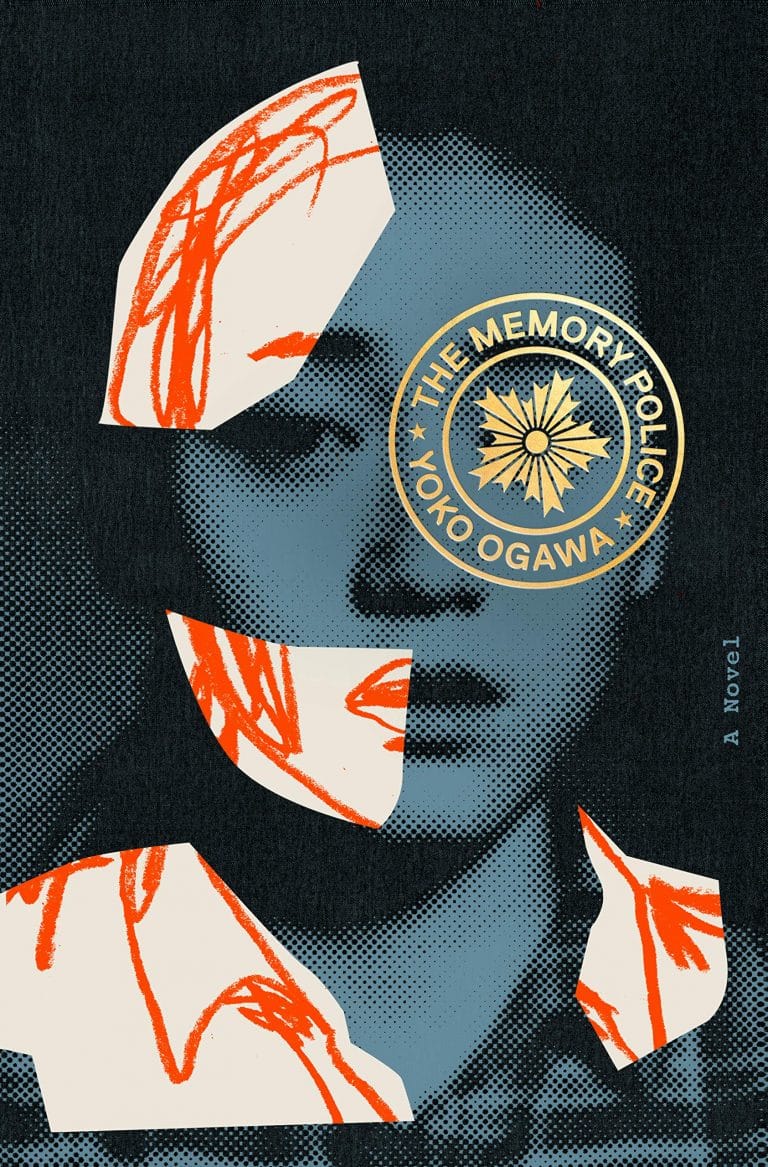
Japanese literature isn’t always neatly accommodated by the buckets often set out to categorize novels. Yoko Ogawa’s The Memory Police, about an island where entire classes of things, and the memories that go with them, just disappear, a state of affairs enforced by a malevolent and menacing special police force, could be placed in several…