Wasafiri’s “Writing Hong Kong” issue
At the British Council in Hong Kong on Friday, the UK literary quarterly Wasafiri launched an issue dedicated to writing from the former British colony.
At the British Council in Hong Kong on Friday, the UK literary quarterly Wasafiri launched an issue dedicated to writing from the former British colony.
This November in New York has featured three different versions of the Madame Butterfly story on stage: the original at the Metropolitan Opera, a revival of the David Henry Hwang play M. Butterfly and a revival of the musical Miss Saigon. Of these, I managed Hwang and Puccini back-to-back.

For a number of logistic, commercial and territorial reasons, books rarely circulate much outside the market they were published in. Asian-published books can as a result often, regardless of merit, end up largely unknown outside a relatively small domestic market, something that goes in spades when the book was originally published in a language other…
World War II created its fair share of myths: on the American side, the “Flying Tigers”—a “small private air force that fought the Japanese over Burma and Western China”—became one of the first, providing as it did some of the few bright spots in the days after Pearl Harbor. From December 1941 to June 1942,…
Whether the casts for this week’s Aida are the best ever assembled for opera in Hong Kong—they have some competition from Hong Kong Arts Festival productions, including a Simon Boccanegra with Roberto Frontali, Michele Pertusi, Giorgio Berrugi and Erika Grimaldi, and a Traviata with Carmen Giannattasio and José Bros—is the sort of thing opera-goers love…
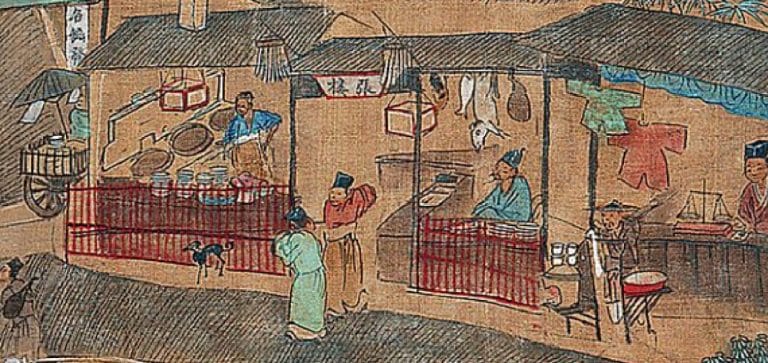
Late Ming China didn’t have the “Nigerian advance-fee scam”, but if Zhang Yingyu’s contemporary The Book of Swindles is any indication, it had just about every other con ever tried. This collection of short cautionary tales is, according to translators Christopher Rea and Bruce Rusk, “said to be the first Chinese story collection focused explicitly…
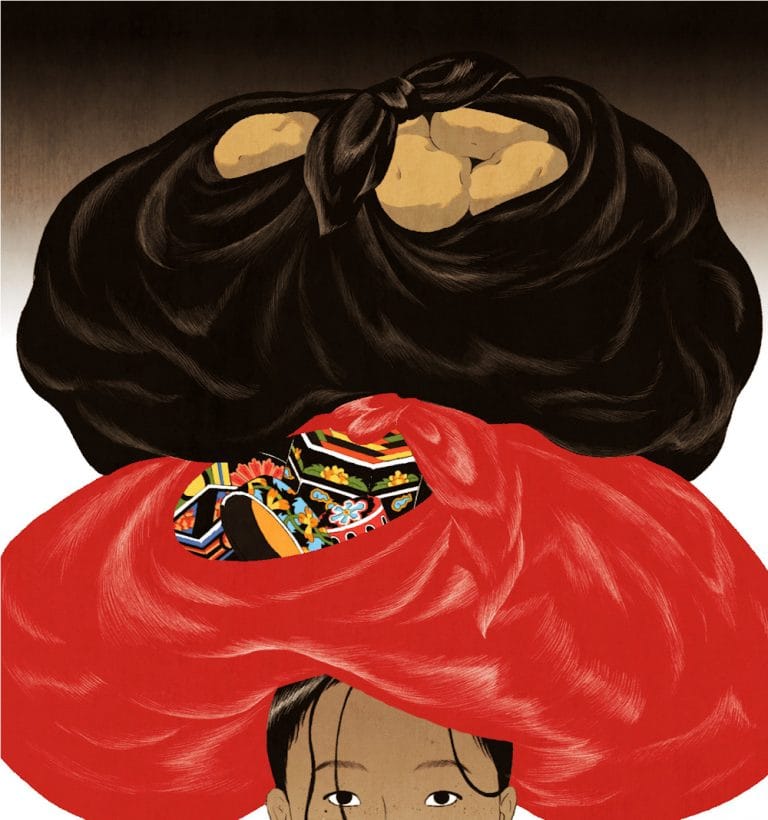
As contemporary Korean literature receives increasing acclaim in English-language circles—Han Kang’s The Vegetarian won the 2016 Man Booker International Prize—it is perhaps inevitable that efforts are being made to introduce older Korean classics to the English language mainstream. One of of these is Sweet Potato, a newly-translated volume of short stories by Kim Tongin (or…
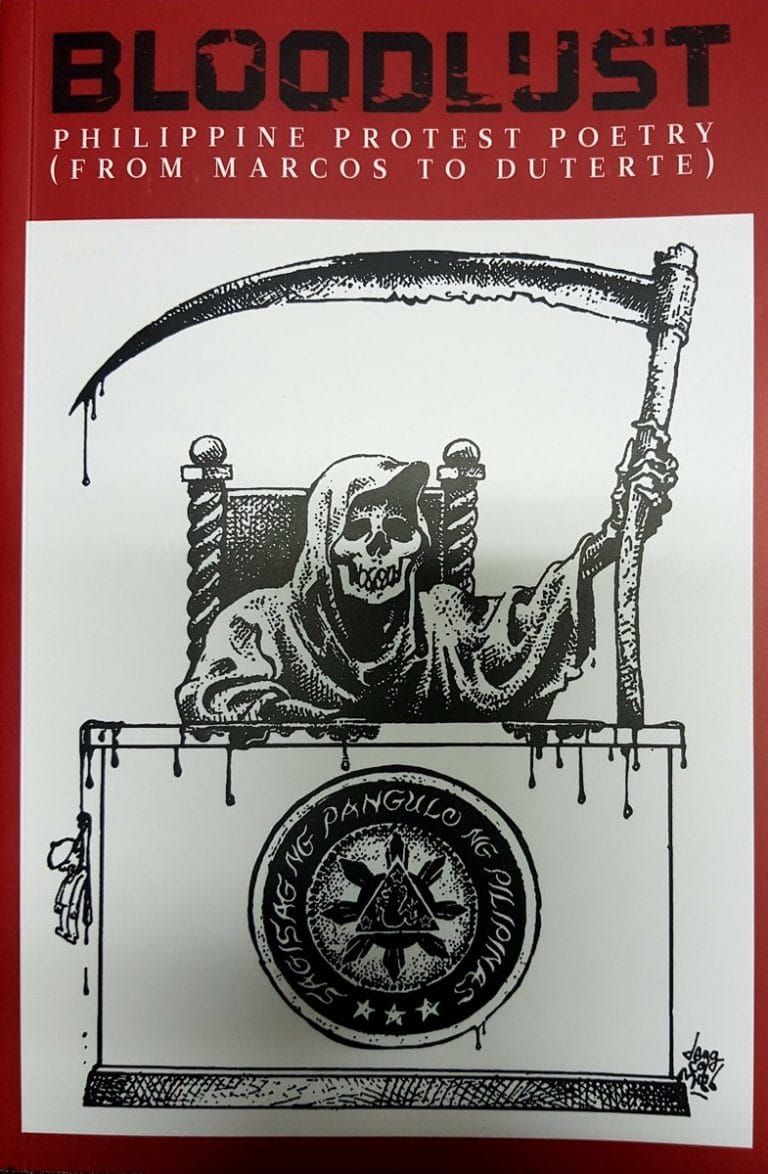
Is poetry a potent enough protest to move the political needle? In other cultures—the Middle East comes to mind—poetry is fundamental. In a recent article in the BBC, somewhat controversially entitled “Why I became a jihadist poetry critic”, Elisabeth Kendall is quoted as “Anybody who’s spent time in the Middle East knows how important poetry…
While it may be true, as writes Robert Sutter in the introduction to National Bureau of Asian Research’s excellent report “Russia-China Relations”, that “The United States has a long experience in assessing the twists and turns of the relationship between Russia and China and what it means for US interests”, most casual (Western-oriented) observers are…
For most of its history, Hong Kong has been tied to the sea and ships. Today’s urban metropolis of skyscrapers and financial institutions is a relatively recent development. Where there are ships, there are seamen; some of Hong Kong’s most venerable if not necessarily best-known institutions relate to their welfare. Strong to Save is a…
When one transports an opera set in 13th-century Florence to early 20th-century Shanghai, as Opera Hong Kong did for the comic opera half of this weekend’s double bill of Suor Angelica and Gianni Schicchi, one can expect some textual inconsistencies. Puccini’s only outing in opera buffa tells a story hinted at in Dante’s Inferno: of…
The “thousand star hotel” of the title is a metaphor of the night sky, the roof of the homeless. Bao Phi’s prose poem attributes this to a self-deprecating Vietnamese joke. Who knows? It is just one of perhaps one thousand metaphors, images and turns of phrase that sparkle in this new collection.

“Please mind the platform gap” is a phrase travelers on the Hong Kong MTR hear every time the train stops. It is a curious phrase, not just the now somewhat quaint “mind” but also that of course the platform has no gap: what is meant is the gap between the train and the platform. First-time…
When the end came, it came quickly and, for most of the Japanese inhabitants of occupied Manchuria, unexpectedly. Kiku Kyuzo, protagonist of Beasts Head for Home, was of one of the great many Japanese left behind when Manchuria fell to the Soviet Army in August 1945.
One of the defining debates in economic development theory is one of chicken-and-egg: whether good institutions and governance are needed for markets and growth, or vice versa.