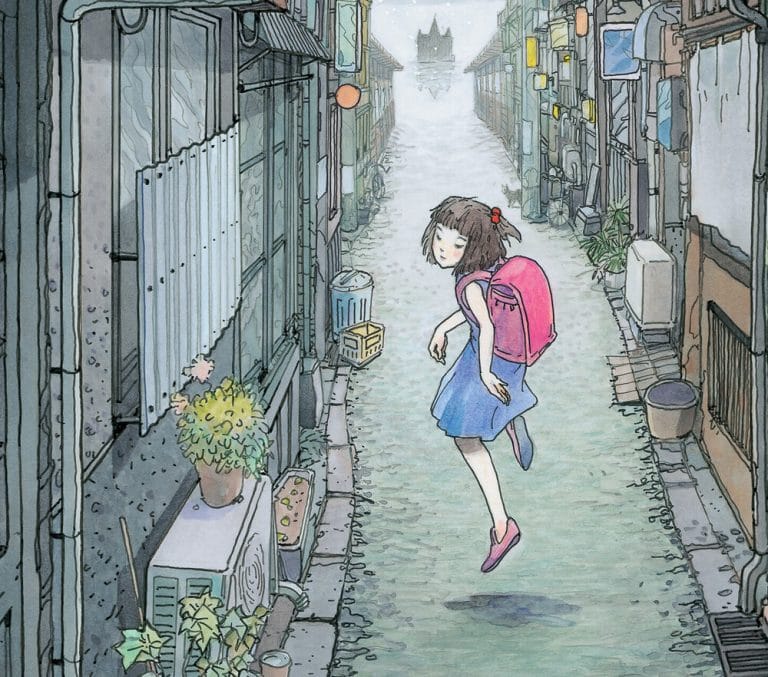
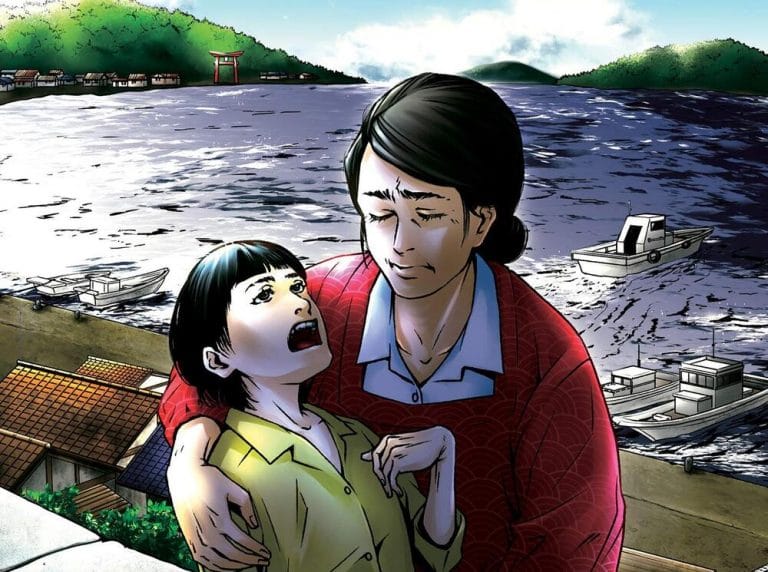
“Things Remembered and Things Forgotten” by Kyoko Nakajima
When grieving is over, when no one pauses to remember, things will be forgotten forever.

When grieving is over, when no one pauses to remember, things will be forgotten forever.

On March 9, 1945, American B-29 flying fortresses firebombed Tokyo, Japan, in what Malcolm Gladwell in his new book The Bomber Mafia calls the “darkest night of the Second World War”.

If anyone thought Sei Shōnagon (ca 964-after 1027) was little more than a gossipy, snooty, disingenuously prim and sometimes acerbic observer of life at the effete Heian court of ancient Japan, here is a book to prove that notion completely wrong. Not only can her classic Pillow Book be read on several levels, but it…

Heaven is excruciating. Readers share viscerally in the protagonist’s victimization at the hands of sadistic bullies. Fans of Breasts and Eggs, Mieko Kawakami’s first novel published in English in 2020, might be expecting another women-centered narrative. Heaven is radically different. This time, an unnamed male narrator describes his appalling position in the social hierarchy of…

Izumi Tanaka is a normal, Northern California teenager. She’s an average student and spends much of her free time at the local diner with her friends, a quartet they’ve dubbed the Asian Girl Gang, or AGG. In her final semester of high school, life as she knows it suddenly comes to a halt when she…

Kokoro can’t bring herself to go to school anymore. She has been the victim of an intense bullying campaign that culminated in a destructive assault on her home; if the bullies find her, she is afraid they will drag her outside and kill her. Kokoro is twelve years old.

The stories collected in Terminal Boredom take up themes that might feel familiar to readers of contemporary Japanese fiction. The characters criticize, challenge, or defy social conventions. Narrators raise questions about identity and agency. But unlike, say, Mieko Kawakami or Sayaka Murata, author Izumi Suzuki died more than three decades ago.

In Touring the Land of the Dead, author Maki Kashimada writes about one woman’s trauma with razor-perfect concision and an austere beauty.

Shaw Kuzki’s middle-grade novel Soul Lanterns begins in August 1970. A generation earlier, an atomic bomb leveled Hiroshima. Nozomi and her friends have grown up attending yearly memorials and learning about “the flash” in their peace studies class. When a much-loved art teacher takes an unexpected leave of absence, Nozomi begins to wonder about how…

Unlike the ever-changing silhouettes of western dress, the iconic cut of the Japanese kimono, a straight-seamed T-shaped robe, was developed in the Heian period (794 -1185) and has remained relatively unchanged through modern times. Central to almost all ensembles in traditional Japanese dress, kimono designs were seen as intimate reflections of the wearer’s identity. Newly…

Like clockwork, every year around the spring equinox, as the ducks and egrets return to the rivers and sprigs of green grass begin sprouting in lawns, people in Japan take to the hills to pick mountain vegetables, herbs and other wild foods. As translator and writer Winifred Bird explains in her new book, Eating Wild…
This friendly guide offers concise but detailed demystifications of more than 85 aspects of ancient and modern Japan.

“100 poems by 100 poets”: compiled in the 13th century by the famed poet, Fujiwara no Teika, (1162–1241) the Hyakunin-isshu (百人一首) is the most widely-read poetry anthology in Japan. Long celebrated in the arts, including in a famous woodblock series by Hokusai, the anthology is part of the curriculum of all Japanese school children, much…
A funny and intimate travelogue of one woman’s unexpected adventures in Japan. French illustrator Julie Blanchin-Fujita arrived in Tokyo for what she thought would be a one-year stint, and ended up never leaving.

Shigeru Mizuki’s Tono Monogatari has a complicated lineage. During Japan’s rapid modernization in the early 20th century, a man named Kunio Yanagita set out to preserve Japan’s cultural heritage of magic and the supernatural. Along the way, he met a young writer, Kizen Sasaki. Together they traveled Japan’s Tono region, today about five hours northeast…