“The Factory” by Hiroko Oyamada
Hiroko Oyamada’s debut novel in English was drawn, it is said, from her experiences working as a temp in the subsidiary of an automaker. If The Factory is any indication, she didn’t take to it.
Hiroko Oyamada’s debut novel in English was drawn, it is said, from her experiences working as a temp in the subsidiary of an automaker. If The Factory is any indication, she didn’t take to it.
A remarkable and true tale of loyalty, vengeance, and ritual suicide… In the spring of 1701, the regional lord Asano Naganori wounded his supervising official, Kira Yoshinaka, during an important ceremony in the ruling shogunate’s Edo Castle and was at once condemned to death. Within two years, in the dead of winter, a band of…
In 1415, the English forces under Henry V inflicted a terrible defeat on the French army. After the battle, under a heap of dead soldiers, they found and captured a young man who turned out to be Charles, duc d’Orléans (1394-1465). He was taken to England and placed in honorable captivity, but Henry V ordered…
The Emergency Detention Act, Title II of the Internal Security Act of 1950, is the only law in American history to legalize preventive detention. It restricted the freedom of a certain individual or a group of individuals based on actions that may be taken that would threaten the security of a nation or of a…
The term samurai brings to mind disciplined, well-trained warrior-soldiers, skillfully wielding swords and following a strict military-ethical code of honor and sacrifice. Michael Wert, an associate professor at Marquette University who specializes in Japanese history, seeks to dispel this popular depiction in his fascinating short history of the samurai.
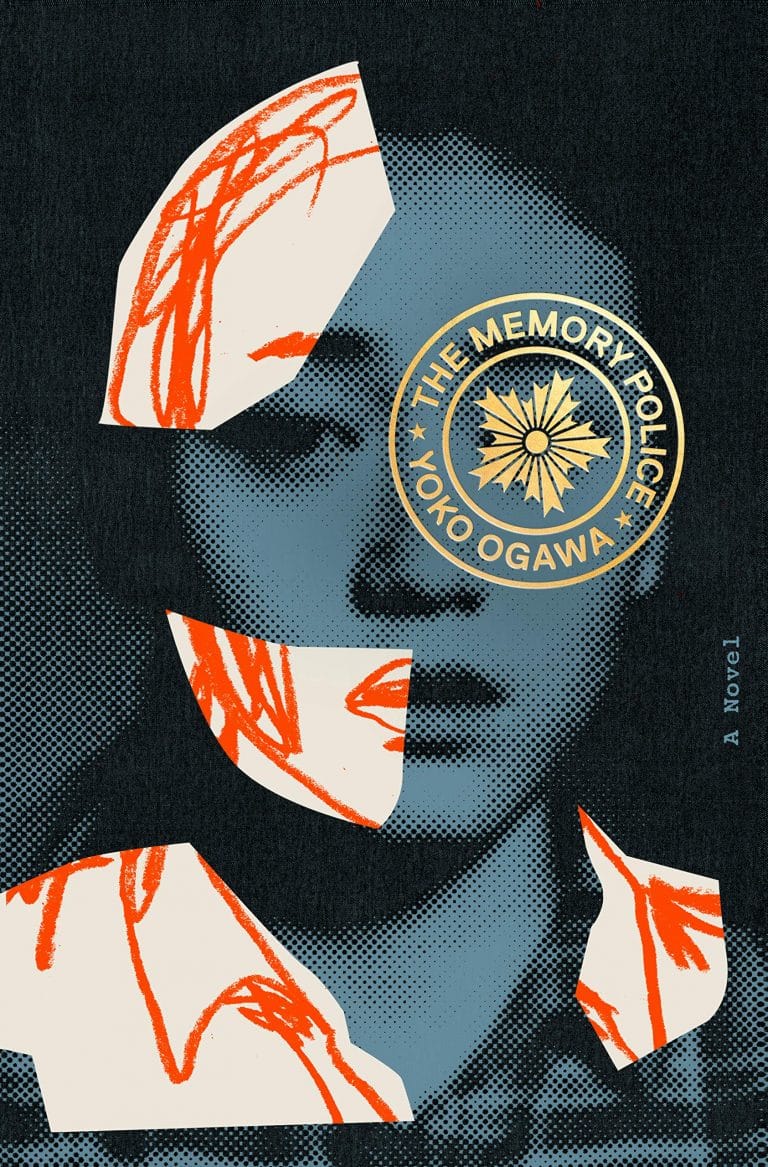
Japanese literature isn’t always neatly accommodated by the buckets often set out to categorize novels. Yoko Ogawa’s The Memory Police, about an island where entire classes of things, and the memories that go with them, just disappear, a state of affairs enforced by a malevolent and menacing special police force, could be placed in several…

We first meet Kazu Mori, the protagonist of award-winning Japanese author Yu Miri’s newly translated novel Tokyo Ueno Station, after his death. Unable to move fully into the afterlife, Mori seems condemned to merely observe his former abode, its visitors and its inhabitants. Through his eyes we learn about the park’s history as, variously, a…
Yone Noguchi: The Stream of Fate is the first full-length biography of the pioneering international Japanese poet Yone Noguchi (Noguchi Yonejiro, 1875-1947).

In the late 1970s and early 1980s, two Jewish cartoonists brought the term “graphic novel” to the mainstream. Will Eisner’s A Contract With God tells the story of poor Jewish immigrants in New York tenements while Art Spiegelman’s Maus depicts two storylines that center around the Holocaust. These books address heavy subjects and differ from…
After fleeing a disastrous teaching job (and a bad gambling habit) in Boston, Lindsey starts teaching English in Hime, a small fishing town in Japan. One morning, while trying to snap the perfect ocean sunrise photo for her mother, she slips off a rock at the edge of Toyama Bay, hits her head, and plunges…
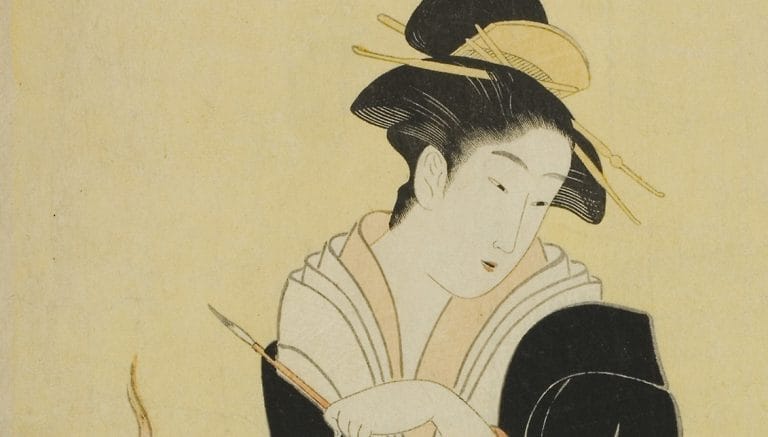
Anyone who has ever studied literature has probably come across the now rather hackneyed line by the American poet Archibald MacLeish (1892-1982), “A poem should not mean, but be.” Steven Carter, the Yamato Ichihashi Emeritus Professor of Japanese History and Civilization at Stanford University, notes that the Japanese poet Shōtetsu (1381-1459) expressed similar sentiments long…
First published in Japanese in 1995 and now in English translation, The Ten Loves of Mr Nishino by Hiromi Kawakami takes the form of ten short stories linked by a central character, the titular Mr Nishino. Each encapsulates one of ten affairs Nishino conducts through his life ranging from schoolboy romance to extramarital liaisons. Sadly,…
Mouse, Fox, Spider, and Snake all want to scare Bear. But Bear is the bravest animal in the forest—nothing scares Bear.

Short story anthologies for a given country or genre tend toward the predictable in their choice of stories, gathering the one or two most well-known from the most well-known authors. This is not the case with The Penguin Book of Japanese Short Stories. Edited by translator and scholar Jay Rubin (Disclosure: I edited Jay Rubin’s…
It is a truism that war is—by its very nature—tragic. For soldiers, it is about killing and being killed. World War II resulted in the deaths of more than 70 million people, a number which tends to overwhelm and obscure the individual lives lost. Sometimes the tragedy of war is easier to comprehend in small…