Hotel Calcutta by Rajat Chaudhuri
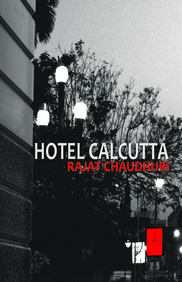
A monk’s mantra starts the stories flowing in Rajat Chaudhuri’s collection of short stories about following through on one’s heart’s desire, and what emerges is a hopeful, cautionary tale about how things come around. It’s also a seductive story about stories being shared because much is at stake if storytelling stops; this is, in fact, the framing device for this motley collection of suspenseful mysteries.
Established in 1911, a few months before the British shifted their capital from Calcutta to Delhi, Hotel Calcutta,
a lonely hotel in a rusty neighbourhood of Calcutta where friendless people would wash up every day
faces an uncertain future: land sharks who want to tear it down and build a mall. A twinkly-eyed monk turns up at the hotel and breathes a recipe for a reprieve:
Keep telling stories… Stories will protect the past. Every tale, like a mantra will strengthen the foundation of memories on which you stand.
The staff and hotel guests take turns at storytelling, dipping back in time to “build a wall of stories” against ghoulish greed and “monster cranes” that
loomed against the sky, beyond the row of flame trees, like the advance guard of a race of aliens that was taking over the planet.
The result is a seductive swilling of mystery, travellers’ tales, fantasy, noir, idiosyncrasy, ghosts, painters, theosophists, porn, intoxication, science and hearsay. Eleven tales in all, each about obsession or a passionate undoing: a game of chess in Amsterdam, a chat id scrawled on the wall of a public loo in a Calcutta neighbourhood, a friendship struck over books at an old Delhi bookshop, a magic herb experiment, the scent and arrangement of panties in a flower bowl, a number dialled on a whim, a manuscript written in such frenzy that it consumes its author, an overwhelming itch to steal, a thief’s thirst for a tipple, a keen hearing troubled every night by “a heart-rending cry from far away”.
The crisis of heritage building versus mall convenience which propels the story cycle, asks readers to contemplate the future of the past:
As if one was a reflection of the other, on the mirror of the present which was so near that it was hard to pin down.
The tales that build the “wall of stories” to protect the hotel are about time, both decay and regeneration, touching on all that’s lost, yet speaking of much that still abides. A persuasive artist who works with subtle shifts of light and time, fancy and abstraction, Chaudhuri creates tantalising tales that hint at other worlds that shadow ours and mourn “some lost, lingering feeling.” Narrated in the clear light of memory, his calibrated, atmospheric mysteries take shape in the kind of light that suggests more than it reveals—misty vales, the drowsy afternoon hours that throw up long shadows, deepening twilight, sodium-lit street lamps, snow-swept nights, flickering candlelight, the pallor of a “moth-eaten moon”, the neon glare of a bar strip, slate skies heavy with unshed rain. Almost always, they unravel in the glow of a passion. His plots hinge on straying and abandonment—someone adrift, a neglected corner, deviant desire or an anachronistic detail—yet the intrigue in each plot is in sync with seasonal cycles. However extraordinary or disruptive an event might appear, there is an immanent frame holding it together
The hidden clockwork that animates the universe bringing life and death when it desires, darkening the skies on its whims or painting the butterflies in fractals, setting out the honeybee in search of nectar or directing the queen to multiply, telling the purple-blue kurinji flower to bloom after years, lighting up the hills of the south with blue fire, bringing joy when it wishes or burying civilisations to show its wrath, the clockwork at which science and art, genetics and quantum physics, mathematics and meditation have only been able to shine weak flickering beams—like the six blind men and the elephant.
So it follows that, as in nature, in life too—as indeed, with this cycle of stories narrated to stymie the advance of the bulldozers and ensure that the hotel’s 100-year-old heritage survives—a sense of cycles is necessary. In time, the book’s denouement crystallises this awareness of natural balance phenomenally, on a rain-blurred morning when raindrops fall “like silvery stakes” and tear through the loose earth.
Hotel Calcutta invites a hungry, urgent reading: as much for its trenchant grasp of time, denouements and the intimations, as for the radhaballavi, tournedos, arbi halim and attendant variety of food and drink enjoyed in the different stories in which straying after a curious fact or the consummation of desire is as central a plot preoccupation as the swig of a quart of brandy or what one has for lunch. One might wonder if this book isn’t an aesthete’s lament, pleading clemency from time as it were, for immersion in a passion, a deeper understanding of nature and time enough for stories and ghontiwallah’s cha? Or if this beguiling collection of stories that pits faith against reason isn’t Chaudhuri’s sly nod to the Bengali pastime of adda,
the hubbub… of people putting forth their viewpoints, their angles, their attitudes—arguing, sparring, conspiring, chirping merry, shaping thoughts, popping ideas, whispering meaningfully or just breaking into laughter;
that time-out-of-time sustenance from a bit of jabberwocky as people from a “cosy loop of chairs around a new storyteller”, drawn by the promise, the intimacy, the relief, the release, of a story?