
The IT sector seems to be concerned with the flow of information across nations. However, it can also be about the flow of emotions. Labour around technology is not only about programming; it can also be about emotional exhaustion. In The Future of Futurity: Affective Capitalism and Potentiality in a Global City, anthropologists Poornima Mankekar and Akhil Gupta document the workings of call centres by looking at how the BPO “agents” (workers or operators are called agents) navigate the demands of their job: doing “night work”, learning and unlearning accents, and racist abuse from the customers.
The book is a result of the field work conducted by the authors between 2009 and 2016 in three BPO companies of different sizes in Bengaluru (Bangalore). The authors conducted interviews with employees at these companies between 18 and 25 years of age, representative of the BPO workers: coming from lower class-caste backgrounds, barely finished high school, and looking forward to upward class mobility. Mankekar and Gupta argue that these jobs are an example of “affective capitalism”, heavily dependent on managing emotions—employees’, their families’, and their customers’.

Akhil Gupta (Duke, April 2025)
Employees’ emotional lives come into the picture in several ways. One, they become “intimate strangers” to the customers from the UK, the USA and Australia. From selling vacation deals to providing customer service and recovering debts, these agents gain access to the lives of people they barely know. Sometimes, they empathise with the customers; on other occasions, they judge them. For instance, the authors relate that an agent judged a customer for piling up on credit card debt on “frivolous” things such as cruises.
Vandana had made several calls to this customer coaxing her to pay her debt but to no avail. This was a woman who, after her retirement, had made a hobby of going on cruises several times a year. The only problem was that she put her expenses for the cruises on her credit card and quickly amassed huge debts that she was unable to pay off, and it fell to Vandana to recover them. Vandana called her several times and finally lost her patience: this was a huge faux pas for a customer service agent, but it was incomprehensible to Vandana that her customer could build up debts in order to go on cruises. Vandana had seen her father take out a loan with tremendous trepidation when her brother had needed an operation. She had also heard of relatives who, in sheer desperation, had taken loans when their crops failed. But to amass such huge debts to go on cruises was something she could never understand. This was a world that made no sense to her. Enraged by Vandana’s impatience, her customer complained to the credit card company, which in turn threatened to withdraw the contract from the BPO. Vandana shook her head with mortification as she recounted to Mankekar what had happened.
The culture shock comes from the fact that most agents have witnessed what debt does to families in India, especially from the socioeconomic contexts they come from. Other things that contribute to emotional dissonance include learning and unlearning accents, training the facial muscles in specific, unnatural ways.
“Accent training” and learning a “neutral” accent are, fundamentally, implicated in the process of being (re)embodied as a racialized subject. Changing one’s accent, even if to neutralize it, involves specific physiological practices…When we observed training sessions, we saw how trainees struggled to change how they spoke by learning to use their tongues and breath differently: pronouncing t’s and p’s in a supposedly neutral accent meant training oneself to aspirate differently, just as distinguishing between v’s and w’s involved new and unfamiliar movements of the lips and teeth. But beyond these obviously corporeal processes, learning to speak English a certain way and retraining one’s accent was as much about retraining— and reconfiguring—the body as it was the mind.
The agents also have to unlearn Indian ways of formal address (“Sir”/”Madam”), understand the nuances of “no worries” or “you’re welcome”, and watch English sitcoms to understand idiom but not pick up profanities and on their “own” time when there is hardly any time left in their waking hours.
Agents are also victims of being stereotyped by the media as promiscuous individuals doing “night work” as a means to sexual escapades. A media report quotes a head of a counseling center in Bengaluru as saying that a call center’s drainage system was found to be choked with condoms! Family members feel rattled by such reports and the stigma around working at night. One story relates a woman agent complaining that her mother forced her for a virginity test because she had missed her menstrual cycle for the last two months. Another story is that of a woman who is unable to conceive because of the toll caused by disturbance in the circadian rhythms. While families appreciate the money flowing in thanks to these jobs, they remain uncomfortable with the fact that these jobs with odd timings do not let them participate in normal family life.
Managing customers’ emotions requires the agents to dismiss racist abuse as silly and unprofessional, and something that needs to be responded to with courtesy, attention, empathy and care. The agents are expected to “absorb” the customers’ anger towards the companies politely because the customer satisfaction score is a metric that is used to evaluate the agents’ performance. While customer satisfaction is the core of the hospitality sector in general, the unique feature about the BPOs is that the agents have only their voice to depend on to communicate with the customer: they are told that they have to emote when speaking or that the customer should be able to “hear” them smile.
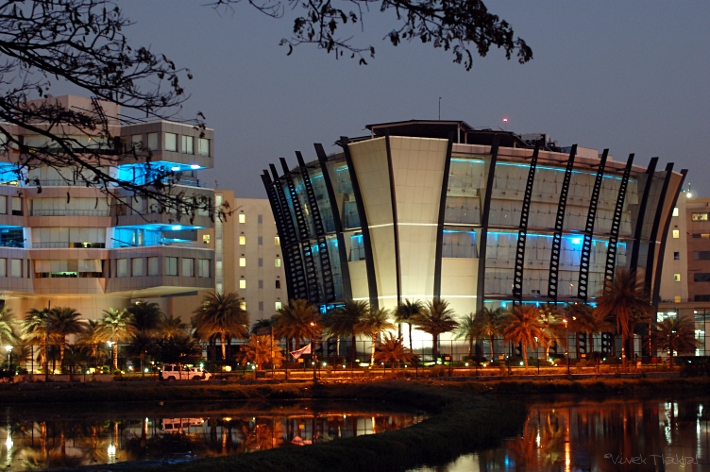
Additionally, the architecture of the BPOs—located in tech parks near shopping malls or surrounded by manicured lawns and water fountains—makes a certain kind of impression on the aspirants. This strategy is a way of appealing to youngsters: it promises them an entry into global citizenship who know how to shop in Western ways, accessorize, speak, use escalators, watch movies in multiplexes and so on. The built environment is designed as a means to “pedagogy of aspiration”: the agents look forward to moving around in this world with “pose and confidence”. The industry talks about steering the country towards a brighter future, projecting its services as reflections of technological and financial progress or development. However, against this projected hope is the emotion of despair: the industry as well as the employees do not know what the future holds for them. Advancements in chat functionalities, and now AI, make a lot of jobs redundant, as is the case elsewhere in other industries and other countries. The entire industry is built on emotional fragilities.
Here is an excerpt that provides a glimpse into the different themes of the book while also summarising the nature of the industry:
Raghu once complained to us, “Sometimes I feel that I can never hit the Pause button.” Our interlocutors’ affective labor did not finish with the end of the long working night. It left traces on their minds, hearts, and bodies, for many of them, there was no closure. It was implicated in their sleep patterns, digestive systems, musculature, and the curvature of their spines; it transected their intimate relations and their engagements with family and community; in some instances, it disrupted ovulation cycles. Labor and consumption, each fully imbricated with capital, generated futures and futurities, lifeworlds and socialities, subjectivities and solidarities. The push to work ceaselessly, without a period, did not so much overwrite our interlocutors’ desires or identities as produce them. And yet there were many moments when they veered off script; they entered into relations of intimacy with each other and with customers in physical and cultural landscapes far removed from their own; they engaged in forms of imaginative and virtual travel to navigate new worlds of mystery, fascination, and anxiety.
The key takeaway from the book is that not all remote work is the same, including the so-called IT jobs. BPOs are touted as part of the IT sector but they are not different from hospitality and are even more demanding than hospitality. Here is an example of remote work in which switching off the camera does not amount to the freedom that comes with being “AFK” or just shutting someone down or being physically free and not intimidated into being in an office. BPO jobs are remote jobs where functioning requires listening and attention. More importantly, The Future of Futurity shows what forced transplantation of cultural habits (accents, interactions, or work schedules) does to the context of tradition in countries such as India. In what ways do employees work the same everywhere? What other examples of “cyber coolies” exist in the Global South?
You must be logged in to post a comment.