“Angel at the Earth’s Extreme” by Chūya Nakahara

The life of the Japanese poet Chūya Nakahara (generally referred to by his given name, Chūya) followed an archetypal pattern of tragic genius ending in early death. Chūya was born in 1907 and, by his own account, began writing poetry in response to the death of his infant brother, when Chūya was seven. After a strict childhood in a military family, he committed himself to poetry in his teens and produced a body of work brilliant enough to cement his legacy by the time of his death from tuberculosis at the age of thirty. In that time, he suffered a tumultuous love affair, the death of his infant son, and the pain of his own illness.
Angel at the Earth’s Extreme represents the largest collection of Chūya’s poetry yet available in English, beautifully translated by Jeffrey Angles. The work includes, in roughly chronological order, early tanka poems from Chūya’s youth, modernist experiments, numerous uncollected poems and the two full books of poetry Chūya completed while living.
In the tanka, Chūya already displays his remarkable sensitivities and poetic gifts, and many themes that dominate his later work first make their appearance here. For instance, lines like the following, written before 1924 and organized by Angles into a modernist form, express an early nostalgia and longing:
Images and language that reappear later also abound, such as train whistles in the distance, shimmers of heat, the elements, the seasons, and Christian vernacular—his grandparents were Catholic. Heat shimmers, for instance, appear “lonesome and forlorn” in his early tanka, then “laugh in fields at military encampments” in “Angel at the Earth’s Extreme,” and appear again near the end of the collection, in “Autumn”: “In the heat shimmers, dead souls stand and sit again”.
Chūya also reveals in these early poems his frustration and self-awareness in some of his most petulant lines, often resolving, it seems, in regret:
Chūya’s modernist experiments reflect his encounter with the Dadaist movement and the French poets who would come to wield significant influence on him, especially Baudelaire, Verlaine and Rimbaud. Dada, a movement employing avant-garde techniques such as nonsense, juxtaposition and chance to subvert established modes of thought and art, attracted Chūya, as Angles writes, for its “assault on common sense and authority”. The poems from this era show Chūya at his most experimental and playful, with some poems skirting sense altogether, such as “Dada Lyrics”:
Infidelity is a toothbrush
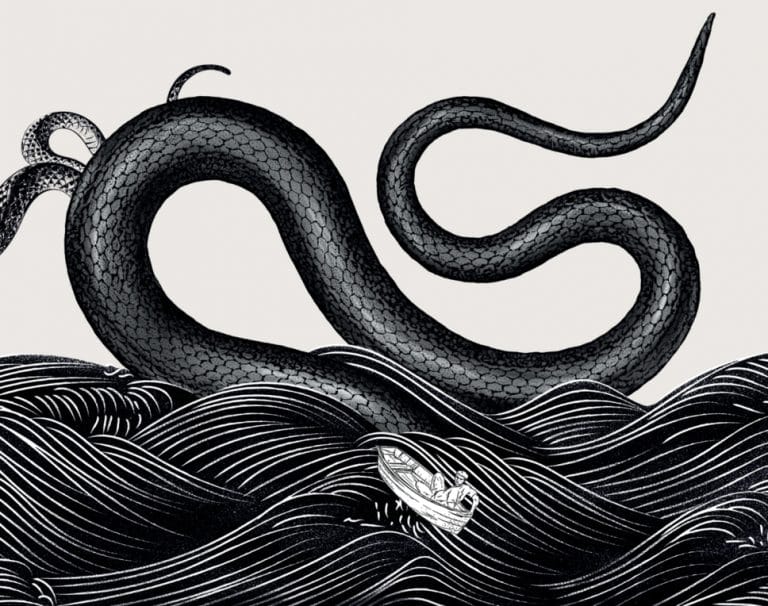
pythons are scales
the sun falls &
the world of the sun begins
Yet the emotionality and limpidity of his earlier tanka still shine through, and the two modes establish a synthesis that is on display in his later poems, most notably in his completed books. In these poems, Chūya’s playfulness and Dadaist ambiguities ally with his sensitivity to image and his grief over the modern condition. Angel’s translation displays the musicality of Chūya’s verse, intensified by his penchant for repetition and onomatopoeia, as in “Circus”:
In the eponymous poem of the collection, he laments the materialist and predatory attitudes around him—in short, the absence of poetry, which he counters with his own wild, scathing imagery:
Many of these poems reward slow, careful reading and rereading. They are frequently open-ended and invite multiple interpretations.
At other times, however, his poems are remarkably clear. They are suffused with deep feeling, usually of loss, of sadness, of alienation and loneliness shot through with beauty and frequently expressed in relation to nature, as in “Twilight”:
Frequently, Chūya is searching for “something no one can quite grasp,” and so even his relatively comprehensible poems tend to indicate a horizon, a longing for something just past what can be said. The result is a kind of grief mirrored both in personal, quotidian failures and larger tragedies, such as a vulgar era or the loss of a child. The result, however, need not be despair, but “the desire to serve”:
Because your loved one is dead,
Because they are gone without a doubt,
Because you can’t do anything about it,
Because of that, because of that,
You will feel the desire to serve
Chūya marshals the full force of his poetic talents to make this absence and desire palpable. In so doing, he helped to revolutionize Japanese poetry and created a lasting contribution to world literature. Angel at the Earth’s Extreme makes that contribution more accessible than ever for anglophone audiences, and it, like many of the volume’s individual poems, deserves to be read and reread.