“Art Is: A Journey into the Light” by Makato Fujimura
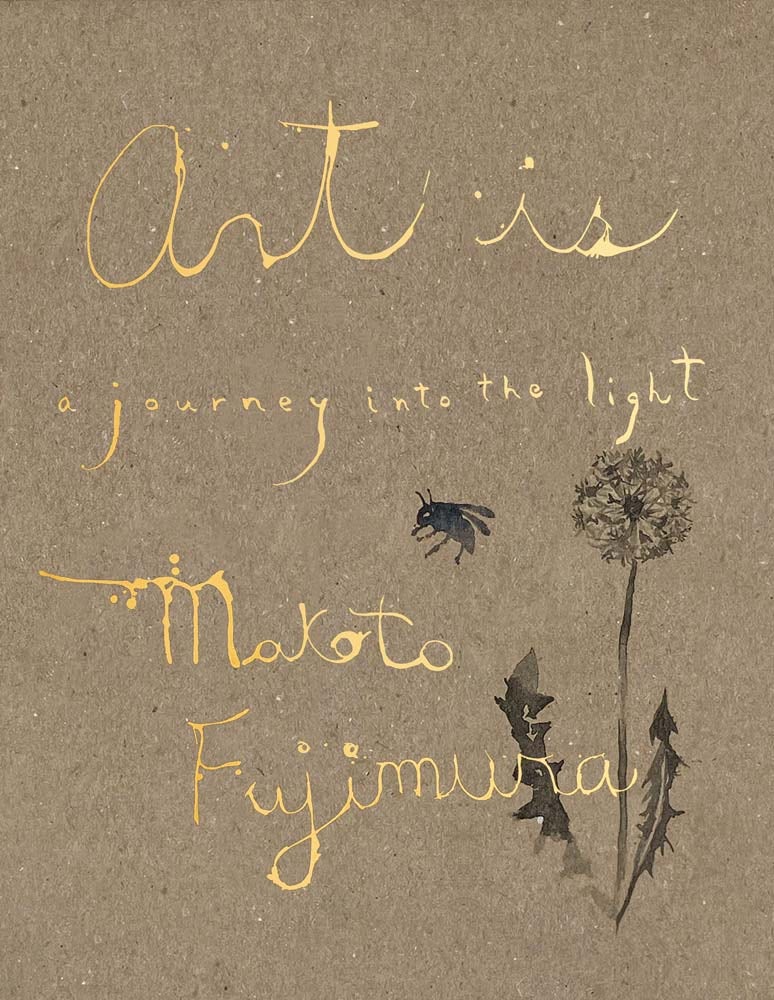
Art Is: A Journey into the Light, Makoto Fujimura (Yale University Press, October 2025)
Part memoir, part meditation on the practice that Makato Fujimura has popularized as “slow art”, Art Is: A Journey into the Light is pithy yet expressive. In the acknowledgments, Makato Fujimura recalls his publisher’s exhortation to create a “beautiful book” emerging out of the malaise of the COVID-19 pandemic and this is indeed in many ways a beautifully produced and designed one. It will be of interest predominantly to followers of Fujimura’s ongoing efforts to harmonize artistic practice and Christian faith.
For the uninitiated, however, this is not an easy work to access, and its numerous diversions are not always conducive to readers’ efforts to follow Fujimura’s narrative of his “journey into the light”. A book first emerging from his own efforts writing to “capture [his] experience still awakening from the slumbers of the global coronavirus pandemic”—connecting fragments of memory with his everyday routine—part of the nature of this work is that the various fragments do not always neatly form a complete whole.Art Is combines elements of Fujimura’s life experiences as a Japanese American artist, with his broader reflections on faith and art. The sections dealing with his lived experience shaping his artistic practice are most compelling; for instance, his trauma surviving 9/11 as a commuter in New York, to even the more mundane acts of routine walking daily from his home to studio and his engagements with the natural world. Most notable are his efforts to overlay his Japanese heritage and Christian faith, two important contexts that continually intersect throughout this book, and indeed his prior works as well. His deep fascination with the 16th-century Japanese tea master Sen no Rikyo enables him to think about beauty through sacrifice, and the ritual practices mediating Christian faith in times of persecution. Likewise, his adaptation of what he describes as “Nihonga”—Japanese methods of painting, which for him includes first establishing a hundred layers before painting any movement of images—helps him appreciate the Christian tradition of monasticism and mysticism.Ironically, as Fujimura notes, his own efforts to rediscover his heritage and aesthetics, led him on a meandering pathway first through the Japanese collection in the Museum of Fine Arts in Boston, and then to the Nihonga (Japanese painting) department at the Tokyo University of Arts, where Fujimura—as with “outsiders” before him—played a role in championing Japanese culture and working out a complex legacy of cultural exchange across the Pacific. Fujimura deftly navigates the boundaries of essentialism, though given the thorny legacies of Japanese claims to representing “Asianism” at the turn of the 20th century—also the origins of his alma mater, the Tokyo University of the Arts—I wished for a more sustained reflection on his own understandings of this lineage of “cultural preservation” which shaped his own intellectual formations.Now living between Princeton and New York, Makato Fujimura is a Christian artist and a leading proponent of concepts such as “culture care” (stewardship of culture rather than culture wars), “theology of making” (seeing God as the first and only True Artist and the Bible as a book of “making” new creation). Fujimura is indebted to evangelical thinkers like Tim Keller and CS Lewis, and he himself is an author who liberally quotes from the scriptures in his writing; his work attempts—through art— to navigate a way out of America’s culture wars by asserting an Eastern Christianity with aesthetic values closer to Zen Buddhism than to Western industrialism. Fujimura is the kind of countercultural Christian who bristles at the “Christian” label— indeed, all forms of marketable, identifiable “brands”— preferring to identify instead as a “follower of Jesus, whom [he] found by following the stars”; he was not “converted,” but inverted into the faith, assenting to the flow of the Spirit as mediated through his readings of William Blake’s poetry.In this and multiple other instances, Fujimura’s insistence on transcending the boundaries of marketable labels is disarming, and an important contribution in the broader resistance against the commodification of art. Yet his ambiguity within these calls to transcendence can make them hard to follow. For instance, his call to reject the “war zones of culture wars that turn all of us into soldiers” is well-taken, but then a subsequent exhortation for each to find a “stone path to our studios” of refuge seems too abrupt a shift towards the level of individual decision-making. Fujimura writes fleetingly about art as an “intentional act of peacemaking in a time of brutal dictatorial regions filled with violence and death”, but only to develop a separate point on the symbolic liturgies of tea in sixteenth century Japan. A description of his being in a condition of exile, “a stranger in my own home, and alien in my own body”, is made without elaboration—possibly alluding to the conditions of isolation during the COVID-19 pandemic, but also of the broader malaise in the human condition.Despite a meandering structure which leads the reader on multiple excursions, perhaps the point of Art Is, is one that Fujimura has made in his prior works, that the act of creating is a profoundly sacred one. It is one step on a journey towards a greater vision that provides one access into the mind of the divine Creator. For all of Fujimura’s engagements with “Japaneseness”, they are always underpinned with a firm Christian faith, even as his associations with the church are similarly inflected through Japanese aesthetics and “Eastern” techniques. Neither is sufficient without the other.A humanist reading of Art Is is possible, albeit one that would emphasize the acts of intuitive, collaborative art-making—as Fujimura describes a child’s intuitive desire to create—that leads to peace, restoration and healing. Fujimura freely acknowledges that what he produces is not always legible in the secular marketplace of art and ideas, but scattered seeds will take root. Readers who follow Fujimura’s invitation to think alongside, listen and reflect, may yet find sources of inspiration on their own journeys into the light.