“Ghosted: Delhi’s Haunted Monuments” by Eric Chopra
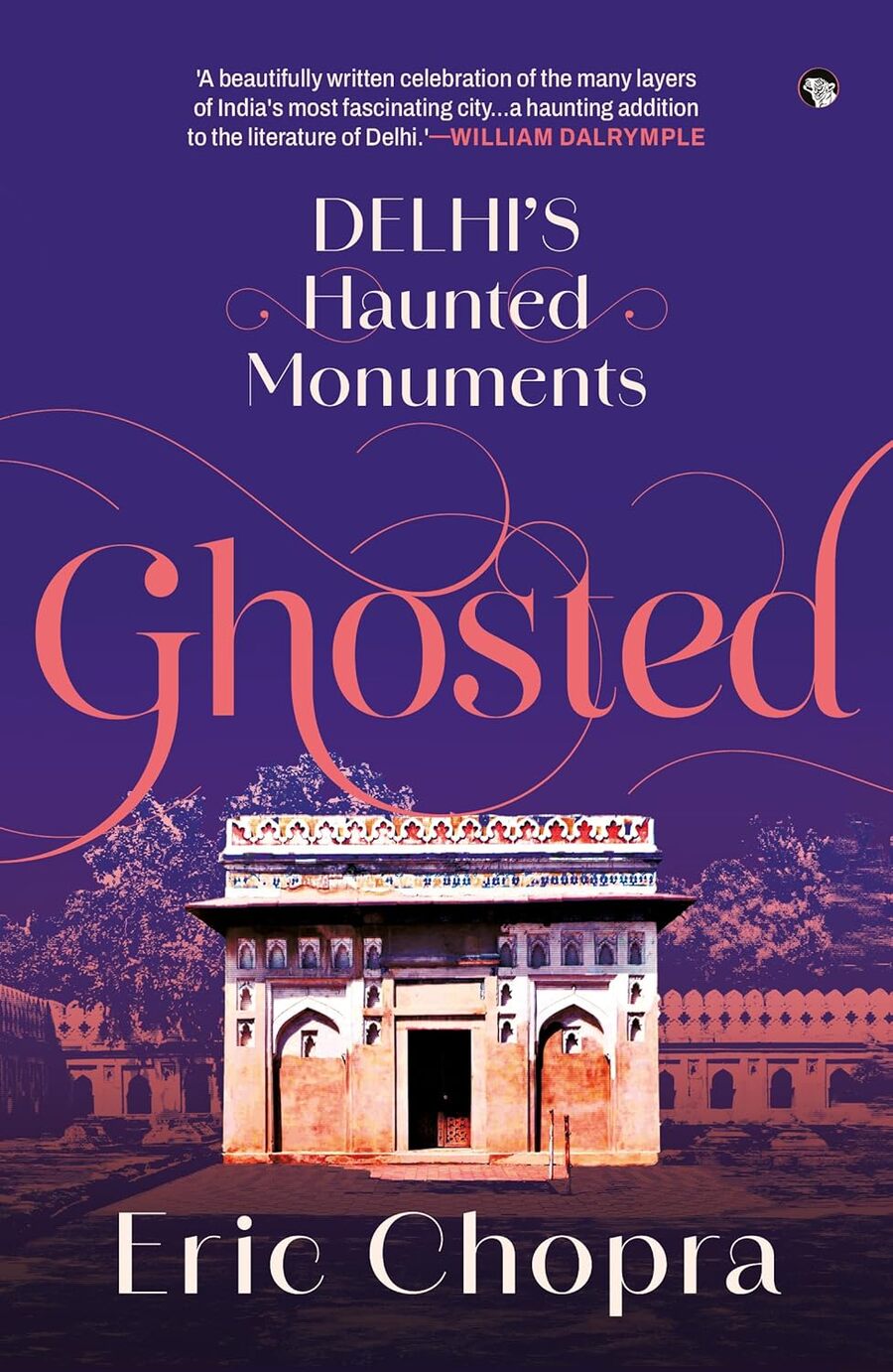
Ghosted: Delhi’s Haunted Monuments delves into the often-overlooked monuments of Delhi through the lens of jinns, Sufi saints and the horror tales associated with them, revealing both the brutality and humanity embedded in the collective history of the monuments and those who are tethered to them. Historian Eric Chopra contends that “to make sense of its antiquity is an overwhelming process for it’s a city that has witnessed 100,000 years of presence” and that in the light of the city’s long exposure to invasion and migration it “must be haunted”.
The figures who shaped the monuments Chopra investigates in this book are long gone. To keep their memories alive, saints and oral storytellers wove narratives around these kings, empires and their commoners tinged with horror—often inspired by tragic deaths or cursed reputations. The ghosts and jinns are a framing device; the book focuses on real individuals who played decisive roles in shaping Delhi as both a city and a historical landscape. Chopra approaches the city through stories that have been reduced to mere tourist curiosities but which were once of cultural significance. In doing so, he reveals how tales that appear eerie on the surface actually in fact embody Delhi’s diversity and its rich historical past.The book maps Delhi’s layered past through iconic monuments.
The seed for the book was planted in Chopra’s mind when he encountered a mural titled Dead Dahlias. He describes one dahlia as symbolizing a fatigued Delhi, its petals sagging and stem bent, while the other, fully bloomed, representing a reborn city. The historian traces this symbolism to Hindu mythology, noting how “Lord Krishna, in the Mahabharata, transformed the City of Ruins named Khandavprastha into Indraprastha, the City of Gods,” in a place which has traditionally been associated with what is now Delhi.
Spanning five chapters, the book maps Delhi’s layered past through iconic monuments such as the Jamali-Kamali tomb, Firoz Shah Kotla, Khooni Darwaza, the Mutiny Memorial, and Malcha Mahal. Delhi’s long history has seen the rise and decline of the Tughlaqs, Mughals, the Ashokan and Slave dynasties, among others. Through these five sites, each shaped by acts of construction or destruction, Chopra examines the trajectories of these empires. Chopra notes, “the kinds of entities that haunt (or inhabit) Delhi are not arbitrary. They are rooted in episodes, in communal memories or in the collective imaginations that inform how we engage with the past.”For Chopra, the ghost stories linked to figures ranging from saints like Jamali-Kamali to colonial-era soldiers and casualties of Indian politics—each anchored in Delhi’s monuments—form a “part of a larger pattern and how its fragments endure, and who and how we choose to remember.” Chopra suggests that the supernatural narratives surrounding these sites either serve to preserve the monuments within the nation’s collective memory or, as he puts it, offer a way “to think about the past and all that it leaves behind.” While the dead their lives appear sad, each nonetheless marked a rise or a fall, evolution or devolution of an empire.Ghosted: Delhi’s Haunted Monuments approaches its subject with sensitivityy at a time when history is often recast in service of politics.
Though grounded in historical research, the book becomes deeply personal as Chopra documents the brief conversations with guards and pirs at the sites he visits only to focus on what their stories have to say rather than making assumptions on their history. While researching the tomb of Jamali-Kamali, he encounters narratives of jinns from the guards or those who sweep it daily. Jinns, Chopras describes are “intermediaries and complex beings made of smokeless fire.” The jinns, from an objective point of view, are supernatural elements of these oral stories that have always piqued the curiosity of common people and researchers. Chopra suggests that the pirs and other commoners created these stories to “make the place and its experience unforgettable”, making it clear that objectively these are real but mere accretions.
In recounting his visit to Firoz Shah Kotla, Chopra emphasizes on the fort’s significance as both an architectural landmark and a site of sustained communal life, spanning the Tughlaq era to the Indian freedom movement. He describes the monument as standing “at the cross section of multiple periods,” The jinns associated with the fort are identified as walis, guardians of Islam, figures believed to offer blessings rather than fear. Together, these narratives, that we find in the book, reinforce India’s secular ethos.Similarly, Chopra’s account of his visit to the tomb of Jamali Kamboh, a 16th-century Sufi saint, courtier, poet, and traveller during the Mughal period and Delhi’s Mutiny Memorial are unsettling yet compelling, with stories of paranormal, sexually-ambiguous presences and comets.Chopra brings the book to a close with Malcha Mahal, a site whose history “unlike many of Delhi’s other haunted monuments is grounded in a far more tangible reality.” The historian recounts how the descendant of Awadh Royal family, Begum Wilayat Mahal’s unfulfilled demand to reclaim her ancestral property from both the British and then Congress turned increasingly tragic, even brutal, at a time when, as Chopra observes, “the newer Delhi was trying to overwrite the old.” Malcha Mahal, offered to the Begum as compensation by the Indian government, later became the setting of a grim legend. As he writes, “it is the tales that grant meaning to the histories around us.”Written in clear, accessible prose, Ghosted: Delhi’s Haunted Monuments, approaches its subject with sensitivityy at a time when history is often recast in service of politics.