“Iran and the Revolution: A History” by Homa Katouzian
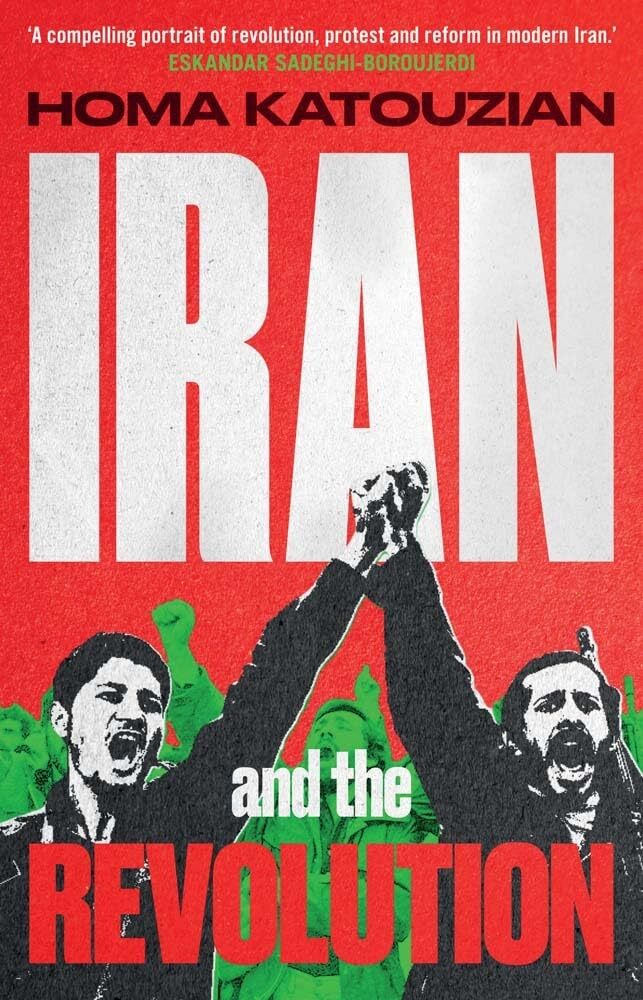
With the US-Israeli war against Iran into its second month, the publication of Homa Katouzian’s history of the 1979 Iranian revolution couldn’t be timelier. The outcome of the current war may decide the fate of that revolution and the Islamic regime that resulted from it. Katouzian’s conclusion mentions the June 2025 joint US-Israeli attacks targeting Iran’s nuclear weapons program, and notes, with astonishment, that the Iranian people failed to rise up against the regime.
Katouzian teaches Middle Eastern studies at Oxford University and has authored several books on Iran’s history. The 1979 revolution, he writes, was not inevitable, but its causes reach back to three phases of Iranian history: a period of chaos between 1941 and 1953 after the fall of Reza Shah; the decade after the 1953 coup that overthrew the government of Mohammad Mosaddeq during which the Shah of Iran shared political power with landlords and religious leaders; and between 1963 and 1979 when, in Katouzian’s words, the Shah “became an arbitrary despot.”
Katouzian credits the Shah for his attempts at land reform, educational reforms, industrial development, and for pursuing a “clever foreign policy”, including establishing close relations with the United States and good relations with Israel. But it was those very reforms that turned the Islamists against the Shah. As early as 1963, in the wake of social reforms that came to be known as the Shah’s “White Revolution”, Islamic clerics, most prominently Ayatollah Khomeini, publicly criticized the Shah, calling him a “wretched man”. Khomeini became a hero to those opposed to the shah’s one-man rule, including secular reformists and communists. Gradually, Katouzian writes, a political gulf widened between Iranian society and the state, even though much of the population benefitted from the Shah’s reforms:
By the 1970s, the hostility of the society towards the state had reached such proportions that the people would simply not acknowledge any service to them rendered by the state.
The dreaded Savak and other intelligence agencies ruthlessly repressed political opposition. It didn’t help the Shah when US President Jimmy Carter launched a public “human rights” campaign even as he praised the Shah’s leadership.
By the time the Shah realized that the only way to survive was to share power it was too late.
Khomeini and his followers criticized the Shah for his modernist programs that in their view trampled on religious and cultural traditions. Other opposition groups sought greater political freedoms and were willing to join forces with Islamists to bring about regime change. By the time the Shah realized that the only way to survive was to share power it was too late. The final nail in the regime’s coffin was the Iranian military’s refusal to forcibly crack down on the growing political opposition. The shah’s health deteriorated and he fled the country, eventually traveling to the United States for medical treatment.
The Shah’s flight led to a power vacuum and a power struggle among the opposition groups. A few weeks after the Shah left the country, Islamist “students” seized the US Embassy and took its personnel hostage. Katouzian calls this event “one of the most catastrophic events of the history of the revolution and Islamic Republic.” It isolated Iran internationally and “greatly intensified domestic repression”. Khomeini blessed the hostage taking, calling America the “great Satan.” Katouzian writes that this was when “the process of total and complete Islamization of social and political life rapidly began.” Institutions were purged of non-Islamist officials and employees. Political opposition was banned. There were significant numbers of executions. The subsequent war with Iraq resulted in even more repression and censorship.
Katouzian details the politics of post-revolutionary Iran after Khomeini’s death in 1989: the internal power struggles among different political factions that he divides into moderates, pragmatists, and hardliners; the continued deterioration of US-Iranian relations (which he invariably blames on the US, especially the Trump administrations), despite what he claims were opportunities for improving those relations; the periodic and growing popular discontent with the Islamic state; Iran’s quest for nuclear weapons and the varying international responses; the ongoing conflict with Israel (which he invariably blames on the Israelis); and Iran’s growing ties to Russia and China. However, in his policy assessments, Katouzian can at times appear almost reflexively anti-US and anti-Israeli, thereby reducing confidence readers might have in the book as a guide to analysing the present.
“What will happen next in Iran’s short-term society… is anyone’s guess,” Katouzian writes. As this review is written in the crucible of war, it is still anyone’s guess.
