“My Grandfather, the Master Detective” by Masateru Konishi
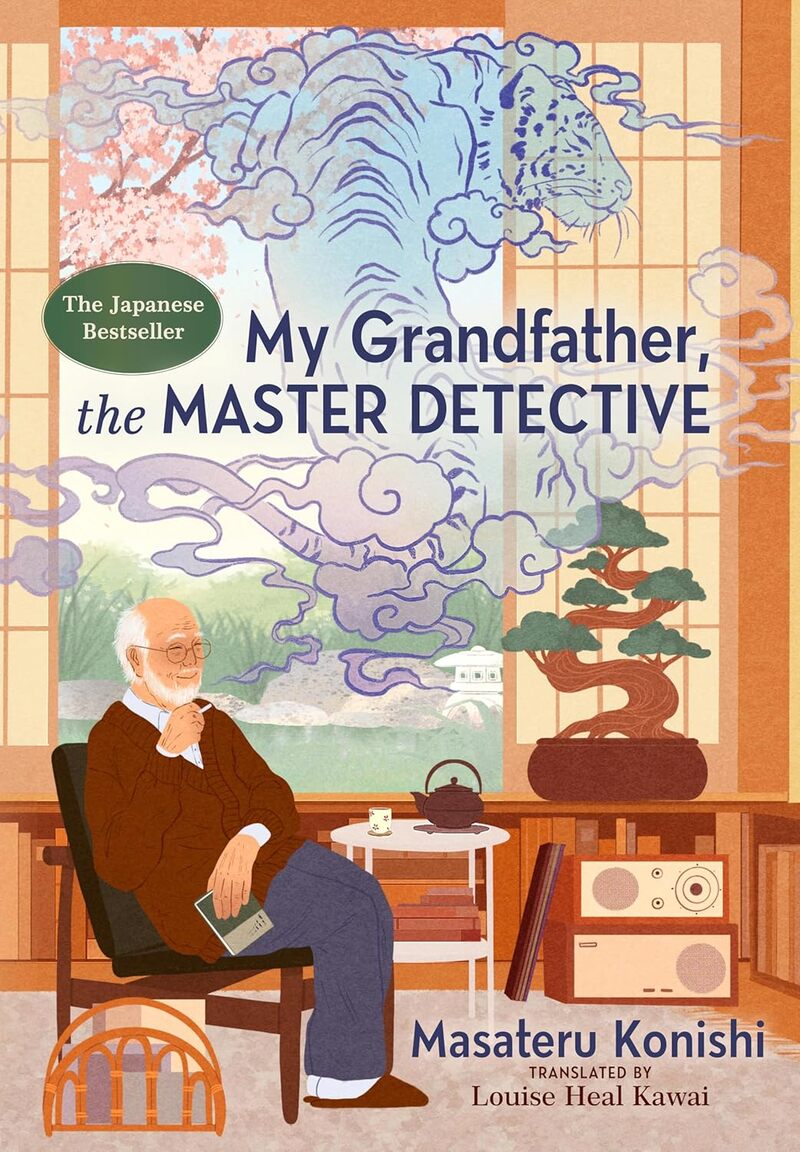
In Tokyo’s Himonya district lives Kaede’s grandfather, a former school principal with a love of mystery novels that he has passed down to his granddaughter.
Grandfather lives with Lewy Body Dementia and experiences hallucinations, a symptom that the narrator describes as “distinct” and “one that is unique to this variation of dementia”. Lewy Body Dementia makes for much of Kaede’s continued concern for her grandfather; it also, at times, serves as a literary device deftly deployed by the author.Konishi doesn’t stray too far from some of the themes and objects that make comfort fiction in translation so popular.My Grandfather The Master Detective is Masateru Konishi’s debut novel. Konishi strikes a balance between the cozy mystery genre and the Japanese (and Korean) comfort novels in translation that are having a moment on the bestsellers’ lists. Konishi does well with both genres, with a plot that builds in the second half, gently but with enough intrigue to make the reveal one of interest.Konishi begins with Kaede’s grandfather telling her about a blue tiger that had been in his study.
“Good thing you didn’t get bitten,” Kaede remarked, careful to sound casual about it, but in truth her heart sank a little.
Here we go again…
Kaede listens to her grandfather having another one of his hallucinations, but Kaede is gripped by her grandfather’s telling—he is a skilled storyteller, so Kaede hangs onto every word.Kaede adores her grandfather. She has picked up his love of mysteries, but has also followed in his footsteps as a schoolteacher. And her first mystery comes via a colleague at school, whose former baseball teammate needs her help with The Izakaya Locked-Room Murder Mystery. Kaede presents her observations and thoughts—what her grandfather calls weaving a story. Together, the pair arrive at a conclusion that makes the most sense. They soon find themselves solving further mysteries.There are cafes, music and old bookshops…
Konishi doesn’t stray too far from some of the themes and objects that make comfort fiction in translation so popular. There are lines about coffee—“coffee and mystery novels went extremely well together”—and a few pages later, a remark about coffee going cold. There are cafes, music and old bookshops, as well a sense of calmness and acceptance as these strange tales unfold. Kaede’s love for her grandfather is clear, and Konishi presents the grandfather’s dementia with care.
Influenced by her grandfather, Kaede is a fan of the golden age of detective novels and Konishi references these themes in the mysteries that Kaede and her grandfather solve. But Konishi also plays with the golden age, introducing a character who is clearly well-versed in mystery novels, but who pokes fun at Kaede’s interest.