“Oxford Soju Club” by Jinwoo Park
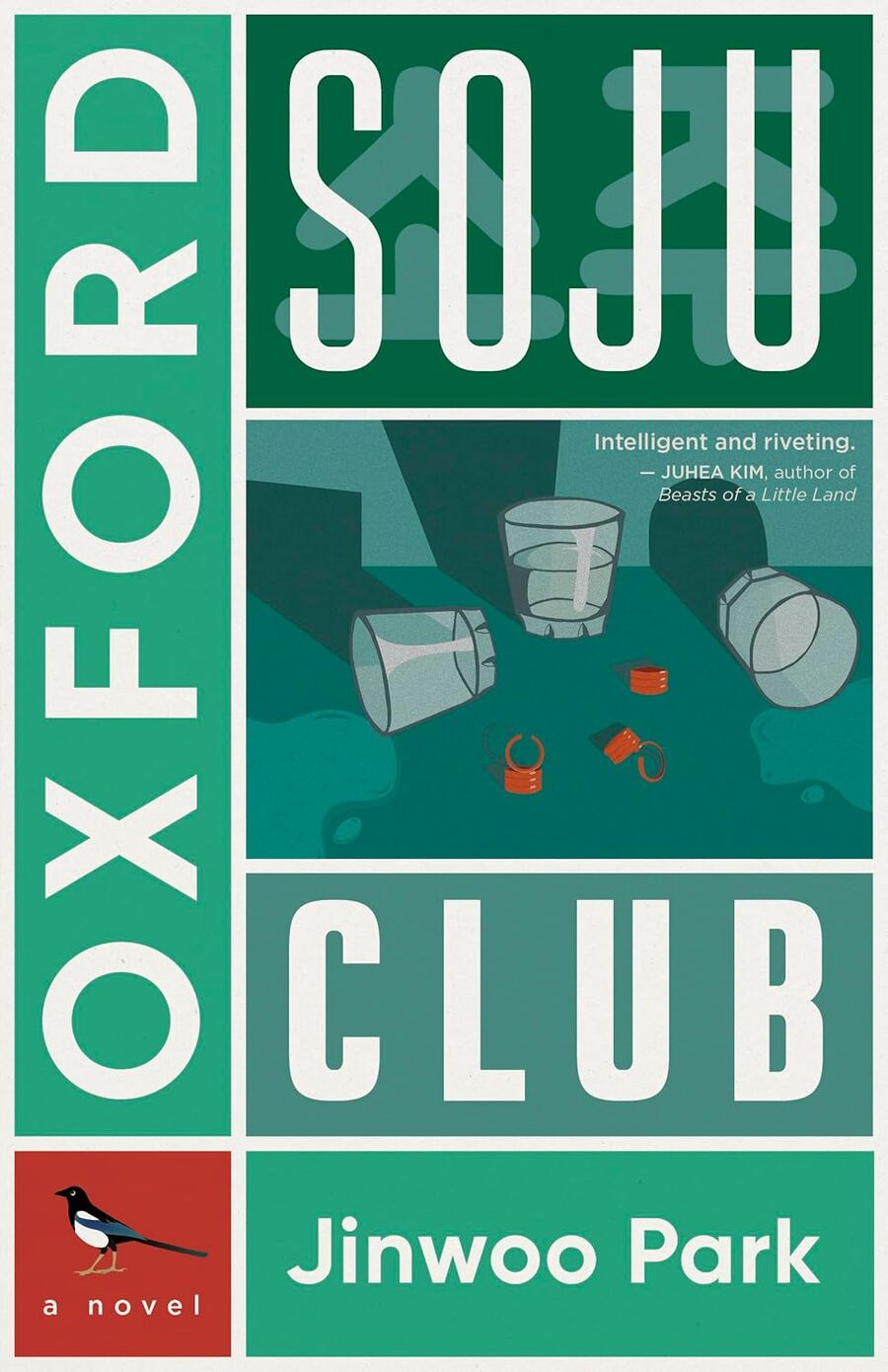
In a dark alley in Oxford, Yohan finds his mentor Doha Kim stabbed. With moments left to live, Doha tells Yohan that he must go to the Soju Club and meet with Dr Ryu. These are the North Korean spymaster’s final instructions, which Yohan knows he must obey.
Not far away is the Oxford Soju Club’s titular restaurant. Owned by Jihoon, a young South Korean who recently immigrated to England, Soju Club is a small restaurant that was often frequented by Doha and, since he has moved to Oxford under his cover as a Japanese-French graduate student, Yohan.It is no coincidence that across the street from Soju Club is the Magpie, a pub that serves as a front for Korean-American spy Yunah, who is now desperately seeking out Yohan.Park’s debut novel is as much about identity and immigrant identity as it is about intrigue.
Jinwoo Park’s Oxford Soju Club brings together all three characters as their lives become entangled, unravelling in the aftermath of Doha’s murder. Park divides each chapter into three sections, initially organising them as the Northerner, the Southerner and the American, with each section representing one of the main characters. Park moves between the present action and the characters’ back stories, revealing layer by layer how they came to find themselves in the middle of Oxford.
Oxford Soju Club is a spy novel replete with intrigue, tension and deceptions, but Park’s debut novel is as much about identity and immigrant identity as it is about dramatic twists and turns. For each character, the foreign setting of Oxford forces them to contend with different truths and realities, both large and small.When Doha calls Jihoon “Im Jihoon-ssi”, the young restaurant owner later reflects.More than the fact that the professor knew details of his birthplace and his father, it is the way he said his name that lingers. He has only ever heard “Jihoon Lim” since coming to Oxford, never “Lim Jihoon,” or “Im Jihoon” for that matter, the Korean way of saying it.
In their interactions with Jihoon and with each other, both Yohan and Yunah present with their cover identities. While covers are to be expected in a spy novel, Park’s writing also seems to be reflecting about the identities we all—and perhaps immigrants even more so—present in public and the parts of our identities we keep to ourselves.Yohan is a chameleon, but it is not difficult to see (never mind relate to) how the names immigrants choose, the histories they reveal, the masks they wear and the stories they tell are sometimes all carefully calibrated to try to optimise survival and success. An interaction between Yunah and her white, male colleague sums up how one’s background can feel both an advantage and a disadvantage.“They said that you being Korean was a risk factor. That there was a possibility that you would empathize with the target, so I was to keep an eye out for that.”
“Funny, I remember them saying that me being Korean was an asset.”
“They said that too. It’s not always clear-cut, is it?”
Park includes scenes where Yunah recalls her childhood and the pressure to be the model immigrant, where Jihoon’s employee Deoksu shares his views on “those second-generation kids who don’t speak a lick of the language” and early advice from Doha to Yohan on how to best blend in, which could be mistaken for experiences on how immigrants feel the need to assimilate.Just like the masks his characters wear, Park’s spy thriller is a guise for a novel that goes much deeper.
Soju Club is a setting that provides opportunities for the characters to interact, but it also anchors the characters with a sense of home. In the strangeness of Oxford, Soju Club helps to evoke the familiar and Park uses this comfortable setting to draw out his characters’ thinking and memories with food, of course, being one way that people express their identity.
As Yunah inhales the aroma coming from a bowl of Jihoon’s kimchi jjigae, she is taken back to her childhood and the grandmother who helped raise her.