Podcast with Paul Blustein, author of “King Dollar: The Past and Future of the World’s Dominant Currency”
The U.S. dollar is the world’s most important currency. Trade is priced in dollars, the world’s central banks keep U.S. dollars in reserve, some places–including my home of Hong Kong, peg their currencies to the dollar. But what explains the dominant role of the U.S. dollar? And why have some challengers, like the Japanese yen or the Chinese yuan, failed to gain traction?
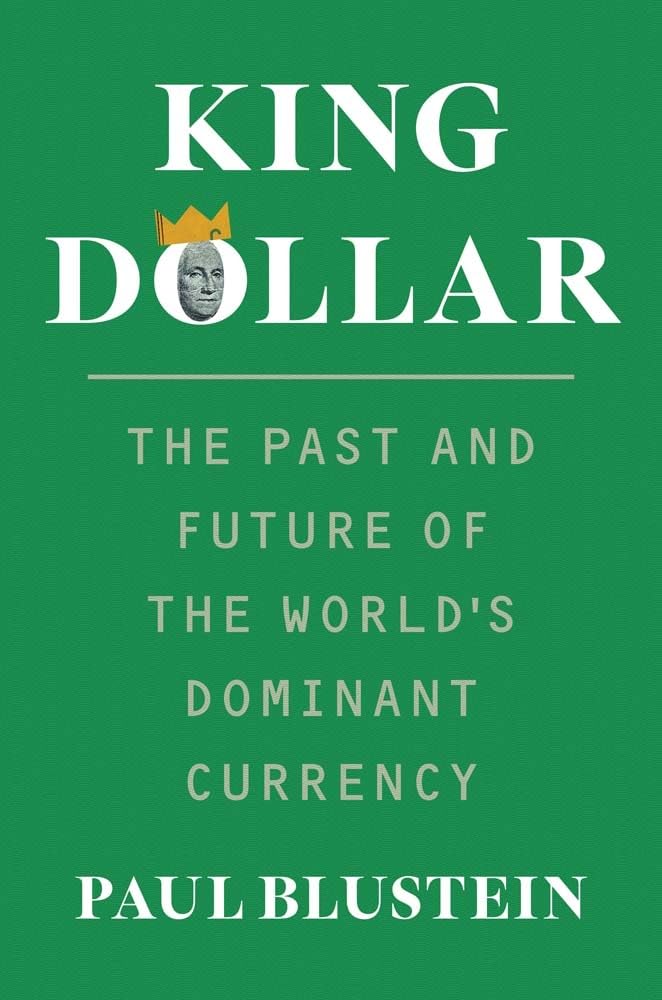
Paul Blustein, author of King Dollar: The Past and Future of the World’s Dominant Currency, joins us on the show today; the book was released last year, and is now in paperback. In his book, Paul talks about how the role of the U.S. dollar got to where it is today and punctures some of the myths surrounding dollar dominance–like the idea that the “petrodollar” made a difference.
Paul is a senior associate with the Economics Program and Scholl Chair in International Business at the Center for Strategic and International Studies (CSIS). He is also the author of several critically acclaimed books about global economic affairs. A graduate of the University of Wisconsin and Oxford University, where he was a Rhodes Scholar, he spent much of his career as a reporter at the Washington Post and Wall Street Journal.
A programming note: we recorded this interview on April 4th, about a month after the U.S. first launched its strikes on Iran.