“Safe Passage: The Untold Story of Diplomatic Intrigue, Betrayal, and the Exchange of American and Japanese Civilians by Sea During World War II” by Evelyn Iritani
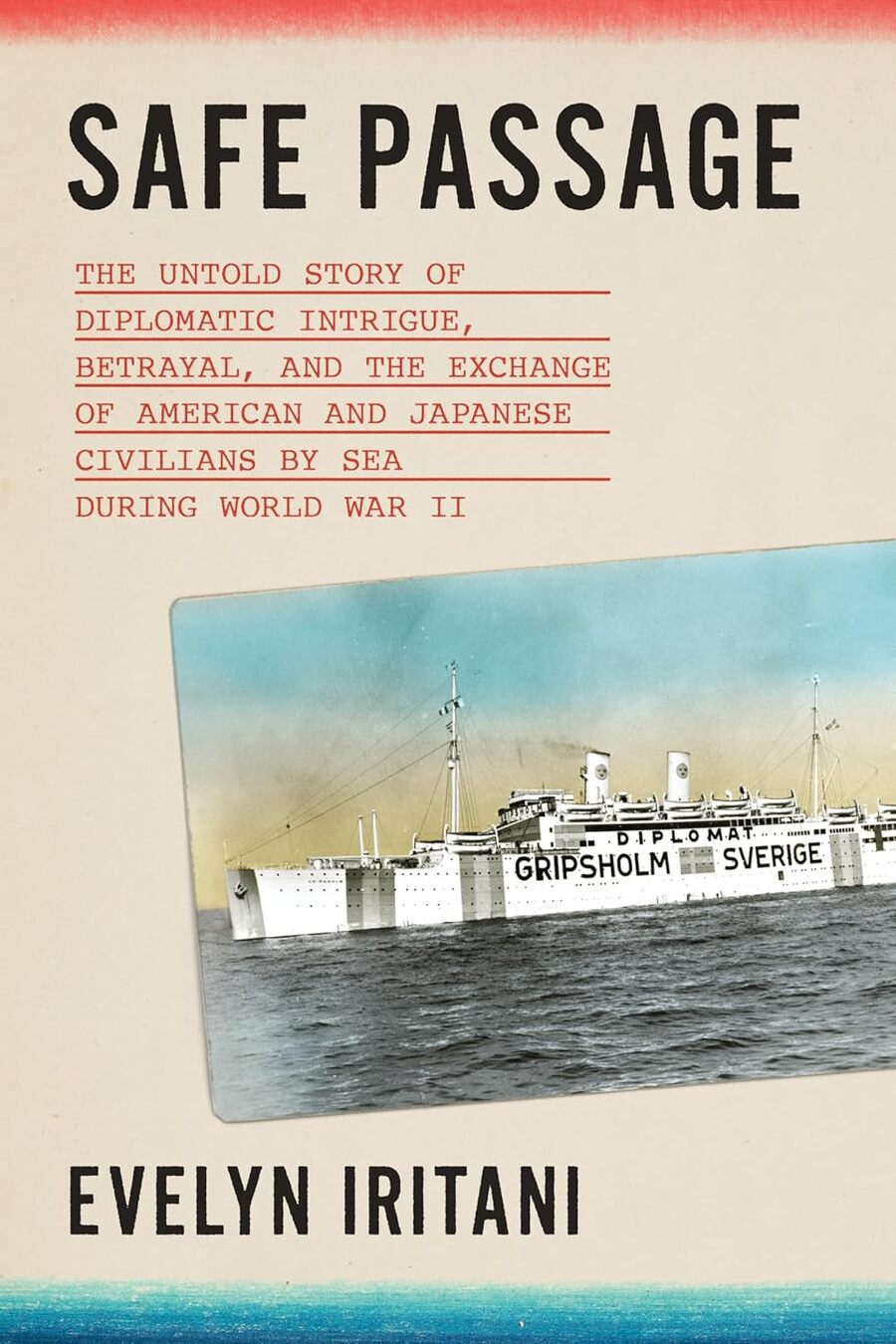
Diplomats, soldiers, and spies tend to take centre stage in stories of war, as author and former journalist Evelyn Iritani writes in her history of the United States and Japan in the Second World War. In this book, the author tells a tale of civilians, rather than one of military men, a tale of victims, rather than one of perpetrators.
She writes of American and British prisoners of the Japanese in Asia, exchanged for Japanese aliens and their Japanese-American children kept in relocation camps by the US government. Several thousand people, freed from detention, crossed paths on several exchange ships in two exchanges. The first exchange took place in 1942, the second in 1943.Iritani tells her story with a focus on a few dozen men, women and children. Among the women featured is the flamboyant Emily Hahn, a prolific American writer whose married lovers included the Chinese poet and publisher Shao Xunmei and the British military intelligence officer (and, later, renowned historian) Charles R Boxer. One of the men in Iritani’s story is Daniel Brooke McKinnon, an American teacher who had taught at Otaru Higher Commercial School, on the northern Japanese island of Hokkaido, from 1917 to the day of the Japanese attack on Pearl Harbor, when Japanese authorities threw him into solitary confinement and subjected him to repeated beatings and torture until he boarded the exchange ship Gripsholm in September 1943 to return to the United States. The children include those of the immigrant brothers Isamu and Mataji Rikimaru. Born in the United States, the Rikimaru children had to board the Gripsholm to accompany their Japanese fathers to Japan.Readers interested in the lives of individuals buffeted by the winds of war will find much to hold their interest. Iritani tells their stories with a wealth of personal details. She conducted extensive interviews with those involved, as well as with their children and other family members, to gather together many particulars. She also spent a great deal of time conducting research in American archives and reading the relevant English-language literature on the wartime exchanges. For an understanding on such issues as Washington’s motives for relocating Japanese nationals and their Japanese-American children from the West Coast to the interior, the stark difference in the treatment that Washington and Tokyo gave enemy aliens, and the thinking of the exchanged Japanese Americans as they joined the thousands already residing in Japan who were serving Imperial Japan in intelligence, propaganda, and military roles against the United States, readers will have to look elsewhere.Setting such deeper policy issues aside, Safe Passage is worth reading. Iritani writes in an approachable manner for a broad audience on an episode of the Second World War that has been relatively little known.