“The Forgotten Indian Prisoners of World War II: Surrender, Loyalty, Betrayal and Hell” by Gautam Hazarika
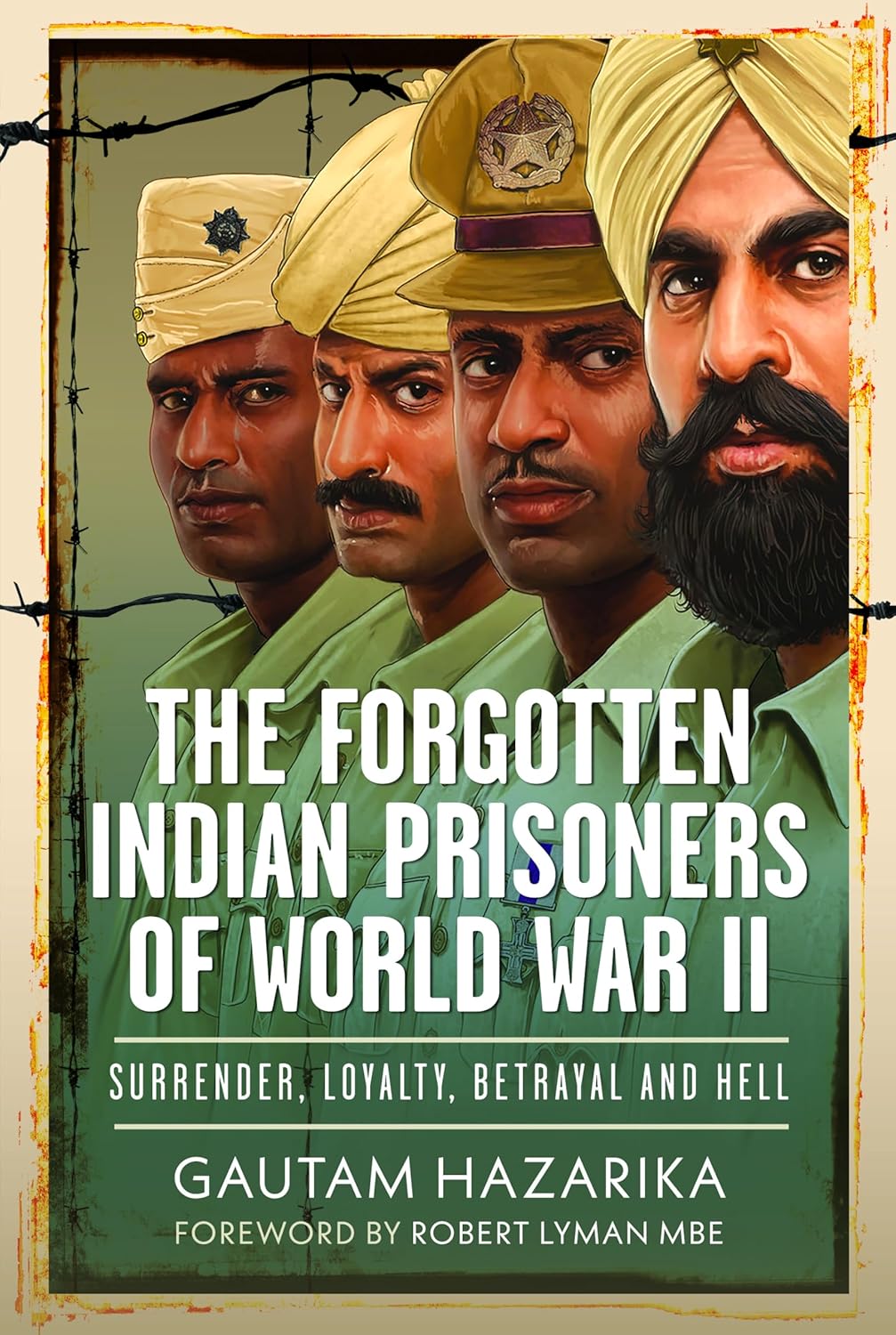
World War II birthed the anti-colonial Indian National Army (INA), a force composed of former imperial troops and civilian recruits that fought with Japan against the British and helped to accelerate India’s independence from Great Britain. Like most aspects of World War II, these developments were messy, complicated, and filled with tragedy. Gautam Hazarika, a former banker turned World War II historian, tells the story of one of the war’s lesser-known tragedies—the fate of Indian prisoners of war in the aftermath of Japan’s conquest of Malaya and Singapore.
This is Hazarika’s first book. It is a well-sourced and highly-detailed account of “surrender, loyalty, betrayal, and hell”. Approximately 67,000 Indian soldiers helped the British defend Malaya and Singapore, to no avail. Hazarika notes that the well-planned Japanese offensive caught the British by surprise and led to an ignominious retreat and defeat. Britain even lost two of its warships—the Prince of Wales and Repulse—which resulted in Japan controlling the sea, air, and land in and around Singapore.Britain’s surrender set in motion the formation of the INA. Japan’s generals promised to help India gain its independence if India’s soldiers fought with Japan against their colonial rulers. The Japanese recruited Indian military leaders and political officials to persuade Indian prisoners to break their oaths to Great Britain and fight for an independent India. Hazarika credits Captain Mohan Singh, the prominent Sikh preacher Giani Pritam Singh, and Japanese intelligence officer Major Fujiwara Iwaichi with establishing the INA. Some Indian soldiers didn’t need much convincing to fight for independence, but others were torn between loyalty to Britain and a longing for independence.Japanese military authorities gathered the Indian POWs in camps, where camp authorities used anti-British propaganda and not-so-veiled threats of ill treatment to induce the prisoners to join with Indian civilians to form the INA. Japan’s ill treatment of prisoners included, Hazarika writes, “threats, shootings, [and] beatings”. Japanese authorities also sometimes resorted to “bribery and promises of high posts”. Interviews with Indian POWs after the war showed that the motives for joining with Japan against Britain varied: some cited patriotism, some peer pressure, some to avoid adverse consequences by Japanese conquerors, while others cited effective propaganda.The INA was formed on 1 September 1942, under the leadership of Captain Mohan Singh. Regiments were named after Indian political leaders, such as Ghandi, Nehru, and Azad. INA soldiers were told that they would eventually be able to invade India to overthrow British rule there, but the reality was, as Hazarika notes, Japan’s offensives soon stalled, which caused dissension among INA leaders, some of whom were arrested by Japanese military authorities. Britain took advantage of Indian dissenters by recruiting some of them as spies against the Japanese, but some Indians also spied for Japan against Britain in India. Meanwhile, some Indian POWs managed to escape, and Hazarika details some of the daring journeys of those who fled the camps.Japan recruited new leaders of the INA, including Rash Behari Bose for a time, and later one of the best-known Indian nationalists, Subhas Chandra Bose. But Japan soon abandoned the notion of sending the INA to India and instead began shipping Indian POWs to the Southwest Pacific Area to work as forced laborers on what Hazarika calls the “torture islands” of Papua New Guinea. Not only was the labor hard, but medical treatment was poor, disease was rampant, and food shortages led to starvation. There were massacres and beheadings by the Japanese.“[T]he worst atrocities against Indian POWs”, writes Hazarika, “were committed in New Guinea and New Britain”, and after the war Australia held war crimes trials to hold to account those responsible for the atrocities. Hazarika devotes a chapter of the book to those trials in which 36 Japanese were sentenced to death. Britain, meanwhile, brought charges against some INA members for betraying their oaths to the British king and for committing atrocities. But the Indian public was on the side of the INA men not Britain. The trials only revealed, Hazarika writes, that Britain had lost India.